Showing posts with label Grace. Show all posts

Friday, 6 June 2014

The meaning of grace in the life of a Christian.


In every person there is a seed of good. However, just as a regular seed cannot grow and ripen without moisture and light, so does the soul of man remain barren until it is irrigated by the grace of God. Feeling the inadequacy of divine help within himself, King David prayed to God: “My soul thirsteth after Thee, as a thirsty land.” And all people who have a genuine thirst for righteousness realize that without the help of God, without His guidance and support, spiritual life is totally impossible. The grace of God renews a man’s soul, purifies his conscience, enlightens his mind, fortifies his faith, guides his will towards good, warms his heart with love for God and one’s neighbor, directs him towards heaven, inspires him with the desire to live by spiritual interests. It purifies and sanctifies man’s entire being. According to the testimony of the many who were favored with supreme spiritual illumination, the grace of God brings such peace and joy to a man’s soul that all earthly riches and all physical delights seem pitiful and insignificant in comparison.


From the day the Holy Spirit descended upon the apostles, each newly-baptized person receives this grace of the Holy Spirit, just as did the apostles, in the sacrament of chrismation. The power of this sacrament is so great and indelible that, like baptism, it is never repeated. Subsequent sacraments of the Church, such as confession and communion, and also church services, home prayers, fasting, charitable deeds and a virtuous life serve to fortify and increase in a Christian the action of these gifts of grace that he had received in chrismation.


The life-giving power of the grace of God reveals itself in beneficial internal and external changes in the people who have received it. These changes were especially evident in Christ’s disciples. Until the descent of the Holy Spirit they, as we know, were simple and illiterate people, and possessed no eloquence of language. When the Holy Spirit descended upon them, however, they became enriched with spiritual wisdom, and with their inspired words began to attract not only simple folk to the faith, but even philosophers and noblemen. Their grace-filled words penetrated the coarsest hearts, disposing sinners to repentance and correction, and the fainthearted to diligence. From timid and timorous people, such as the apostles were during the Savior’s life on earth, after the descent of the Holy Spirit they became courageous and dauntless. The result of the gifts of grace which they had received was the appearance of a multitude of Christian communities even while the apostles were still living, not only in various parts of the Roman Empire, but also beyond its boundaries: in northern Africa, India, Persia and the south of Scythia. Thus, due to the apostles’ indefatigable efforts, Christianity began to spread throughout the entire world, and together with it there began a renaissance of human society.

Friday, 9 May 2014

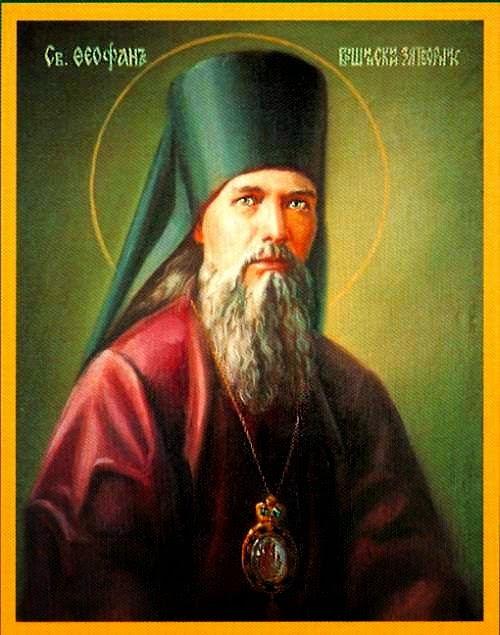
St.Theophan The Recluse-On How Grace Settles in the Repentant Soul.


In looking at a person who has repented, we are looking at a person who has actually entered into communion with God, but this communion is still hidden, secret, unmanifest. His goal is to attain communion that is complete, tangible, and perceptible. We must precisely determine all of this for ourselves and be assured, because all the penitent's labor for salvation should be built upon this foundation, namely: that in the Sacrament of Confession (or Baptism) grace descends perceptibly to the spirit but then hides itself from the awareness, although it does not in fact go away. It remains imperceptible until the heart is purified, at which time it dwells visibly and finally. It is obvious that our only instructors in this matter can be the Holy Fathers. None of them expresses it so well as St. Diadochus, Bishop of Photiki, and St. Macarius of Egypt. We present their witness to our suppositions. 

Grace Settles in a Person and Stays with Him from the Moment he Receives the Mysteries.

"From the instant we are baptized," says St. Diadochus, "grace is hidden in the depths of the intellect." Also: "For when through Holy Baptism divine grace in its infinite love permeates the lineaments of God's image — thereby renewing in the soul the capacity for attaining the divine likeness — what place is there for the devil?" St. Macarius says: "Grace is constantly present, and is rooted in us, and worked into us like leaven, from our earliest years, until the thing thus present becomes fixed in a man like a natural endowment, as if it were one substance with him. 


When Grace First Settles in a Person through a Sacrament, it Vouchsafes that Person a Complete Taste of the Blessedness of Communion with God.

Saturday, 11 January 2014

Arch.George of Saint Gregory( Mt.Athos)- On Genuine and false experiences of the Grace of God


Recorded speech of the Abbot, Archimandrite George of our Holy Monastery of Saint Gregory of the Holy Mountain at Stratoni of Halkidiki, on 14/27 January 1989, at the invitation of the Most Reverend Nicodemus, Metropolitan of Hierissou, of the Holy Mountain and Ardameri. Taken from the magazine "Saint Gregory" of the Holy Monastery of Saint Gregory, of the Holy Mountain.


I am very pleased to see at this evening's meeting, a holy and blessed gathering, the honourable presbytery led by the preacher of the Holy Metropolis, but also yourselves, a pious crowd, who through the blessing and invitation of your Most Reverend Metropolitan and Head Shepherd, are gathered here this evening so that all of us may confess our true faith to our God-Man Lord. Your presence this evening is not only the attendance for a lecture but also the witnessing of the Orthodox faith, which my humility will profess by mouth while you profess it with your presence. And as the Lord said in the Holy Bible: "Whoever confesses Me in front of men, I shall confess him in front of My Father in Heaven".

The purpose of our life, as you know, is our union with God. As the Holy Bible says, man was created "in the image and the likeness" of God, namely to unite with Him. The likeness of man with God, our holy Fathers call "theosis". Can you see how great the purpose of man's life is? Not to simply become better, more virtuous, more courteous by God, by grace. And what is the difference between Holy God and the deified man? That our Maker and Creator is God in nature according to His nature, while we become gods by grace, for although by nature we remain men, by His grace we are deified.

When man unites with God by grace, he receives also the experience of God; he can sense God. Otherwise how could we unite with God without feeling His grace?

Before the first-created ones in Paradise sinned, they could converse with God, they could feel divine grace. God created man to be priest, prophet, king. Priest, to accept His existence and the world as gifts of God, and to offer in return himself and the world to God eucharistically and doxologically. Prophet, to understand the mysteries of God. King, to reign over material creation and himself. To use nature, not as a tyrant but as a ruler. Not to abuse creation but to use it thankfully. Today's man does not use nature logically but instead acts self-centeredly and foolishly, and as a result, destroys his natural surroundings and within it, destroys himself.

If man had not sinned and replaced his love and obedience to God with his selfishness, he would not have separated himself from God; he would have been king, priest and prophet. However, Holy God who hurts for His creature, wishes to return man back to the state where he can again become a true priest, prophet and king. To be able to again attain the experience of God and unite with Him. It is for this, that in the narrations of of the Old Testament we see God gradually preparing mankind's salvation with the coming of His Only Son. He thus provides the gifts like those that man had before his fall - for example, the gift of prophesy. In the Old Testament there were men, like the prophet Elijah, the prophet Isaiah, the prophet Moses, who received the prophetic gift and who sighted the glory of God. However this gift was not generally given to all, nor was it for the entire duration of their lives; it was a partial grace that God had given them for a specific purpose and for circumstantial occasions. Namely, whenever God wished these just men to proclaim the coming of Christ to the world or to declare His Will, they were given the capacity to receive certain experiences and revelations.

However, the prophet Joel had prophesied that a time will come when God will bestow the grace of the Holy Spirit - not only to select men and for a specific purpose - but to all people. Here is what the prophesy of Joel says: "........I shall pour My Spirit upon all flesh", I shall give My Spirit to every person, "and your sons and daughters shall prophesy, your old men shall dream dreams, your young men shall see visions" (Joel 2:28). Namely, my people will see spiritual visions; they will see the mysteries of God. This pouring forth of the Holy Spirit took place during the day of the Pentecost. On that day, the grace of the Holy Spirit was bestowed upon the entire assembled Church. This grace was not bestowed during the period of the Old Testament because Christ was not yet incarnate. The communion of man with God had to first be restored, for God to give the grace of the Holy Spirit to all the people. This communion our Saviour Christ achieved through His incarnation.

The first union that God had with man in Paradise was not hypostatic, which is why it failed. The second union is hypostatic namely personal. In the hypostatic person of Christ, human nature was united, undisturbed, properly, indivisibly, inseparably, with the divine nature forever. No matter how much men sin, it is no longer possible for human nature to be separate from God, because in Jesus Christ, the God-man, it is united forever with the divine nature.

For man therefore to be able to receive the Holy Spirit, to become priest, king and prophet, to know the mysteries of God and to feel God, he must become a member of the Body of Christ, of the Church. Jesus Christ is the only one, true and perfect priest, king and prophet. What Adam and Eve were created for and had failed on account of sin and selfishness, was effected by Christ. Now all of us, united with Christ, can partake in the three offices of Christ, the royal, the prophetic and the priestly. At this juncture we must clarify that with Holy Baptism and Chrismation, a Christian receives priesthood, but not the special priesthood that is obtained through tonsuring and through which the officiators of the Church receive the grace to perform the Sacraments in the Church and to shepherd the lay flock.

Laity, however, is not only the non-priests but also those who through Holy Baptism and Chrismation receive the right to be members of the people of God and the Body of Christ, and to participate in the three offices of Christ. In fact the more healthy, conscious and active member of the people of God and of the Body of Christ that the Christian is, the more closely he participates in the hierarchal, prophetic and royal right of Christ, and that far greater experience and feeling of His grace that he receives, we can see in the lives of the Saints of our Faith.

Forms of experience of the grace of God

What are the experiences of grace that a Christian can receive so that his faith and Christian life will not be for him something mental and external, but a true spiritual feeling of God, a communion with God, a habitation of God in which the complete man participates.

It is first and foremost an inner information that through faith in God, he will find the true meaning of his life. He feels that his faith in Christ is a faith that comforts him internally; that it gives meaning to his life, and guides him, that it is a strong light that illumines him. When he perceives the Christian faith within himself this way, he begins to live the grace of God. God is not something external to him.

Another experience of the grace of God man receives when he hears in his heart God's invitation to repent for his dark and sinful deeds, to return to the Christian way of life, to confess, to enter the path leading to God. This voice of God that he hears inside him is a preliminary experience of the grace of God. All the years that one lives far away from God, one cannot understand anything.

He begins to repent: he confesses to the Confessor for the first time in his life. After confession he feels a great peace and joy that he has never felt before. And then he says: "I have been comforted". This comfort is the visitation of divine grace in a soul that has repented and one that God wishes to comfort.

The tears of a repenting Christian when he prays and asks to be forgiven by God or when he confesses are tears of repentance. Those tears are very comforting. They bring lots of peace to the soul of man. Man will then feel that these are the gift and the experience of divine grace.

The deeper man repents and reaches a greater love for God and prays with a godly eros, whereby most of his tears of repentance become tears of joy, tears of love and divine eros. The tears that are above and beyond the tears of repentance are also proof of a loftier visitation and experience of the grace of God.

We approach to commune the Body and Blood of Christ having repented, confessed, with fasting and spiritual preparation. After receiving Holy Communion what do we feel? Deep peace in our soul, and spiritual joy. This too is a visitation of Divine grace and an experience of God.

There are however other, superior experiences of God. The supreme experience of God is the vision of the Uncreated Light. This was the Light the disciples of the Lord had seen on the Mount of the Transfiguration. They saw Christ shine like the sun with a heavenly and divine light, which is not a material, created light, like the sun and other created lights. It was the Uncreated Light, namely the Light of God, the Light of the Holy Trinity. Those who are completely cleansed of their passions and sins, and who pray with a sincere and clean prayer, are the ones who are deemed worthy of this great experience of seeing the Light of God in this lifetime. This is the Light that will be shining in the eternal life. They not only see it from now, but they are also seen in this Light even now, for this Light envelops the Saints. We do not see it with our eyes, but the clean of heart and saints do see it. The bright halo that is painted around the heads of the Saints is the Light of the Holy Trinity that has illumined and sanctified them.

In the life of Saint Basil the Great we read that when praying in his cell, they could see him entirely enveloped by the Light, and his cell also was flooded by that Uncreated Light. We see the same thing in the lives of many saints.

Therefore for someone to be found worthy of seeing the Uncreated Light, is one of the highest experiences bestowed by God, and is not given to every one but to very few - to those who have progressed in spiritual life. According to Abba Isaac, in each generation, barely one person manages to clearly see the Uncreated Light. There are however even in our day Christians who are worthy of this unique experience of God.

Of course we need to stress that everyone who claims to have seen the light does not mean that he has seen the Uncreated Light. The devil deceives them, and shows them other lights - demonically or psychologically - fooling them into believing that it is the Uncreated Light, when it is not. For this reason, every Christian that hears something or has a certain experience, must not readily accept it as though it comes from God, because he could be deceived by the devil. He must however confess it to his Confessor who will then tell him whether it is from God or if it is a deceit of demons. A lot of caution is needed in such cases.

Determination of a pure experience of the grace of God

Let us now look at the conditions which ensure whether different experiences we have are genuine and not false.

The first condition is that we should be persons of repentance. If we do not repent of our sins and cleanse ourselves of our passions we cannot see God. As the Lord says in His beatitudes, "Blessed are the clean of heart for they shall see God". The more man cleanses himself from his passions, repents and returns to God, the more he will feel and see God.

To attempt to achieve experiences of God through artificial means and methods - as is done by the heresies of Hinduism, Yoga, etc., is a mistake. Those experiences are not from God. Those are experiences derived through psychological means.

The Holy Fathers tell us: "Give blood and receive spirit". In other words, if you do not give the blood of your heart with your repentance, prayer, fasting, asceticism, you cannot receive the grace of the Holy Spirit. True spiritual experiences are given to those who through humility do not ask for spiritual experiences but ask God for repentance and salvation. To those who are humble and say, "My God, I am not worthy of receiving a visitation of Your grace and divine and heavenly solace and spiritual pleasures". To those however who through pride ask God to give them experiences, He will not give them true and genuine experiences due to their pride. So therefore the second condition is humility.

The third condition for receiving a true spiritual experience is to be within the bosom of the Church. Not outside the Church; because outside the Church the devil will deceive us. When a sheep becomes separated from the flock, it will be devoured by wolves. Within the flock there is safety. The Christian is safe, inside the Church. However, when he leaves the Church, he is exposed to his own deceits, and those of other people and of the demons. We have innumerable examples of many people who did not heed the Church and in their spiritual state, eventually fell victim to deceit. They even believed that they saw God or that they were visited by God when in reality the experiences they had were demonic and destructive. It also helps greatly to offer pure and fervent prayers. The truth is, that during the time of prayer God gives most spiritual experiences to man, which is why those who pray with longing, zeal and patience, receive the gifts of the Holy Spirit and feel the grace of God.

As you may know, there is a prayer we say at the Holy Mountain and which you may also be saying: "Lord Jesus Christ have mercy on me the sinner". This prayer which is characterized as noetic, heartfelt and unremitting when it is said with humility, with longing and persistence, brings in the heart of man the feeling of the grace of God.

False experiences of the grace of God.

People have false experiences of God when they believe that by themselves, with their own powers, in heresies, in groups, in religious gatherings, outside the Church, they can receive the grace of the Holy Spirit. They gather and some new "prophet" acts as their leader and they believe they are receiving the grace of God.

It so happened that I was present at a gathering of Pentecostals in the States in 1966 during my visit there. Their "church" was a school assembly hall. At first, someone began to play some music with soft and gentle sounds which, as time moved on, became increasingly more intense, deafening and frantic, and aroused excitement in the assembly. The music finished and the preacher started. He too began with gentle tones and as he continued, he began to shout increasingly louder. He too eventually created an excited atmosphere. And after all the crowd had been subjected to auto suggestion and hysteria, they too began to shout and move their arms about frantically, while uttering totally unintelligible noises. I could sense that the Spirit of God was definitely not there, given that the Holy Spirit is a Spirit of peace and not of such turmoil and excitement. The Spirit of God does not visit through artificial and psychological means. I felt rather sorry for the children that were there with their parents, as they were to suffer the consequences of this mass neurosis.

A young man who had become a monk at the Holy Mountain after first becoming involved in Hindu Yoga (you should know that there are approximately 500 Hindu heresies in Greece), described to me what experiences they strive for in there. Whenever they desired to see light, they would rub their eyes until they could see little stars. Whenever the desired to hear unusual sounds they applied some sort of pressure on their ears so that they could create sounds.

Similar psychological experiences that are produced artificially, are attributed by some heretics to the Holy Spirit.

Other experiences in heretic gatherings are not only psychological. They could also be demonic. The devil manipulates the seeking of such experiences by some people and presents them with various "signs" that are not from God but from them; i.e., diabolical. These people cannot understand that they allow themselves to become victims of the devil. They actually believe such "signs" to be heavenly and brought by the Holy Spirit. The devil can also give them some prophetic abilities, the way he does to the various "mediums" and "psychics". The Lord has however forewarned us: "For false christs and false prophets will rise and show great signs and wonders to deceive, if possible, even the elect." (Matth.24:24). They won't merely perform miracles and wonders, or scary signs: just like the Antichrist, who will not do bad things when he comes. He will perform good deeds, heal the sick and various other impressive things that will deceive people, if possible even the elect, so that they will acknowledge him as a saviour and follow him.

That is why we must be careful. Every one who can perform signs and prophesies is not always from God. Again as the Lord says: "Many will say to Me in that day, 'Lord, Lord, have we not prophesied in Your name, cast out demons in Your name, and done many wonders in Your name?' And then I will declare to them, 'I never knew you; depart from Me, you who practice lawlessness!'" (Matth.7:22-23).

I knew a young man who was led astray by occult and Pentecostal heresies, who admitted that the various experiences they had when they were members of these heresies, were obviously diabolical.

A former Pentecostal man for example admitted that during the Pentecostal gatherings when some "prophetess" would utter a "prophecy" he could feel a disturbing demonic presence and that when he tried to say the prayer, "Lord Jesus Christ have mercy on me the sinner", the "speaking in tongues" would begin, and would drown out his attempt and impede him from saying the prayer.

Given that the devil can transform himself into an angel of light, we must be careful with experiences. The Apostle John advises us "Beloved, believe not every spirit, but try the spirits whether they are of God" (1 John 4:1). Not all the spirits are from God. Those who have the Apostle Paul's gift of discernment of spirits (1 Cor. 12:10) can discern if the spirits are from God or from the devil. The Confessors of the Church have this gift. That is why when we have such problems we must seek our Confessor and he will determine the source of every experience.

Even monastics can be deceived. We have had cases at the Holy Mountain where monks were deceived by such experiences. For example, an angel appeared to a monk -which was in fact the devil- and told him "Come to the peak of Athos, so I can show you great miracles". He guided him there and he would have fallen off the precipice, had he not invoked divine help. He made the mistake of believing that the vision was from God when he shouldn't have. Monastics know that when they have a vision, they must tell it to their Elder and he will tell them if it is from God or from the demons. Where there is pride, deceit is very possible.

About Pentecostals

The experiences of the Pentecostals are not from God. It is for this reason that are not enabled to enter the Church but instead, are driven away from Her. Only the devil is interested in drawing people away from the Church.

Furthermore, their own divisions into numerous sub-heresies and groups is proof that they do not comprise the One, true Church of God. Protestantism consists of thousands of heresies. One of the protestant heresies is Pentecostalism. In the USA alone, there are over 39 different Pentecostal groups. Many of the Pentecostal heresies have no communion between them. Here are the titles of some of the Pentecostal groups: "Congregation of the Church of God of the Mountain", "Integrated Congregation of the Church of God", "Theater Gar", "Sleepless Mission", "Church of Mother Horn", "Church of Mother Robertson", "Jesus and Sleepless Mission", "Remainder of the Church of God", "Fire born Church of God's sanctity of America", "Church of Mogara Cook", "National Spiritual Davidic Union Temple Church of God", "Church of the Square Bible"......

If the Spirit of God truly existed in these groups, there would have been a union between them all; there would have been one unified Church and not so many different and opponent groups.

Also, some of the phenomena that take place during their assemblies, such as shaking, dropping to the floor as if dead ("slain in the Spirit"), screaming unrecognizable and useless utterances, are not gifts that come from the peaceful Spirit of God. Similar phenomena are found in idolatrous religions. They also have many similarities with occult spiritualist phenomena.

They also encourage a spirit of pride, by believing that the entire Church that dates almost two thousand years is deluded, and that they are the ones who have supposedly discovered the truth, in 1900. The first one who created the group of Pentecostals is an American. The first Pentecostal in Greece, Michael Gounas, preached, "After so many centuries in the land of Greece, the onset of the visitation of God happened like on the day of the Pentecost". According to him, the visit of Christ started in Greece by him, the way it did on the day of the Pentecost! All the other years there apparently was nothing. Can you see the satanic egotism and pride?

So, what about this "speaking in tongues" (glossolalia) gift that is so coveted by them? Indeed, in the New Testament there is a reference to "speaking in tongues". The holy Apostles on the day of the Pentecost spoke to the crowds of people who had come on a pilgrimage to Jerusalem, in order to tell them the Good News. The miraculous gift of the Holy Spirit was that even though the Apostles were preaching in their own native tongue, the foreigners in the audience (who had various, differing national languages) were able to understand in their own language what the Apostles were saying!

Acts, 2:1-12

When the Day of Pentecost had fully come, they were all with one accord in one place. 2 And suddenly there came a sound from heaven, as of a rushing mighty wind, and it filled the whole house where they were sitting. 3 Then there appeared to them divided tongues, as of fire, and one sat upon each of them. 4 And they were all filled with the Holy Spirit and began to speak with other tongues, as the Spirit gave them utterance.5 And there were dwelling in Jerusalem Jews, devout men, from every nation under heaven. 6 And when this sound occurred, the multitude came together, and were confused, because everyone heard them speak in his own language. 7 Then they were all amazed and marveled, saying to one another, "Look, are not all these who speak Galileans? 8 And how is it that we hear, each in our own language in which we were born?9 Parthians and Medes and Elamites, those dwelling in Mesopotamia, Judea and Cappadocia, Pontus and Asia,10 Phrygia and Pamphylia, Egypt and the parts of Libya adjoining Cyrene, visitors from Rome, both Jews and proselytes, 11 Cretans and Arabs—we hear them speaking in our own tongues the wonderful works of God." 12 So they were all amazed and perplexed, saying to one another,"Whatever could this mean?"

The gift of the speaking in tongues is a gift given by God to the Apostles for a specific purpose: To proselytize the non Christians to the Christian faith. The holy Apostles when speaking in tongues, did not speak meaningless sounds like demoniacs. They spoke tongues, not any tongues, but the tongues of those who were in Jerusalem and could not speak the Jewish language, so that they could hear of the greatness of God and believe. So the meaningless cries have no relation to the gift of "speaking in tongues" which the Pentecostals maintain.

The Orthodox Church is the place of the genuine experience of the Grace of God

The Church of the Pentecost is our Orthodox Church. And why is She? Because She is the Church of the incarnation and humanism of Christ, of His crucifixional death, His Resurrection and of the Pentecost. When, out of the overall opus of Christ we isolate only one part, overemphasize it and falsely explain it, this becomes one sided and a heresy. Only the Church that accepts and lives the overall opus of Christ, including the Pentecost, is the true Church of the Pentecost. Can there be Resurrection without a Cross? Unless man crucifies himself with fasting, prayer, repentance, humility, asceticism, can he truly see God? The Cross is precedent in the life of Christ and of every Christian, and the Resurrection and Pentecost follow. However, they want the Resurrection and spiritual gifts, without "crucifying" themselves through repentance, asceticism, fasting and obedience to the Church. That is why they do not comprise the Church of the Pentecost.

During every Divine Liturgy of our Church, we have another Pentecost. How does the bread and wine become the Body and Blood of Christ? Aren't they transformed through the descent of the Holy Spirit? That's Pentecost! Every Holy Altar of the Orthodox Church is the attic of Pentecost. At every Baptism we have Pentecost. With the grace of the Holy Spirit, man becomes a Christian and becomes one with the Body of Christ. Every tonsuring of a Deacon, priest and of course a hierarch is a new Pentecost. The Holy Spirit descends and makes a man an instrument of God.

Every confession of a Christian is again a Pentecost. The moment that the Christian kneels before his Confessor and with humility tells him his sins with repentance and the Confessor reads him the blessing of forgiveness, he is forgiven by the grace of the Holy Spirit.

At every gathering and at every mystery of the Church it is a continuation of Pentecost, because they are performed in the presence of the Holy Spirit. This is why almost all activities, prayers and Mysteries of the Church begin with a prayer: Heavenly King, the Paraclete, the Spirit of truth...... come and dwell inside us......" We ask the Paraclete to come: the consoler, the Holy Spirit. And He comes. Wherever the Orthodox Church meets, the true Church of Christ, there also is the grace of the Holy Spirit.

Every Saint of our Church is a spirit-bearing man, full of the gifts of the Holy Spirit, a man of Pentecost.

The Sunday prayer requests: "Thy Kingdom come" meaning: "May the grace of Thy Holy Spirit come". The kingdom of God is a grace of the Holy Spirit. So it is with the Lord's Prayer also, that we seek the Holy Spirit.

The prayer, "Lord Jesus Christ, Son of God, have mercy on me the sinner", is also recited through the grace of the Holy Spirit. For as the Apostle Paul says: "no-one can say Lord Jesus, if it is not said in the Holy Spirit (1Cor 12:3). No one can invoke Jesus Christ but only through the grace of the Holy Spirit.

Furthermore, only the holy water of the Orthodox remains unspoiled indefinitely. Those of you who keep holy water at home, already know that no matter how old it is, it never spoils.

This is our faith, the true and Orthodox one.

Depart from this faith and follow certain American Johnny-come-lately "saviours" who believe that the Church has Her beginnings with them? Just imagine what demonic conceit they have! The Church has existed for over two thousand years, and yet they dare to claim that from them - the Pentecostals and other heretics - the true faith originates!

When in the 14th century the western monk Varlaam fought against the Orthodox teaching on the divine energies and the Uncreated Light as experienced on the Holy Mountain, God brought forth the Hagiorite Hieromonk, Saint Gregory Palamas - a major theologian and teacher of the Orthodox Faith. Just like now: if the Pentecostal heresy had not existed, we would not have gathered here. We would not have made our faith even stronger; we would not have confessed our faith. Thus, whatever the heresies and the devil set out to achieve against the Church eventually turns against them. The Apostle Paul says: " For there must also be factions among you, so that those who are approved may be recognized among you." (1 Cor.11:19). Heresies must also exist, in order for the faith to become apparent in those who persevere in it. Now that our holy Church is being attacked by atheism, carnal pleasures and heresies through radio, television, newspapers and other media, this is the time that the faithful and true Orthodox Christians and fighters and witnesses of the Orthodox faith will appear.

In these very critical times, any Orthodox Christian who perseveres in his Orthodox faith in Christ, will receive great blessings and great rewards from our Holy God. And this is because in this evil and corrupt time he was not led astray by contemporary idolatry and false gods, nor did he bend a knee to them, but remained steadfast and immovable in our Orthodox Faith.

We wish therefore that no Orthodox become a traitor, a Judas and apostate of our holy Orthodox faith. May all those who were led astray by the evil one due to their ignorance into deceits and heresies, be illumined by God and return to our holy Orthodox faith, so that they may have the hope of salvation.

We may all be sinners but when we are within our holy Orthodox Church we have the hope of salvation. On the contrary, even if we were "righteous" outside the bosom of the Church, we have no hope of salvation. All of us who are within the Church shall repent, shall confess, shall be forgiven, and God will have mercy on us. Outside the Church who will save us? What Holy Spirit will forgive our sins and which Church will intercede after our death for our souls? Therefore, any Orthodox who dies Orthodox should know he/she has a hope of salvation. However, anyone who departs from the Church, even if he believes he has done good works, has no hope of salvation.


For this, our brothers, let us remain within our Orthodox Church, faithful and immovable, with a holy stubbornness on our part so that we may all have, with the grace of God and the blessing of the Theotokos hope for our salvation.

Monday, 25 November 2013

Saint Theophan The Recluse-What is Grace-Filled Awakening?


                        Saint Theophane The Recluse

It is natural to ask: What is grace-filled awakening? Into what state does it put the sinner? And how does this state differ from other similar states? It is necessary to know the characteristic traits of awakening in order not to let it go by fruitlessly, and so that you might not accept some natural state in its place.
The state of the soul awakened by grace can be discerned by comparing it to the opposite state of a soul lost in the sleep of sin.

The Feeling of Dependence on God Returns. 

Sin separates man from God. A person who has left God for sin does not perceive his dependence on God, lives as he pleases, as though he is not God's and God is not his. He is like a self-willed slave who is running from his master. Now his barrier is broken. The feeling of dependence on God returns. The person clearly realizes his total subservience to God and his absolute responsibility to Him. Before, heaven for him was just a heavy, copper lid stretched over his head; but now some rays of light pass through this dark veil, showing him God the Master and Judge. Within him is powerfully awakened the perception of the Divinity in all His perfection, and the Divinity irresistibly inhabits the soul, filling it entirely. This is the foundation and potentiality for the future spiritual life.

One Sees all his Ugliness within.

Sin first enveloped man in blindness, insensitivity and indolence. At the moment of grace's influence, this three-layered, crystallized millstone falls from his fettered soul. The person now sees well all his ugliness within, and not only sees it, but also feels it. He also realizes the danger of his condition, begins to be ashamed of himself and takes care for his fate. Not only does shame fall into the soul, but with the feeling of responsibility for himself before God, fear, agony, and disappointment begin to powerfully attack his heart. His conscience gnaws at him.

One Feels a Certain Sweetness in Godly Life.

Now he feels a certain sweetness in godly life. Sensing all the futility of a sinful life and nursing a revulsion for it as for a sea of evil, he also has a presentiment that joy and consolation are hidden in the realm of goodness, which is now being revealed to his spiritual eye. It comes into his view like the promised land, as a most blessed haven from all disquiet. This presentiment in a sinful soul is ultimately a manifestation that man himself cannot produce. It is God's blessing and is subject to His authority. Thinking about it is not the same as feeling it. God Himself leads man's spirit into His treasure-house and allows man to taste its blessings.

Freed from the Reign of Sin the Soul is Free to Choose.

Notice how necessary this action of grace is on the path of freeing the soul from the reign of sin. The goal of awakening grace and its power extricates man from the jaws of sin and places him on the point of indifference between good and evil. The scales of our will, on which the will leans toward one side or the other, should now be evenly weighted. But this cannot happen if the sinner is not given at least a foretaste of the sweetness of goodness. If this were not given, then the sweetness of sin, as we pointed out before, would attract him more strongly to itself than to goodness; and the choice would fall to the former, as happens with those who have contrived to change their lives without grace-filled awakening. For this is a general law: ignoti nulla cupido, that is, what you do not know you will not desire. But when grace-filled awakening allows him to taste the sweetness of goodness, it attracts him to itself, as we said, consciously and perceptively. The scales are even. Now complete freedom to act is in the person's hands.

Everything is Illumined by this Grace-Filled Awakening.

In this manner, as in a flash of lightning, everything within and around the person is illuminated by this grace-filled awakening. For one instant it introduces the heart to that state from which sin has been cast out, and places man into that chain of creation from which he voluntarily exiled himself through sin. That is why this act of grace is always signified by a sudden fright and jolt, like the way the abrupt sound of the word "stop!" jolts a person walking quickly but lost in thought. If you look at this state from a psychological point of view, it is nothing other than an awakening of spirit. It is natural for our spirit to acknowledge Divinity, and the higher world or order of things, to raise man above everything sensual, and carry him away to the purely spiritual realm. But in the sinful state our spirit loses its strength and commingles with psychological emotionality, and through it with sensuality to the point of practically disappearing into it. Now through grace it is extricated from this and placed as if on a candle stand within our inner temple, and it sheds light upon everything dwelling within and is visible from within.

Source-Excerpts from "The Path to Salvation" by Saint Theophane The Recluse

Thursday, 24 October 2013

Saint Makarios of Egypt-On Grace


HOMILY 17: God executes the dispensations of his grace upon mankind, after a two-fold manner

1. THE wisdom of God being infinite and incomprehensible, he executes the dispensations of his grace upon mankind after an unsearchable manner, with great variety, that they may be manifest that seek him with all their heart, and endure all manner of danger and labour upon his account. Some are set out with the favours and gifts of the Holy Spirit, immediately, as soon as they ask, without toil, and sweat, and fatigue; God affording them grace, not by chance, but by a wisdom that exceeds all expression. Let these who so quickly obtain the divine grace, be sensible of the benefit and kindness that has been shown them, and of the sweetness of God, according to the proportion of grace received, without any pains of their own: let them give proof of their diligence and their conflict, and make a suitable return for those gifts, by giving their whole selves to the love of the Lord, doing his will only, and withdrawing themselves perfectly from all carnal desire.

2. On others, though they have withdrawn from the world, and persevere in prayer, and fasting and diligence, God does not immediately bestow his grace and rest, and the gladness of the Spirit, but withholds the gift, that he may see whether they thought him the faithful and true God, who has promised, to give to them that ask, and to open to them that knock, the door of life; that he may observe whether they endure to the end, asking and seeking; or whether through remissness they fall off, not holding on to the end.

3. For some that receive not in a little time are the more desirous after heavenly things; and every day adds to their former industry, and speed, and struggle, and hunger and thirst after that which is good; nothing, dispirited, by the trials that are present with their souls, nor turning to impatience, or despair; yea, the more the Lord puts them upon the trial, so much the more eager, diligent, and obstinate they are, in seeking after the gift of God; being fully assured that God cannot lie, who has promised to give his grace, to them that continue to ask.

4. Wherefore suitably to this assurance, do they make an estimate of themselves wherein they are deficient; whether it be in labour, or conflict, or application, or any other point, and when they make this scrutiny; with all the exactness they are able, they force and urge themselves, all they can, to do what is well-pleasing to the Lord; as having this full confidence, that God, who is true, will not deprive them of the gift of the Spirit, if they persevere to the end in the expectation of him: but they shall receive the heavenly grace, while they continue in the flesh, and shall obtain eternal life.

5. And thus do they direct their eye to the Lord, looking for him only with great desire, and ever waiting for the consolation of grace, and taking no comfort in any thing of this world. At the same time the Lord himself is already, after a hidden manner, present with them, and succours and preserves them, and is their support. Although they have not obtained the grace of the Spirit, and the refreshment of the heavenly gift, yet let them not fear; they that take up such an intention, and endeavour, and pains, and desire of virtue, and continue in it to the end, shall of a truth obtain life and the everlasting kingdom.

6. Let not therefore any of the brethren be lifted up against his brother, so as to say, "I have the spiritual gift, and you have not." For you know not what the morrow may bring forth, or what end his will be, and what your own. But let every one, looking well to himself, sift his conscience at all times, and prove the work of his heart, what application and conflict he has in his mind towards God. And aiming at the perfect mark of liberty, and freedom from disorderly affections, let him run without intermission, never placing his confidence in any gift or in any act of righteousness.

Glory and worship be to the Father, and to the Son, and to the Holy Spirit, for ever! Amen. 

 Translation edited by the Revd D.R. Jennings, with corrections and additional editorial work by the Monachos.net Library Project.

Monday, 21 October 2013

Our relationships with our neighbour and on the meaning of sorrows..


An admonishing epistle on our relationships with our neighbour and on the meaning of sorrows.

By monk Markellos Karakallinos

Nothing makes the way for the approach of God easier as does the mercy that is offered from the depth of the soul for those who are in need. The Lord said: "Inasmuch you did it to one of the least of my brothers, you did it to me" (Matt 25:40).

The one who heals the needs of the others like God, imitates God, through philanthropy and demonstrates that he bears within himself in analogy with God, the power of providence for the salvation of his brother.

Who therefore is so indifferent that does not wish to be like God, in other words, wishing to approach that which is in His likeness while the manner of doing good and of sympathy towards his neighbor is so easy? Without compassion and love towards the neighbor, no virtue can remain undefiled.

Let us learn the habit of observing and examining only ourselves, and never bother ourselves with the actions of the others. We should recognize only one judge, wise and just, the Holy God, who judges with wisdom and justice, everything that happened and even for the reason they happened.

Let us limit ourselves by severing every connection to the external and not allow our eye to see, nor our ear to hear, not even the tongue to talk about the things of others. Let us use more sympathy than empathy towards others.

Let us listen to the divine preacher Paul who advises us: "I beg you to behave with all humility and meekness, and longsuffering, forbearing one another in love" (Eph 4:2). "If therefore different and varied gifts and not the same were given to others, there should be absolutely no reason that this distribution should be the cause of enmity between you. For this distribution was not done by chance but was done by Christ Himself. "But for every one of us is given grace according to the measure of the gift of Christ" (Eph 4:7).
"Put away the old man of your earlier way of life who is corrupted by the deceitful lusts and be renewed in the spirit of your mind and put on the new man who is created according to God in the holiness of truth" (Eph 4:22-24). For if we endeavour this with ourselves then we shall succeed "that we walk worthy of God who calls us to His Kingdom and glory" (1Thess 2:12)
Holy God grants us His grace, but we have to recognize that whatever good we may do it is not done by us but by God. We must sympathize with the one who lacks and do not believe that he is a sinner, such as lazy, evil, chatterer, thief, liar. If we acquire this awareness, we shall never criticize anyone even when we see him sinning mortally.
We shall think thus: "He does not have Your grace my Christ that is why he sins. If you leave me, I too will do the same and even worse. You help me and I can stand on my feet. The brother sees that much and he does that much".
You ask from your brother what God has not given him. If you'll understand well what I tell you, everybody will not be responsible but only you. If you therefore wish your neighbour to be always good as it pleases you, remove his offenses with the grace (gifts) you have.....".


"It is just to pray for God to remove his offences so that he may see and act correctly. If however you will ask differently to receive your justice, you will appear unjust and would be necessary therefore for the gift (grace) to keep going back and forth until it finds comfort in your soul. For that much grace one is entitled to have as he agreeably endures the offense. As much weight your neighbor patiently bears (Elder Joseph the Spiliote).
Other faster way does not exist for one to persist in the offences that visit us whatever they may be.

The spiritual condition of a person and the grace he possesses is demonstrated by the patience he has. The proof of the existence of this virtue is the tolerance, longsuffering, patience. These are the jewels of every struggling Christian.

For this, my dear soul, during periods you struggle and get burnt by the fire of sin, do not fall asleep, do not neglect to struggle and hope on the non-combative power of God with which you will put out the fire of sin, overcoming thus the devil. Sing with joy and contentment together with the melodic Theodore Studite: "With Your right hand oh Word protect me, that the fire of sin not burn me" (5th antiphone, 1st tone).

You should know that the devil is useful to all of us, if we use him appropriately. He owes us a lot and we succeed from him not with small profit, as happened with the just Job.
If you do not become negligent and if you do not betray yourself, neither could the devil harm you. The weak becomes harmed everywhere while the strong benefits everywhere. For the spiritual inclination is always very important and man's intention always succeeds.

Let us therefore not blame the responsibilities of our sins on the devil nor on others. What is appropriate for us to do? To do just this. To introspect ourselves and our wounds for then we shall be able to apply the medicine necessary for our healing, for he who ignores his disease will not tend to his healing.
Holy Chrysostom prompts us to bless those that disturb us and to consider them benefactors and not curse them as enemies. "This we should always consider that the one who blesses his enemy blesses himself and he who curses the enemy curses himself and the one who prays for the enemy prays for himself and not him".
Elianos praised the tax collectors of Sparta because they did not revenge the Klazomenes who dishonoured them. They had gone to Sparta and painted the thrones of the tax inspectors where they sat while in judgment. The inspectors when they learned this, they did not become angry nor did they delve evil for evil. They ordered however the speaker to declare the following famous words: "It is allowed for the Klazomenes to act ugly".
These tax collectors we should imitate, us Christians, And if they curse us or do us evil or swear at us, we should not revenge but let us hear what Chrysostom advises us in his sermon on repentance: "He who does not treat himself unjustly, no one else can make him suffer loss... and if you do everything you can do, the help of God will surely follow....., however if one suffers loss and is wronged, it certainly derives from himself, not from the others, even if they were innumerable all those that wronged and harmed him. For if he did not suffer this by himself, all those living on the whole earth, even if they hit him, they could not in the least harm him who walks and is attentive in the Lord....."
The sorrows and the diverse temptations always are spiritually beneficial. Holy Adelphotheos Jacob considers the sorrows as a cause for spiritual joy, and for this he observes: "Count it all joy my brothers, when you fall into various temptations, knowing that the test of your faith works patience" (Jam 1:2-3). You will rejoice in your sorrows and temptations knowing that the test of your faith through the sorrows will certainly result in a safe and completely steady patience. This patience then being unshakeable will produce the fruit of your perfection, that you may be perfect and complete, that you will thus lack nothing.
Apart from the temptations that God permits, there are temptations that are produced by our sinful passions. No man who suffers from sin, say that God is the reason he is tempted and pushed into sin. Everyone becomes disturbed and pushed into sin by his own bad intentions, which bring him down and with the bait of pleasure draws him in.
Most happy is the man that maintains himself with patience and looks forward to the test of sorrows. And he is most blessed for when through this test he becomes unshakeable, tested and fit, he will receive the bright and glorious crown of eternal life, which the Lord promised to those who love Him. 

By monk Markellos Karakallinos
Publication Orthodox Kypseli

Sunday, 13 October 2013

ST.GREGORY OF SINAI - On the Different Kinds of Energy

 ST.GREGORY OF SINAI

In every beginner two forms of energy are at work, each affecting the heart in a distinct way. The first comes from grace, the second from delusion. St. Mark the Ascetic corroborates this when he says that there is a spiritual energy and a satanic energy, and that the beginner cannot distinguish between them. These energies in their turn generate three kinds of fervor, the first prompted by grace, the second by delusion or sin, and the third by an excess of blood. This last relates to what St. Thalassios the Libyan calls the body's temperament, the balance and concord of which can be achieved by appropriate self-control.

ON DIVINE ENERGY

-- The energy of grace is the power of spiritual fire that fills the heart with joy and gladness, warms and purifies the soul, temporarily stills our provocative thoughts, and for a time suspends the body's impulsions. The signs and fruits that testify to its authenticity are tears, contrition, humility, self-control, silence, patience, self-effacement and similar qualities, all of which constitute undeniable evidence of its presence.


ON DELUSION


-- The energy of delusion is the passion for sin, inflaming the soul with thoughts of sensual pleasure and arousing phrenetic desire in the body for intercourse with other bodies. According to St. Diadochos it is entirely amorphous and disordered, inducing a mindless joy, presumption and confusion, accompanied by a mood of ill-defined sterile levity, and fomenting above all the soul's appetitive power with its sensuality. It nourishes itself on pleasure, aided and abetted by the insatiable belly; for through the belly it not only impregnates and enkindles our whole bodily temperament but also acts upon and inflames the soul, drawing it to itself so that little by little the disposition to self-indulgence expels all grace from the person thus possessed.

from The Philokalia: Volume IV, edited and translated by G. E. H. Palmer, Philip Sherrard, and Bishop Kallistos Ware, (London: Faber and Faber, 1995), pp. 261 - 262.

Tuesday, 27 August 2013

St.Theophan The Recluse-Why the Grace of God does not Abide all at Once Entirely with the Soul


One might ask: what is the reason that the grace of God does not abide all at once entirely, or likewise, it does not immediately reveal the triumph of complete communion of the soul with God? It is necessary to know this reason in order to work against it, and work successfully; for only by setting it aside can we attain the full in-dwelling of grace.

1. The Inner Make-Up of the Convert.

In order to understand why it does not happen this way, let us observe the inner make-up of the convert. Sin takes possession of a person and entices his attention, all his longing and all his strength. Acting under the influence of sin, the person permeates himself with it, and all parts of his existence, all his powers become accustomed to acting according to its suggestion. This alien activity that attaches itself to us, because of its extended stay, is so grafted onto us that it becomes as if in-born, taking on an appearance of something natural, and therefore unalterable and necessary. Thus become intertwined, for example, arrogance with the mind, greed with desires, lust with the heart, and with all our endeavors: selfishness and a certain dislike for others. In this manner, in the consciousness and will, in the powers of the soul — the mind, will and feelings, in all bodily functions, in all outward deeds, behavior, bearing, rules and customs — man becomes permeated with sin, that is, selfishness, passionateness, self-pleasing. St. Macarius expresses it thus: that sin, which entered into us at the Fall, possesses as if the entire image of man, which is why it is called the fleshly man, the emotional, the outer man, and why sin has robed with its own parts of our nature: mind with mind, will with will and so on. And, having overwhelmed the natural functioning of our own powers, it has counterfeited for them its own unnatural functioning, meanwhile fixing us in the belief that it is natural. In the midst of this obscurity, under the yoke of sin, everyone who is unconverted, unrepentant, and has not resolved to serve God in spirit and in truth abides in the satanic realm.
The grace of God that comes — at first through awakening, and then throughout the entire period of conversion — cuts off one man from the other, brings him to the awareness of this duality, to seeing the unnatural and what should be natural. It leads him to the resolve to shake off or cleanse away all the unnatural, so that the nature of God's image would appear in its full light. But it is obvious that such a resolve is only the beginning of the matter. Through it the person has only in consciousness and will left this realm of alien unnaturalness that functions in him; he has renounced it and applied himself to the awaited and desired naturalness. But in actual fact, in all his make-up he remains the same as he was — that is, permeated with sin, in soul and all his powers. Just as before, passionateness is present in all his bodily functions, the only difference being that before this was desired, chosen and acted by the person himself, but now it is undesired, is not delighted in, but is hated, parried, persecuted. The person has now come out of himself as if from a stinking corpse and sees what kind of passionate stench comes from which part of himself, and against his will sometimes senses to the point of mental disturbance the entire stench that he is emitting.

2. The Grace-filled Life Is at First Only a Seed.

So the true grace-filled life in a man is at first only a seed, a spark — but it is the seed sown among thorns, a spark covered from all sides with ash. It is still a weak candle burning in the thickest fog. With his consciousness and will the man has cleaved to God, and God has received him, united with him in this consciousness and will-power, or mind and spirit, as it is spoken of by Sts. Anthony and Macarius the Great. And the good, saved, God-pleasing parts of a man are there. All other parts are still held captive and do not yet want, are not yet able to submit to the requirements of the new life: the mind does not want to think in the new way, and thinks as it did before; the will is not able to want the new, it wants only the old; the heart does not know how to feel in the new way, only in the old.
It is the same for the body in all of its functions. Consequently, it is still impure, except for the one point which comprises the conscious and free power — the mind and spirit. God is most pure and unites with this one part, while all the other impure parts remain outside of Him, foreign to Him; although He is ready to fill the entire man, He cannot grant this because the man is impure. Then, as soon as the man becomes pure, God manifests the fullness of His indwelling. St. Gregory the Sinaite writes: "If our human nature is not kept pure or else restored to its original purity by the Holy Spirit, it cannot become one body and one spirit in Christ, either in this life or in the harmonious order of the life to come. For the all-embracing and unifying power of the Spirit does not complete the new garment of grace by sewing on to it a patch taken from the old garment of the passions." The Lord cannot abide there fully, for the dwelling is not yet prepared; it is impossible to pour the grace to the brim, for the vessel is still faulty. Doing that would mean squandering and killing this spiritual treasure in vain. For what communion hath light with darkness? And what concord hath Christ with Belial (II Cor. 6:14-15)? And the Lord, promising to come with the Father and create His habitation, places the irrevocable condition for this on the fulfillment of the commandment, all the commandments of course; or to put it another way, righteousness in all action, which is impossible without righteousness of the powers [mind, will, soul]; and righteousness of the powers is impossible without divorcement from the unrighteousness that had overtaken them, or without cleansing away sinfulness and passionateness.
The following passage could be applied here: If we say that we have fellowship with him, and walk in darkness, we lie, and do not the truth: But if we walk in the light, as he is in the light, we have fellowship one with another (I Jn. 1:6-7). This darkness is the darkness of passions, because later St. John uses in similar verses lack of love and the three-pronged lust (I Jn. 1:2, 10, 11, 15, 16). Light, to the contrary, is the light of virtue, again because later light is used interchangeably with virtues. From this it is seen that it is possible to truly stand in the perfection of communion with God only when the darkness of the passions has been dispersed and the light of the virtues has dawned; when the virtues have grown in us and become a part of our existence, vested us and penetrated our powers, expelling and pushing the passions out of them, so that no longer are we merely illuminated from without, but we ourselves are illuminating lights. Until this time communion with God is so hidden, so unknown, that it would seem that it was non-existent; and to some degree it should be considered unreliable, not decisive, incomplete, or not corresponding to ourselves.
Thus, we see that when the Lord has united Himself with a person's spirit and does not fill it all at once or come to dwell in it, this does not depend upon Him Who is ready to fill all things, but upon us, or rather our passions that are mingled with the powers of our nature, which has not yet divorced itself from them and exchanged them for virtues. St. Anthony the Great says, "It is our own sins that prevent God from shining within us."
If the main goal of the repentant sinner should be total, light-bearing and blessed communion with God, then the main hindrance to this is the existence of the passions still active and working in him — the virtues being as yet unsealed in him — and the unrighteousness of his powers. Therefore his main work upon conversion and repentance should be the uprooting of passions and sealing the virtues — in a word, correcting himself. He must remove all unrighteousness and receive or make room for righteousness; cast out sinful passions, habits, inadequacies — even those that are seemingly natural, as well as other unrighteousness that is seemingly excusable — and adopt virtues, good morals, rubrics and in general all facets of righteousness. However, he must not withdraw his attention from the final goal, but work with all eagerness against the passions, having the eyes of his mind fixed on God. In this consists the initial work which should be maintained throughout the building of a God-pleasing life, by which he must measure the straightness or crookedness of all rules he invents and of ascetic struggles he embarks upon. This must become a firm conviction, for all active delusions seem to spring from not knowing about this beginning. Without understanding the power of this, some stop with external practices alone, others stop with good works and expertise in these works without reaching any higher, while yet others proceed straight to contemplation. All of this is necessary, but everything should come in the proper order. At first all of this exists in seed form, then it develops, not exclusively, but the majority of the time in one part or another. Nevertheless, a gradual process is inescapable — the rising from external ascetic struggles to the internal, and only from one to the other, to contemplation — never the other way around.
Assured of this, we can now easily derive a guiding rule for a God-pleasing life, or for the spirit and character of ascetic struggles.

Taken From "The Path to Salvation"By St.Theophan The Recluse

Friday, 7 June 2013

Elder Ephraim of Arizona- On the Love and Humility of God


Chapter Seventeen.

On the Love and Humility of God,
on Grace, and on the Fear of God.

 May the Lord our God give you peace and love, for God is love. Always remember the words of the Lord, Who said: “He who keeps My commandments, it is he who loves Me. And he who loves Me will be loved by My Father… and We shall come to him and make Our abode with him” (Jn. 14:21,23 ). Let us love God with all our soul, with all our heart, and with all our strength, and may our works keep in step. That is, our works should be a reflection of our love towards Him. And when our works are wrought lawfully, God will repay us with divine love in our souls. He who has found love partakes of Christ every day, and thus he becomes immortal. “If anyone eats of this bread, which I shall give, he will live forever” (cf. Jn. 6:51 ), says the Holy Gospel. He who partakes of the love of Christ bears much fruit. The souls that love Jesus breathe the spiritual air of the other world, the world of the spirit, which is the kingdom of heaven. Even in this life they taste the waters that flow from the throne of God’s grace! The drink at the heavenly table is divine love. The licentious drank this drink, and the wounds of their sins were soothed; drunkards became fasters; rich men desired poverty in Christ; paupers were enriched with godly hopes; the weak became strong; the unlearned became wise! Love is the Christian’s triumph over the devil, hatred, and envy. In order to reach the divine harbor of God’s love, we must first fear Him as God, Who chastens sin and transgression. It is not possible to cross the sea and reach the harbor without a boat. Likewise, it is impossible to reach the harbor of love without repentance. The fear of God appoints us commander and captain in the boat of repentance, and it takes us across the murky sea of life and guides us to the divine harbor of divine love. Just as we are unable to live without air, likewise it is impossible to live in the eternal life with God if we do not breathe the very sweet and fragrant air of God’s love. Let us shake off the burden of our sins with the power of repentance, and thenceforth light and free as eagles, let us fly high above where the eternal God has stored up the inexhaustible treasures of virtue and wisdom, so that we may drink the waters of eternal life and be deified, as the Scriptures say: “You are gods, and all of you are the sons of the Most High” (Ps. 81:6 ). Let us compel ourselves, my children, for the love of God is not gained through negligence and sluggishness but through eagerness, obedience, patience, forbearance, silence, prayer, and forcefulness in everything. So shall we be negligent for such an eternal gift? No! Then let us cry out in lamentation: “Christ, our Master, shut us not out of Thy kingdom, but open unto us out of Thy compassionate mercy. Amen”.

2. God is love and full of compassion. Let us not sadden Him in anything! He endured the Cross for us; His head was pricked by the crown of thorns; His side was pierced by the spear; His feet were nailed; His back was scourged; His all-holy mouth was given gall and vinegar; His heart ached from the insolence and ingratitude; He was naked up on the Cross in front of such a demonic mob. This, my children, is Whom we should not sadden with our carelessness, which intensifies His suffering. The Jews were His enemies, whereas we have been baptized in His holy Name—we are His disciples who are devoted to serving Him! His disciples abandoned Him out of fear of the Jews, and how much He was grieved is beyond description! And now, how will all who deny Him, all who abandon Him, all who promise Him one thing and do another, find themselves before Him at the hour of judgment? What shall they say when our Christ begins to enumerate His sufferings one by one, while they will have only their denial and a multitude of evils to present? Let us attend to our life, my children. Let us have love and patience in everything. Let us not criticize, let us drive away every evil thought, let us humble ourselves, let us bear in mind the difficult hour of death and judgment. When you do all these things, know that you will live with Christ eternally! Like angels beside His throne, you will chant everlasting hymns full of joy! What bliss we shall have then! All things here will be forgotten! Only joy and Pascha with no end! Glory to God, Who gives us the victory.

3. I pray that the love of God will refresh your thirsty soul, as the hart quenches its thirst at the fountains of water. “Thus does my soul yearn for Thee, O God. When shall I come and appear before the face of my God?” (Ps. 41:1,2 ). Glory to Thee, for Thy great mercy upon me! Without my doing anything good on earth, He consoles and comforts my soul. From time to time the blessed dew of God’s love affects my callous soul. Ah, how much it soothes my wretched soul! How much it refreshes my soul and lightens the burdens of life and temptations! Oh, if only God would count me worthy through your prayers to rest eternally in the dew of God’s love for which I long! The salvation of man requires much toil. The tempter—the devil—has activated all his experience and knowledge to annihilate man. Do not depart from us, O God, my God, but be for us as the brass serpent was for Moses, (vid. Num. 21:6-9 ), so that by looking at You, we may be healed from the bites of the spiritual serpents. “When you lift up the Son of Man, then you will know that I am He” (Jn. 8:28 ). My Christ, my light, my crucified love, Who was lifted up on the Cross for our sins, the Serpent that saves souls wounded by the evil serpents, heal us who have been wounded by the stings of sin. May God bless us and in His good will open His sea of compassion to us, so that we may all be found united together in the eternal and blessed life, where there is neither pain nor sorrow or sighing, but life unending. “God will wipe away every tear from their eyes” (Rev. 7:17 ). Oh, what joy that cannot be taken away! What a confident awareness that henceforth the torments of this toilsome life have ended! “What god is as great as our God?” (Ps. 76:13 ). He is a Father overflowing with compassion, Who does not take sins into account, as long as His repenting son says: “I have sinned against heaven and in your sight” (Lk. 15:21 ). Then at once the Father embraces and kisses him and obliterates from His heart every trace of displeasure that the child’s profligacy may have occasioned! I lose my senses when I contemplate His abyss of paternal compassion towards sinners!

4. With what love the blessed soul will be fed in the kingdom of heaven! It is He –my Christ, my Jesus, my dearest, the living Logos—Who gave us our existence, as well as the means to exist, eternal redemption, and repose in the bosom of the heavenly Father. “He spoke and they came into being; He commanded and they were created!” (Ps. 32:9 ). He chastens us a little in order to keep us humble, for He knows how easily our weak human nature changes, how easily it turns towards evil. He treats us with paternal solicitude and chastens us lovingly, so that we may obtain firm wisdom. This is the knowledge of the perfect saints: (it is not as some people explain it, but it has its own special power ) to put it simply, one must confess that even when one is at the heavenly height of virtue, it is possible—if God abandons him—for him to fall into the abyss of corruption and debauchery! It is not a matter of just saying this with empty words, but one must really feel this way. But one cannot say this with conviction if one does not first pass through the Babylonian furnace of temptations, and if one’s human nature does not slip by God’s permission, so that he realizes his weak constitution. He then sees with whom he has to wrestle, what the wickedness and malice of his adversary (the devil ) is, and how difficult it is to rise after a fall! In brief, this is what “know thyself” means. When one obtains this knowledge, the Holy Trinity dwells in his heart. Then bliss gushes forth endlessly, and he reaches the point of seeing revelations! This is what Abba Isaac writes—that great boast of hesychasts. One holy monk stood up to say his evening prayers and stretched out his arms. When the grace of God came upon him—he had his back to the setting sun—it overcame him so much that he didn’t come to himself until the sun rose the next morning and warmed his face. Then he realized that it was the next day, and he glorified God Who counts men made of earth worthy to see such mysteries. Oh! Those days of grace have passed, and now there is a bitter cold even in the warm countries, that is, in the dwellings of monks and hermits. Good examples and virtue have vanished! How vividly the monastic saints must have felt grace in prayer! God visits us somewhat faintly in prayer, and we feel a little bit of grace. But they who were engrossed in theoria all night long—how intensely they must have felt the kingdom of heaven! “The kingdom of heaven is within us” (cf. Lk. 17:21 ). Oh, how much I would have liked to live in those days when sanctity and good examples were abundant—now there is only aridity and misery. Let us once again thank God immensely that in such a moral darkness He has given us a little light, so that even by stumbling forward we are able to reach the gates of the heavenly Jerusalem and not be shut out in the eternal darkness. May this not happen to any Christian, my dear Christ, but may all of us together be counted worthy to reach there with joy and a joyful step, celebrating the eternal Pascha! (Paschal Canon, Ode Five ), Amen.

5. A person whose mouth always thanks God will by no means lack the blessing of God, but a person whose mouth grumbles and wounds his great Benefactor shall certainly be chastened by God. He gave us our being; He gives us life; He preserves us in various ways with His divine providence. Through the death of His Son, He reconciled us who were previously His enemies and made us sons and heirs of His kingdom! He purifies us and sanctifies us through His holy Mysteries! He gives us the heavenly, most holy food and drink, that is, His All-holy Body and Precious Blood! He has also given us a guardian for our whole life! He will receive our soul and guide it to the eternal inheritance! But what am I saying? Time would fail me to recount everything; I would be laboring in vain, trying to count the sand in the sea—the infinite benefactions of our good God! Then, even after so many countless good things, we grumble! Oh, my God, overlook our ingratitude and open our mind so that we grasp what Your paternal heart has bestowed upon us, and so that we render a little thanks in order that we may find forgiveness and mercy.

6. Regarding the holy angel that you wrote to me about, it is true that when he receives a decree from the Lord, he neither adds nor subtracts anything, but he remains beside a person, enlightens him, looks after him, delivers him from dangers, and defends him from the devil, as we see in the life of St. Andrew the Fool for Christ, in which an angel was fighting against the devil in order to defend a guilty monk, and so on. Read it and you will see. Man is given a guardian angel as an older brother who, being closer to God and having more boldness, prays for his younger brother. And man entreats his guardian angel as his older brother to protect him and pray for him, since he has more boldness towards God. How many times he whispers in our soul’s ear, “Don’t do this”, or “Do it”, or “Be careful here”. There are many such instances with those who have the eyes of their soul open. Do not forget the parable of the gardener and the fruitless fig tree in the Holy Gospel, “Let it alone this year also, until I dig around it and fertilize it. And if it bears fruit, fine. But if not, after that you can cut it down” (Lk. 13:8-9 ). The gardener symbolizes the holy angel who looks after a person, until he bears fruit and is saved. In The Sayings of the Desert Fathers, many things are written about the angels’ solicitude for man—they were seen weeping while the people they protected were sinning. Just think how much they prayed for them! Their “tears” show their love and compassion for man.

7. My blessed children in the Lord, may the love of our Lord keep you in spiritual and bodily health. Truly how lamentable it is for a child to be living in his father’s house, to enjoy all the comforts of life, and not to acknowledge his own father—or even if he does give him a little respect and attention, not to feel his profuse love and affection—but on the contrary, when the remembrance of his father does come, he considers it something not worth thinking about or occupying his mind with! What verdict could be given for such an ungrateful and arrogant child? Surely, everyone would label him as an unworthy heir of his father’s love and fortune. Unfortunately, though, in this example and in the person of this unworthy child, we see today’s man who is ungodly in his relationship with God, his Father, and, sad to say, we also see today’s Christians, except for a select few. We live in this world, which God has designated as our temporary abode. He gave us the freedom to enjoy the good things of the earth, without leaving Himself unattested to in everything that we see and think, so that through our reason we would render glory and honor to Him, with whole-hearted love for Him as our supreme offering. Let us briefly go over the world-saving and momentous events, beginning with the disobedience of Adam and Eve, so that we may perceive more clearly the wealth of God’s love. Because of their pride and disobedience, Adam and Eve were banished from the garden of delight and inhabited the land of thorns and thistles. But the infinite love of the Heavenly Father, Who had been forgotten by the human race, sent His only-begotten and beloved Son into the world, to remove man’s enmity towards Him. We see His supreme love leading Him to sacrifice His sweetest Son through a tragic death on the Cross, since this is what the grave fall of guilty mankind required! The Apostle Paul presents this sacrifice with the following words: “He (the Father ) who did not spare His own Son, but delivered Him up for us all” (Rom. 8:32 ). He also says: “He became obedient to the point of death, even death on a cross” (Phil. 2:8 ). But after three days He rose by His own authority, as befits God, becoming the firstfruits of those who have fallen asleep to confirm that most truly the entire race shall be raised by a common resurrection. Before His Ascension, He commanded the holy Apostles to baptize in the name of the Father and of the Son and of the Holy Spirit all who believe in His name, simultaneously giving them the power to become children of God through faith. He even handed down to us the holy Mysteries, so that through them we may be united with Him and always live with Him in true happiness, which only union with God can provide. He also gave us a vigilant guardian for our soul and body, our holy guardian angel, whom He sends to us at holy baptism to be our guide and protector. It is through the Mystery of holy Baptism that a Christian becomes a child of God by grace, an heir of God and a joint heir with Christ (cf. Rom. 8:17 ). But I shall not proceed to recount the events that show the infinite riches of the ineffable love of the heavenly Father towards us; for the more man’s mind is enlightened to grasp the love of the Creator for Hiw creation, the more evident our ingratitude and failure to recognize such an affectionate and true Father becomes. We live in this vain world and are truly ignorant—or rather, we have not yet understood why we are alive, what goal this life of ours has, and what purpose man has on earth! Unfortunately, we have become almost like the irrational beasts; we live without considering that the time of our life here is the most precious thing for our future restoration. We use up and waste this time with no regret, and when we come to our senses we shall be unable to bring this time back. Therefore, how truly wise is the man who has realized the great value of time in this transient life and takes advantage of it accordingly, enriching his life with good works, so that when the grievous hour of death comes, his conscience will be confident and say in his defense before the spiritual prosecutors, the demons: “I have done what I should. So why are you still raging?” in the Holy Gospel, Jesus spoke about the purpose of man: “I came forth from the Father and have come into the world. Again, I leave the world and go to the Father” (Jn. 16:28 ). Here our Savior is speaking humanly, for as God, consubstantial with the Father, He was never separated from Him. The fact that man is destined to leave the world at the time determined by God and to go to God where he came from, can be inferred from the Holy Scriptures in Genesis: “And God formed man from the dust of the earth and breathed upon his face the breath of life, and man became a living soul” (Gen. 2:7 ). The divine breath came out of the tri-hypostatic God—not that the breath itself became a soul in man, but the soul of man was created by a divine insufflations, which is why it has to return to its God. Here is something remarkable: the breath of God went out and created the soul of man. He made it holy, pure, innocent, good, etc. So when the frightful hour of death comes for the soul, I wonder, will it still have its original sanctity and purity? Unfortunately not, for we have all sinned as descendants of Adam. God, however, Who knows our weakness and that the mind of man is inclined to evil from his youth, (cf. Gen. 8:21 ), certainly does not demand the impeccable purity of its initial state, but what does He seek? He seeks true, sincere repentance, abstention from sin, a heart broken and humbled; He seeks mourning and tears in order to give us a consoling ambrosia, “which the unrepentant world knows not (cf. Jn. 1:10 ). So when a person sincerely repents, God welcomes him with open arms, simultaneously giving him the divine features with which he will be able to ascend unimpeded into the boundless kingdom of God, so that he may live thenceforth with the heavenly Father. Behold, the purpose of man! The mind stands in amazement when it grasps this grand and lofty divine purpose! And yet how great is man’s insensibility and how thick a darkness covers the eyes of his soul, so that he does not think why he exists here on earth and what God wants from him. Unfortunately, his mind’s vision has been impaired by the illness of sin, and especially by self-love. How long, my God, shall we remain sluggish and callous towards this great purpose of ours? Send us a little illumination. Why, has the sun ever stopped sending its abundant light? How much more so will You, the infinite Sun of love, never stop shining! Woe to us, my Lord, for we voluntarily do every evil deed. But since You have endless oceans of love, pour upon us love and affection, compassion and forbearance again and again—perhaps some more souls will be saved before Your just judgement breaks out upon us! Yes, Lord, take pity on me, the miserable one, who does not practice what he preaches, and grant me repentance before I leave this world! Enlighten Your world, for which You poured out Your awesome and all-holy Blood, and give repentance to all.

8. Beloved children in the Lord, I pray that my poor letter will find you in love, obedience, prayer, and circumspection in everything. Today we celebrate the assembly of all the Heavenly Powers; just think what a festival is taking place in heaven! What hymns! What joy for the angels of God! The holy angels, the guardians of our souls, are celebrating today, and since they are our older brothers, we should share in their joy and grace. They invisibly help us so much! From how many temptations and deaths they deliver us! How many prayers they say for us when they see the face of God! When they stand beside us, they offer each person’s prayers! And when we die, it is they who will help us in the hour of death and in the ascent through the toll-houses, and for this reason we should bear a special love towards God’s angels. However, it is more advantageous for us to resemble them in their virtues. The holy angels have perfect obedience to the commands of God; they execute His orders with no objections. They have perfect love towards God and men. The angels have undefiled chastity and invincible humility, while their innocence is beyond description. Other virtues also adorn the angels. If we sincerely love them, if we want to live in the same place that they do, we must compel ourselves to resemble them. The monastic way of life is called the angelic life by the Church Fathers. This is because monastics must live a life similar to the angels. However, when they do not live like that, but live a life contrary to it, they will be ranked with the evil angels. Struggle, my children, my joy and consolation, so that you attain the angels’ level of obedience, love, prayer, and chastity, and so that you may also live together with the angels in the life after death! Amen; so be it.

9. The more you perceive the mercy of God, my child, the more lovingly you will be united with Him. And the more you fathom the magnificence of God’s majesty, the more you will immerse yourself in your nothingness, with a corresponding ascent to the state of spiritual knowledge. The more humility you mix with your unceasing prayer, the more intensely you will feel Jesus, and your heart will feel like another burning bush. Raise your mind up above where our life and joy are, for according to the Apostle Paul, “our citizenship is in heaven (Phil. 3:20 ). Long whole-heartedly for the things above, and this holy longing will make monasticism light and very sweet for you. During rapture of the nous by the grace of God, wonder will follow upon wonder, and it will stand completely ecstatic before the abundant light of apprehending the knowledge of God.

10. When Christ lives within you, fear nothing. In order for Christ to live within you, much humility is needed. Mentally fall at His immaculate feet and weep, saying: “My Jesus, Thou alone art left for me in this humble life of mine as light and life. Show me Thy spiritual beauty, so that I may be filled with divine eros and run after Thy myrrh and cry out, ‘My soul has cleaved to Thee, Thy right hand has helped me’ (Ps. 62:8 ). Oh, my Jesus, when shall I come and appear before Thy face? (cf. Ps. 41:2 ). When, O light of my soul, shall I see Thee and be filled and say, ‘Oh, the depth of the riches of the wisdom and knowledge of God!’” (Rom. 11:33 ). Yes, my child, love humility above all, and then you will obtain Jesus, Who is lowly in heart, as an everlasting possession in your soul. Inhale Jesus; exhale Jesus, and then you will know what Jesus is! Where is earthly love then! Is it possible for a firebrand to fall upon a parched forest and for anything to survive? The same thing happens with the twigs of human thoughts when the love of Jesus falls upon them.

11. Take courage, my child; through many tribulations we shall ascend to the boundless, divine light of Mount Tabor, and there we shall hear the divine voice of our beloved Jesus. “How beloved are Thy dwellings, O Lord of hosts! My soul longs and faints for the courts of the Lord. My heart and my flesh have exulted in the living God” (Ps. 83:1-2 ). Yes, O Giver of life, Christ our God. “I have come that they may have life, and that they may have it more abundantly” (Jn. 10:10 ). Yes, I pray that Christ, the eternal life, will live and reign within you, so that you cry out, “Abba, Father!” (Gal. 4:6 ). Oh, what is more delightful than Jesus! Who has tasted Christ’s love and then desired another sinful love? No one! For this love is so potent, that even if one goes through a life of afflictions for a hundred years and then feels divine love for only a short time, this love is able to dispel all the afflictions and leave him astounded before God’s majesty.

12. Out of His infinite goodness, and wanting to impart His innumerable spiritual blessings to us, God invites and exhorts us to seek them from Him—and He wants to give them to us; He wants us to knock at the door of His mercy, and certainly He shall open it for us. God wants us to knock, but the devil—that primeval evil, God’s enemy and ours—what does he do to make man not believe God’s exhortations? He gives us thoughts of unbelief, and then thoughts of hopelessness and despair, so that we will not believe that God shall by all means fulfill His divine words. Then he tells us, “You are a sinner, you are a loser—God won’t listen to you; He won’t pay any attention to you, so cry out all you want”. In this way, he weakens our faith and willpower.

13. Christ does not need us, for He has thousands of angels who serve Him impeccably. In addition, by a word He is able to create thousands more of these most holy beings. Byt His infinite love constrains Him to be corcerned about us, without being disgusted by our stench and our festering wounds. So let us remember this love of God at every moment of our life, so that we shall do our worthless deeds solely for the love of God. Just think—we were not crucified for our Christ, our Savior, whereas on behalf of us monstrosities, He endured death on a cross for the sake of obedience!

14. May the grace of Christ be with you, within your soul, my child, to enlighten you and increase your love for Him, so that you may be kept near Him and not be swept away by the current of worldliness and fall away from God and lose your immortal soul, which is worth more than the entire world. The amount of grace that came to you is small; the saints, though, had much grace. In order to increase it, you must humble yourself. If you become proud it will leave, and then you will weep. So be very careful to bear in mind your sins and passions, so that vainglory will not sprout in you and drive away the Jesus prayer.

15. The goodness of God sometimes seems like a rod that disciplines man—for his own good, though. When He sees that the rod is too burdensome, He changes His approach, and it becomes a cane that relieves the burden and thus comforts man’s soul, so that everything turns out for his benefit and spiritual progress. When a person lacks spiritual knowledge, he thinks that the rod, the “chastisement of the Lord”, will kill him, and that it will stay like that forever. But along with the temptation the good God brings the way out, that is, the end of the temptation. Man has discernment and can determine, for example, how much an animal can carry, so he does not overload it. How much more discernment does God have not to overload us with a temptation beyond our strength! So it is not God, but our faintheartedness that leads us to impatience, which makes our burden seem so heavy. Sometimes, however, God allows very strong temptations to come upon people who have much pride and conceit dwelling in them, in order to crush their haughty spirit. But in the end, He does not abandon them; His mercy will come back again. Oh, how good God is!

16. “Today the Virgin gives birth to the Transcendent One”. What can I, the unworthy and filthy one, say about the grandeur of the innumerable dispensations of the Most High God! I am astonished and unable to look directly at it as I contemplate this mystery. How did God condescend to be an infant in a cave of irrational beasts? How was He wrapped in swaddling clothes and carried in the holy arms of the holy Virgin, He Who was born by the Father without a mother! “Great art Thou, O Lord, and wondrous are Thy deeds, and no word sufficeth to hymn Thy wonders!” “Oh, the depth of the riches of the wisdom and knowledge of God!” (Rom. 11:33 ). My soul shall rejoice in the Lord; I shall noetically smother with kisses that most sweet and blessed Infant, so that He may deliver me from my irrational passions.

17. Christ commanded that we forgive our enemies seventy times seven every day. How much more so does He forgive, He Who is the Abyss of forgiveness! If you were able to count the drops of rain and the grains of sand, you would be able to measure a small part of the infinite compassion of the infinite God.

18. Let us fall down before the heavenly Queen, the immaculate Theotokos, the Maiden quick-to-hear, that she may help us, for “no one who runs to thee is turned away ashamed, but he asks for a favor and receives the gift from thee, to the profit of the request” (from the Small Supplicatory Canon to the Theotokos ). After God, only she is able to help us. Let us trust in her, and we shall not be put to shame.

19. I pray from my heart that you are well and rejoice in peace of soul, for the peace of God is nothing but a place of God, repose, bliss, and divine delight. The peace of God, which surpasses all understanding (Phil. 4:7 ), is given to souls that struggle as a prize and royal gift; it is a property of the children of God. In order for it to dwell in the soul of a Christian, first, godly labor is necessary—labor of a spiritual nature. Then it takes discernment and a blameless, clear conscience shining brighter than the sun, which knows that one has done what he should. Then this soul receives the precious gift of “the peace of God” and delights in it and converses like a bride with her most beautiful Bridegroom Jesus about their eternal marriage and the spiritual riches of heaven. And while one thinks about these things, the peace increases, and one ends up in very sweet tears. The peace of God is one’s betrothal for the future wedding with the slaughtered Lamb. O peace of God, come even to me the trouble-maker, who does not know Your beauty! Come and refresh my wretched, condemned soul!

20. I pray that the love of Jesus will inflame your heart with love, that you will run like a thirsty hart to the monastic fountains of spiritual water and drink your fill of heavenly nectar. May you become entirely spiritual, entirely devoted with divine eros to worshipping Him Who loved you to the point of death, even death on a cross. Only in God will you find true happiness and joy, for the unchangeable and true God is the source. The enjoyment of earthly things is obtained with much labor and hard work, and afterwards it turns out to be harmful, meriting punishment. “Truly all human things are vain; riches do not remain; glory does not accompany one to the other world; when death comes, it obliterates all these things” (from the funeral service ). Do you want to live a pleasant and peaceful life? Keep the commandments of God; keep the fear of God in your every thought, as well as in everything you say and do. The fear of the Lord is the beginning and the end of wisdom (cf. Prov. 1:7 ). Just as a lamp illuminates the path we are walking on, in the same way the fear of God illuminates us spiritually so that we can see how we must walk the path of our salvation. Also, as a lamp keeps us from tripping and falling, likewise the fear of God frees us from the obstacles of sin and guides us to our destination, which is the acquisition of God.

 21. What defense shall we have when our Christ shows us His pierced hands or His speared side or His immaculate head pricked by the thorns or His dry lips embittered by the vinegar and gall, and says, “For you, my dearest soul, did I suffer all these things, out of the great love I have for you. Now show me your marks of love for Me, which will be like balsam on My wounds”. Then, my children, what shall we show? Our ingratitude, our negligence, our ego, our disobedience, and the multitude of our other passions? And then, instead of balsam, we shall put poison in the wounds of His love! So then, onwards! Let us compel ourselves. From now on let us be careful to put balsam on His wounds and be called His true, beloved children.

22. “The Divine is beyond explanation and understanding”. We do not know the nature of our nous; we do not see it, and yet the nous directs everything in man. So how can our finite nous see the infinite Nous, God, in order to believe in Him? God is beyond spirit, beyond everything that man can think of. “Oh, the depth of the wisdom and knowledge of God!” (cf. Rom. 11:33 ).

23. I, too, my child, have my sickly body as a thorn along my way. It does not allow me to progress, and thus I remain behind until God has mercy on my weakness. Sin gives birth to all evil, but out of His goodness, God transforms the chastisement of sins into forgiveness, but also into a means of acquiring boldness towards Him. Oh, how great is the love of God for man! Who is able to look directly at this ocean of love? One cries like a baby when his nous is enlightened and sees even in a small way how much God loves him. But how much he must labor beforehand to be given this enlightenment! For it is a gift from above, from the Father of lights; it comes as dew, as a delightful spring day to souls being scorched by the hardships of various trials.

24. Man has failed to recognize his own Father, the Most High God, Who brought him into being out of nothingness. Oh! How harmful this failure to recognize Him has been! This is the cause of all human suffering, the first transgression of Adam and Eve. And their sin of disobedience and lack of repentance brought upon their children—upon us—all the evil results, and we harvest the thorns and thistles of various tribulations. “You shall surely die” (Gen. 2:17 ). Death is corruption of our former incorruption, with all of its attributes: illness, affliction, misery, pain. However, the good God did not overlook His own creation, but gave grace through the death of His Son on the Cross—“by grace you have been saved” (Eph. 2:5 ). Just as the evil one used the crafty serpent as a tool, in a like manner did our Lord Jesus Christ put on human nature to deceive the devil. O Lord Jesus Christ, the light of my darkened soul, the goal of my life, how great has our guilt become with the passing of time! One disobedience resulted in bringing God down to earth—and where did it lead Him? To be crucified at Golgotha! And the small taste of the forbidden fruit was paid by the awesome drama of the God-man. Oh, how much God loves man! So let us be confident in our repentance, my fellow sinners. :Though your sins are like scarlet, I shall make them as white as snow; though they are red like crimson, I shall make them as white as wool” (Is. 1:18 ). So, my child, let us cleave with love to such a merciful God. Amen.

25. Yes, my child, Jesus alone will become everything to you. Put your trust in Him Who said, “I will never leave you nor forsake you” (Deut. 31:6 ). Never lose your courage. Always stand tall with Jesus as your boast and with your nothingness as your pride. When the devil raises you high, humble yourself and bring yourself down below the earth through self-reproach; when he brings you down to hell, to despair, fly to the heaven of God’s grace and love—this is the game you should play with him. Do not fear him; you have put on Christ; you are the inheritance of Christ; you have been enrolled with the saints. You still have much to go through to show the measure of your love towards Him to Whom you have devoted yourself. Do not accept any thoughts of pride suggested by Satan, but constantly criticize yourself, for that evil rascal has defiled us with disgraceful passions, so how can we be proud? We need weeping and a river of tears to wash away our filth and sores. Bear in mind the humility of the crucified Lord: “Learn from Me, for I am gentle and humble in heart, and you will find rest for your souls” (Mt. 11:29 ). Only by achieving true humility shall we find tranquility and peace in the tempestuous state of our soul.

26. Man suffers because of his sins. However, the goodness of God counts the pain as spiritual work, and He gives wages and a reward. How can we not love such a God? How can we not devote our whole life to worshipping Him? But unfortunately, despite all this, we forget Him—and I do more than all—which is why we transgress His commandments. For if we remembered God, we would remember what God commands, and fear of Him would make us law-abiding and careful; we would remember the Judgment, the fire of hell, and we would shed tears of repentance. The farther we are from tears and mourning, the more attached we are to earthly and corruptible things. Concern for things above engenders the desire to inherit those everlasting good things, and this good concern breaks our sinful attachment to corruptible, transient things that seem good. May God the Lord give us the good sense to take care of our soul before we depart for the other world.

27. I pray with all my heart that the love of Jesus Christ be poured abundantly into your hearts, and that by His grace you will be counted worthy to live in purity of soul nd body all the days of your life. “By this all will know that you are My disciples, if you have love for one another” (Jn. 13:35 ). Thus spoke the life-bringing fountain, our Christ. He also said” “As the branch cannot bear fruit of itself, unless it abides in the vine, neither can you, unless you abide in Me. I am the vine, you are the branches. He who abides in Me, and I in him, bears much fruit” (Jn. 15:4-5 ). With such sublime imagery our sweetest Jesus teaches us that if we do not stay beside Him, it is impossible for us to bear the fruit of eternal life. And in order for us to be near Him, we have to approach Him by practicing His divine commandments. His commandments are not burdensome (1 Jn. 5:3 ), but indolence and our soul’s lack of humility render the commandments an overwhelming burden; yet it is through these very commandments that Christ has secured for us the dominion of happiness and peace. When love establishes its throne in the soul, it bestows the most beautiful spiritual springtime. Everything glistens with the breeze of love’s refreshing fragrance, for it bears all things, believes all things, hopes all things, endures all things, thinks no evil (1 Cor. 13:7,5 ), does not act wickedly, sees everything simply; love covers everything. For this reason, it has earned the crowning achievement: “Love never fails” (1 Cor. 13:8 ). When a bride adores her bridegroom, night and day she thinks about him, imagines him, and lives only for him. Not a single moment goes by without him passing through her thoughts and dripping into her heart the sweetness of love and of hoping to meet. In this way she communicates with her beloved unceasingly. So in the same way, we too should remain with our Lord Jesus Christ. It is not permissible for us to limit our love by offering it only to a particular individual, be it to parents and relatives, or even to another member of the synodia, which the Fathers label as “particular friendship”. All of the above are considered to be kinds of spiritual adultery, for the soul exchanges the eternal love of an immaculate, spotless Bridegroom for the love of earthly and corruptible men. Humble yourselves, my children, if you do not want God to let you fall into temptations. For corresponding to the pride we have, temptations will follow us. Temptations will not cease until we humble ourselves with knowledge and consciousness of soul.

28. There were ten lepers in the holy Gospel, and the divine bath—the command of the living Logos of God—cleansed all ten of them. But only one returned to give thanks to his great Benefactor. And then Truth itself, Jesus, asked, “Were there not ten cleansed? But where are the nine? Were there not any found who returned to give glory to God except this foreigner?” (Lk. 17:17-18 ). Therefore, in every good turn of events, but also in attacks of misfortune, in good health, as well as in encounters with illness, in joy, but also in sorrow, we should always offer up the fragrant incense of our thankfulness before the throne of God as unprofitable servants who have received mercy through the precious blood of Christ. “Our dear Christ, our good God, give us the gift of thankfulness, so that we will not be condemned even more—the guilt for our other various sins is enough”.

29. Fear nothing but God. Have the fear of God as a lamp, and it will illuminate your path and show you exactly how you should walk. For without the fear of God, we can neither form a clear conscience, nor confess frankly, or ever obtain spiritual wisdom, for the beginning of wisdom and the end of wisdom is the fear of the Lord (cf. Prov. 1:7 ).

30. The death of the Lord on the Cross brought us back to our former status as sons, in which the children of God cry out, “Abba, Father!” (Gal. 4:6 ). The terrible sufferings of the Lord made us worthy to become children of God, heirs of God and joint heirs of Christ! (Rom. 8:17 ). I am so filled with elation when I reflect that I am a child of God and that the good Father has a place of ineffable repose and bliss prepared for me! “O death, where is your sting? O Hades, where is your victory? (1Cor. 15:55 ). What joy the Christian feels when he considers that when the time comes for these physical eyes to close, at once the eyes of the soul will open, and he will see a new world, new beings, new creations, incomparably superior, incorruptible, eternal! The heavenly kingdom is not eating and drinking, (cf. Rom. 14:17 ), but spiritual ambrosia of the holy love of God, eternal delight, unspeakable joy. “I desire that they may be with Me where I am, that they may behold My glory” (cf. Jn. 17:24 ). Oh, the infinite depth of God’s love! How much has He honored wretched man by exalting him up to God Himself and bestowing upon him eternal glory and blessedness! So shall we deprive ourselves of such glory and blessedness for the sake of a short-lived, sinful pleasure? May God show compassion on all Christians and enlighten them to follow the path of salvation and repentance. Amen, my Panagia!

31. If one meditates on the crucified Lord and penetrates the mystery of God’s love for man, he sees how much the Lord endured for each one of us personally. What shall we render unto the Lord for everything? (cf. Ps. 115:3 ). Man, however, was not found worthy of this great and immense love. As soon as we do something good, we see our ego jump up as if we have created heaven and earth. Whereas God made everything out of nothing, and yet He humbled Himself so much! The compassion of God has no bounds, and blessed is the man who through prudence has come to realize the love of God. For the sake of earthy, disobedient, insubordinate man, who had become a prey to the passions and demons, the Son of God Himself came down and was hanged on the Cross! Alongside this we see our own laziness, coldness, indifference, while God on the other hand shows us His providence and love in many different ways. Truly, man is a mystery. Boundless and unlimited is God’s patience! What doesn’t He hear and see within each person! When we see some ingratitude in a person close to us; when we see him behave harshly, ungratefully, inhumanly, mercilessly; when we see that he does not say at least one “thanks”, we hold it against him. How many things could God hold against us men who behave callously and abominably towards Him? Every person in this world, every one of us, is more or less ungrateful. God feeds us, He clothes us, He protects us, He has given us a guardian angel, He feeds us with His holy Mysteries, with His Flesh and Blood, He has prepared a vast kingdom for us, He puts up with us when we go astray, He welcomes us when we repent. But we are impious, we blaspheme Him, insult Him, disregard Him, and He is forbearing and tolerant; He awaits our return. But as if God were indebted to us, we never even think in passing about the fear of God, reverence for Him, or the piety we should have when we remember His presence. We forget that we should bow our heads in veneration of this great God—the most wondrous, inexpressible, unsearchable, boundless, and most sweet God. If each one of us had thousands of mouths, we would still be unable to extol Him worthily and fittingly for His countless gifts for us! This is why the Apostle Paul, after repeated ecstasies and theorias and delights of God, was often overcome with amazement and cried out those immortal words: “Oh, the depth of the riches of the wisdom and knowledge of God! How unsearchable are His judgments and His ways beyond finding out!” (Rom. 11:33 ). “Who has known the mind of the Lord? Or who has become His counselor?” (Rom. 11:34 ). Who can know how the infinite Nous works, not only in the heavenly realm, but also in the earth and the underworld? Just think—effortlessly, without toil, He feeds every living thing: men, the animals, the fields, the reptiles, the fish, the microbes, the millions of living creatures. He cares for everything and looks after everything. “How magnified are Thy works, O Lord! In wisdom hast Thou made them all; the earth is filled with Thy creation” (Ps. 103:26 ). “He spake and they came to be; He commanded, and they were created!” (Ps. 148:5 ). Let there be light, and there was light; let there be earth, and there was earth; let there be stars, sun, and moon (Gen. 1:3-18 ), and there were these stupendous creations, these colossal, huge bodies, hanging and moving in space, which illuminate and beautify the sky—all came to be at a single command of God! “The Word became flesh and dwelt among us” (Jn. 1:14 ), the Word of the Father. “In the beginning was the Word, and the Word was with God, and the Word was God” (Jn. 1:1 ). He came and took on flesh and became man, and the world came into being through Him—He made the world! He gave us the right to become children of God (Jn. 1:12 ). He came to His creatures, and they did not receive Him. Now just think—He made the world and the people, and they were cold and callous and did not receive Him. He came as a stranger; He was given hospitality on the wood of the Cross instead of on a mattress; He was given hospitality in a grave; the earth was shaken, the veil was rent, the sun was darkened, the universe was terrified! “What god is as great as our God? (Ps. 76:13 ). “Great art Thou, O Lord, and wondrous are Thy deeds, and no word will ever suffice to hymn Thee fittingly!” The Word became flesh (Jn. 1:14 ). What grandeur this hides! God became man, He descended from the heavens; the bodiless God, the infinite, incomprehensible Spirit came and dwelt within human nature in order to save it. He became a slave to deliver us from slavery; He became man, so that we may become gods by grace; “You are gods, and all of you are the sons of the Most High” (Ps. 81:6 ). We have become a special people (Tit. 2:14 ), a holy nation (1 Pet. 2:9 ), a priesthood of God, through the advent of the divine Child! The divine Word—Who lives, reigns, and governs all of creation—the Only-begotten Word of God, the boundless sweetness of God’s existence, the glory and hymn of the martyrs, the endurance of the holy monks, the sole Bridegroom of pure souls. And as many as received Him, to them He gave the right to become children of God—who were born, not of blood, nor of the will of the flesh, but of God (cf. Jn. 1:12-13 ). Those who will be saved are not born of the will of the flesh and desire, but of God, and they will reign beside Him. “We have received grace for grace. For the law was given through Moses, but grace and truth came through Jesus Christ” (Jn. 1:16-17 ). He gave us the ten commandments; He gave us precepts in the new grace of the Gospel, and disregarding the gratitude we owed Him, He gave us even more grace! And from His fullness we have received grace for grace (cf. Jn. 1:16 ). God was not deprived by giving us His glory, but He gave out of His abundance. He was not diminished by giving and creating the whole world, but rather the complete, infinitely perfect God created man and the angels, so that there would be other beings to delight in Him, so that other spirits would become blessed, and that other souls and beings would possess free will—not subjugated slaves, but free beings that obey and glorify Him freely. “I do not want slavery”, says God. “I do not want them like animals which are enslaved by man and led wherever he wants. I want free will”. This is how great the magnificence of God is. Oh, what the demons lost by falling away from such an infinite, most sweet, inexpressible God! What did the dominion of God lose by the insubordination of Lucifer? Nothing: God has no need of anything or anyone. It is we who have need of God—gratuitously He saves man. God is perfect, incomprehensible, blessed unto the ages of ages; He came and saved us gratis. We owe Him our entire existence—and even if we gave it to Him, we would have done nothing, we would have merely done our duty. He is our Creator; He is our Savior.

Taken From The Book "Counsels From The Holy Mountain"by Elder Ephraim Of Arizona(Philotheou Mt.Athos)
Related Posts Plugin for WordPress, Blogger...