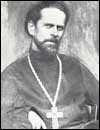
Saint John Maximovich(Met.Of Tobolsk)
Divine Providence
There is nothing random in the world
What
is Providence? It is one of the basic characteristics of God – to see
all that is going on, was going on, and will be going on in the future
as though it is the present, and to have omnipotent concern for
safeguarding all creation and wisely managing all its manifestations.
St. John Damascene describes it thus: “Providence is Divine will which
maintains everything and wisely rules over everything.”
If
we examine any kind of events and manifestations without looking into
their causes and consequences, then many things may seem random to us.
If, however, we look at them from a true point of view, i.e. if we judge
the things happening in the world from the viewpoint of Divine
intelligence, then we will see that there is nothing in the world that
occurs randomly, that occurs without the will and the Providence of God.
God’s mind is infinite and encompasses everything that we can fathom.
The Almighty God penetrates and sees all places in a single moment: the
height of the heavens, and the width of the earth, the depth of the sea
and the unfathomable abyss.
In all matters of Divine rule His
Providence and His care shine forth wondrously, not only directing all
creatures by dint of His might, but being inherent in them and essential
to them. We, being blind, think that many things in the world happen
blindly by chance, whereas everything without exception occurs according
to God’s pre-eternal counsel, according to His will and Providence.
The
blessed Augustine justly said: “Everything that we, without
understanding the matter, believe to occur randomly, chaotically, and
without God’s direction, does, on the contrary, take place according to
God’s will.” Let us explain this by means of an example: a master sends
two of his servants to the same place, but along different routes and
without telling either of them of the other. Their meeting at that place
is accidental as far as the servants are concerned, for they were not
expecting to meet each other, but is not accidental in regard to the
master. In like manner a beggar finds a hidden trove (buried treasure or
money) accidentally, but for God, Who wished the treasure to be buried
there for the beggar to find it and become enriched, this is not an
accidental occurrence, but God’s fatherly Providence, providing for the
poor man. For God there are no accidental occurrences.
Often we
are deceived in calling accidental certain events in which God’s supreme
Wisdom and Providence are revealed. It was not by chance that robbers
out of fear threw the body of a person they had killed into the tomb of
the prophet Elisha, where the dead man, upon touching Elisha’s bones,
immediately came alive. It was not by chance that Moses was placed in a
tar-covered basket and sent down the river, where the Pharaoh’s daughter
found him and adopted him. It was not by chance that the iniquitous
Israeli King Ahab was struck by an arrow that flew in between the seams
of his armor. Truly that arrow was directed by the hand of God, just as
was the one which struck Julian the Apostate; only for the soldier who
let fly the arrow was it accidental. It was not by chance that swallows
flew into the home of Tobit and blinded the righteous man. This happened
at God’s command, in order to hold Tobit up as an example to succeeding
generations, as we learn from the Angel who accompanied his son Tobias.
Nothing happens by chance. It was not by chance that Caesar Augustus
ordered the census to be taken in the year of Christ’s Nativity. It was
not by chance that Christ met with the Samaritan woman at the well in
Sychar and spoke with her. All this was foreseen and written down in the
books of Divine Providence before the beginning of time.
Often
God, in His wise concern for us, leads us along barely passable paths of
life, but He knows well the path that will bring us to the celestial
paradisiacal gardens. Why should we utter complaints against the wisest
and most reliable Guide in our life? Each one of us is accompanied by
God’s Providence along our path of life, from the day of our birth to
the day of our departure for eternal life, as long as we remain loyal to
God’s direction, indicated by our Saviour in His holy Gospel.
Speaking
of God’s Providence, it is impossible not to recall the story of the
Israeli King Saul, who, being sent by his father to find their lost
donkeys, found himself a kingdom. He was anointed by the prophet Samuel,
to whom God revealed that Saul was the one who should be anointed to
rule over the Jewish people. Everything happened according to God’s
unfathomable command, as though in the normal course of events: Saul
found both the donkeys and a kingdom, of which he had had no thought.
How different are God’s fates from human intentions: Saul had no thought
of a royal scepter, but by God’s will was placed upon a throne. Thus,
it was not by chance that the donkeys became lost, not by chance that
Saul was sent to find them, not by chance that for a long time he was
unable to find them, and not by chance did he go to the seer Samuel to
learn of their whereabouts: all of this took place in accordance with
God’s Providence, in order to enthrone Saul as king of Israel.
At
the same time the following question arises of its own accord: why did
God wish to anoint Saul to the kingdom, if He knew in advance that the
latter would subsequently fall into iniquity and end his life
wretchedly?
Instead of a direct answer I will offer you my own
questions: why did God create His angels in grace, knowing in advance
that some of them would offer resistance to God and would be eternally
rejected by Him for their sin? Why did God settle Adam in Paradise,
knowing that Adam would not live in Paradise for long, but would be
expelled from it? Why did Christ add Judas Iscariot to the circle of the
apostles, knowing in advance that the latter would become a traitor to
Him? What is the reason for such changes in God’s determinations?
The
blessed Jerome responds to such questions thusly: “Would you like to
learn the reason for such changes? Here it is: God does not judge future
deeds, but present ones, and does not condemn anyone by His
foreknowledge, although He knows that a good man may subsequently change
into an evil one; at the same time, by His mercy he places man in the
situation which he deserves at the present time, and thus gives him
strength, in the case of a fall, to return to the true path by means of
repentance. Adam did not sin because God foresaw his sin, but the reason
God foresaw it was because Adam was to sin on the basis of his free
will.”
St. Ambrose says the same: “Adam did not sin because he
received the commandment, nor did Judas sin because he was chosen to be
an apostle, for God did not lay upon them the need: for one to
transgress the commandment and for the other to become a traitor. Both
of them, had they faithfully held on to their responsibilities, could
have abstained from sin. Those of whom God knows that they will
subsequently lead a virtuous life, are often evil in the beginning,
while those of whom He knows that they will sin, are often initially
good. You are presently standing, but beware lest you fall. The holy
Apostle Peter fell – and you should be careful; Judas fell, in order to
deter you from falling.”
No effort on our part can protect us
without God’s help, but by the same token, God’s help without man’s wish
(will) will not bring any benefit either, as we see in the examples of
Peter and Judas. We should avoid one-sidedness: we should not remain
indolent, placing all care upon God, but equally we should not believe
that by dint of our own effort, without God’s help or will, we can do
good. For God Himself does not do everything, in order not to leave us
in idleness, but equally does not allow us to do everything, in order to
protect us from pride and vanity. God leads us away from everything
that may harm us, but He urges us towards everything that is beneficial
for us and helps us attain it.
God’s Providence is revealed with
the greatest wisdom: usually not every transgression is punished right
away, nor, on the other hand, is it left without any punishment at all.
If God did not subject evildoing to punishment, many people would think
that there is no Providence. Yet if punishment followed immediately upon
the transgression, in that case they would think that there are neither
rewards, nor punishment after death. For this reason God, by punishing
only some, thus reveals His Providence; and when He does not punish
others directly after their transgression, He then threatens them with
punishment after death in the eternal life, if they do not repent in
this one.
God turns all earthly misfortunes to our benefit and
for our good; He allows actual sins in order to attain the most supreme,
unfathomable, and mysterious goals of His Divine rule. For both the
doing of good deeds and the tolerance of evildoing is a quality
belonging exclusively to Divine Providence. Truly God would never have
allowed evil, if He were not powerful enough and good enough to produce
good consequences from every evil deed. Tell me in conscience: when did a
greater or viler evil appear in the world than Adam’s transgression and
the killing of Christ the Saviour, the new Adam? – However, the
original sin brought God from heaven down to earth, to take upon Himself
the human body, while Christ’s death opened up the heavens to us and
gave us back all that we had lost through Adam. The supreme God is also
the wisest craftsman, turning all evil actions into a reason for
creating the best consequences, just as gold is produced from an
amorphous lump. The Magdalene’s sins served as cause for the
rectification of many; Peter’s fall served as an example of genuine
repentance for a countless multitude of people; and Thomas’s disbelief
reassured many of the truth of Christ’s resurrection. God did not sow
sins, yet reaps from them a rich harvest of virtues. Truly God distills
honey out of rock and oil out of granite, when out of the greatest
iniquities He produces the most beneficial consequences.
In a
similar manner God’s Providence is vigilant over us, and keeps vigil
indefatigably, so that even our most minute discomforts do not go
unnoticed. Consequently each one of us, whenever we are subjected to
physical discomfort, should reason thusly: this illness or other
misfortune, whether it came as a result of my carelessness, or through
human malice, or from some other cause, – has not in any case occurred
without God’s Providence, which has determined it in accordance with my
strength, so that its inception and its weight (weakening or
intensification) depend on God. The method of treating and healing it
likewise depends on God’s Providence, which instructs the physician and
indicates the means of treatment, or counteracts it, for all good and
bad things, life and death, poverty and wealth, – all come from the
Lord. Similarly, in all things that befall us, we must reason that they
have been foreseen and allowed by God. If an enemy maligns or curses you
– know that all his abuses and words spoken in malice have been placed
from eternity upon the scales of God’s Providence: he will say only as
much as has been allowed him and not a word more. Why are you opposing
him and getting angry in vain? In like manner look upon all your other
misfortunes, whose provenance, number, weight, duration, and end have
all been foreseen by God. Therefore, subject yourself to God’s
Providence, saying: may Thy will be done, my God! All of this has
occurred by Thy Providence and tolerance. And since Thou hast allowed
this, I would be an iniquitous sinner if I were to rise against Thee in
indignation. Thus I remain in obedience to Thy holy will, my God, and
gratefully accept all that Thou sendest me, and will endure everything
patiently.
The blessed Augustine says: “The sea of life is
turbulent, and Thou, Lord, seest evildoers flourishing and good men
being oppressed: this raises a tempest within the heart. O Lord God!
Does this constitute Thy truth, that evildoers prosper while good men
suffer? – And God replies to you: is such your faith? Is this what I had
promised you (i.e. a thriving state)? And is this why you are called a
Christian, in order to delight in worldly successes?” Let us humble
ourselves before God, and let us soothe our hearts with faith in God’s
Providence whenever we see the unrighteous dominating, the righteous
being persecuted, righteousness being eradicated, and truth being
destroyed. None of this would be happening if the Lord did not allow it,
and in truth, He would not allow it, if He did not have sufficient
reason to believe that it was better to allow than to forbid. You may
say that such tolerance gives rise to a multitude of tribulations and
the greatest unrest. One may feel sorry for the situation, but within
the bounds of reason, for there were justified reasons for God to wish
it so, since out of the greatest evil God may produce the most wondrous
good, just as easily as slipping a sword out of its sheath.
Do
not be surprised, for God’s judgment is mysterious and unfathomable: at
Christ’s second coming, at the dread day of judgment, the entire life of
every person will appear as in a mirror; also every reason for which
God’s Providence produced one or another event, and why, will be totally
clarified: for all kingdoms, cities, families, and each individual.
Everything will be revealed. It will be revealed how merciful was the
Lord to sinners, and each one of them will remain mute; and also the
extent to which the image of God’s rule of the world accorded with His
glory and truth will also be revealed, and how right and beneficial it
had been for all.
Let us not forget that out of every evil God
creates some good. What was more sorrowful than the fall of Adam and Eve
into sin, together with all mankind? However, God has so reconstituted
them, that the current state of a Christian is higher than was Adam’s
state in paradise. Christ’s death on the cross was a stumbling block for
the Jews and foolishness for the Greeks; however, it became the
salvation of the entire world, and for all those who were called – an
honor, and glory, and attainment of an eternal life of rapture (1 Cor.
1:23).
God’s solicitude for our needs
God
is the most solicitous caretaker. In His hands He holds all of life’s
great and wealthy resources, and only from Him should we ask for them in
fervent prayer. The desert-dweller Mark used to say: Whoever has no
hope of receiving temporary necessities from God, would have even less
hope of receiving from Him that which leads into eternal life. But if
God has given us a body, will He not clothe it? Is not life (the soul)
superior to victuals and the body to clothes? Just as He granted us life
(without any merit on our part, when we did not even yet exist), so
undoubtedly will He give us all that is needful for preserving life and
nourishing the body. Even more so will He not deny us this, since He
Himself, in His supreme goodness, has wished to grant us existence and
life. And if He freely and willingly gave us what is most important for
us, then He can give, and wishes to give, and always sends us the less
important things too. But He will send them on condition that we do not
remain idle: for He has created us and placed us on earth for us to
cultivate it and maintain it in order, and not for idleness, and for us
to place our hope in Him alone, the All-powerful and All-generous One,
and not in ourselves.
Christ Himself teaches us, saying: “Behold
the fowls of the air: for they sow not, neither do they reap, nor gather
into barns; yet your Heavenly Father feedeth them” (Matt. 6:26). The
same Heavenly Teacher goes on to say: “Are not two sparrows sold for a
farthing? And not one of them shall fall on the ground without your
Father’s will. For the very hairs of your head are all numbered. Fear ye
not therefore, ye are of more value than many sparrows” (Matt. 10:29).
This first argument against our lack of faith is presented to us in the
form of living creatures who feed themselves without any care, – so that
at least from their example we would learn to recognize the omnipotence
of God’s Providence – our sole source of tranquility and inner peace.
The
second argument comes in the form of wild flowers. Having pointed out
God’s Providence in regard to sparrows, the Lord Christ then says:
“Consider the lilies of the field, how they grow; they toil not, neither
do they spin, and yet I say unto you, that even Solomon in all his
glory was not arrayed like one of these” (Matt. 6:28-29). And from this
Christ draws the following conclusion: “Wherefore, if God so clothe the
grass of the field, which today is, and tomorrow is cast into the oven,
shall He not much more clothe you, O ye of little faith?” (6:30). To
this our Saviour adds a third point on the futility of our self-concern,
saying: “Which of you by taking thought can add one cubit unto his
stature?” (6:27). Every self-concern of ours that is not joined with
hope in God is futile and vain, of which the Lord goes on to say: “If ye
then be not able to do that thing which is least, why take ye thought
for the rest?” (Luke 12:26). If God does not bless it, our entire effort
is in vain, idle, useless. In your every affair and activity place all
your hopes in God, and He (without any effort on your part) will arrange
everything for the best by His ineffable mercy.
Thus, if the
Lord God concerns Himself with satisfying the basic needs of all
creatures in general, for He created both the great and the small and
takes care of all equally, why are there so many beggars and deprived
people everywhere? Brethren, God’s Providence in regard to poor people
is truly wondrous. St. John Chrysostom has rightly said of this, that
not only the poor have need of the rich, but the rich have even greater
need of the poor. Everything that was and is good and God-pleasing in
the world has been created through the effort and activity of poor but
hard-working and God-fearing people. Being deprived of comfort and
money, they worked diligently and did not forget God, but prayed to
their Creator and Caretaker, Who was a benefactor to them even in the
midst of their need. Many of God’s saints, living in extreme poverty,
loved it much more than wealth and were always the recipients of God’s
greatest Providence.
In truth, God is so solicitous of people who
have entrusted themselves to Him wholeheartedly, that when they are
deprived of human help, He sends them His divine help. Although we often
receive the same grace from God in our needs and deprivations, there is
still much lack of faith among many of us, who fear to lose sufficient
and requisite necessities for maintaining our life here. O, how
faint-hearted we are! Our Heavenly Father knows of all our needs: do we
think that God’s mercy has now dwindled in comparison with former times?
For
60 years St. Paul, the first desert-dweller, was brought half-a-loaf of
bread each day by a raven; however, when the saint was visited by St.
Anthony the Great, the raven brought a whole loaf. St. John the
desert-dweller did not see any people for 14 years, and all this while
he subsisted on a doe’s milk. Many hermits had food and clothes from fig
trees. In 603 A.D. Judoc, son of the Breton king, renounced his throne,
became a monastic, and later became a hermit. On an island surrounded
by water he built a church and founded a monastery. He was so generous
to the poor that the monastery once remained with only a single loaf of
bread for the working brothers, and even that loaf he ordered to be cut
into four parts and the first part given to a beggar. This beggar,
changing his clothes, came up four times on the same day to ask for
charity and thus received all four pieces of the bread, so that there
was nothing left for feeding the brothers. Consequently one of them
began to grumble and berate his abbot for latter’s extreme generosity.
Judoc then comforted him and told him to wait for help from above. A few
hours later, four ships sailed up to the monastery, laden with
foodstuffs which abundantly fed the starving brothers. The blessed
Augustine rightly said: “Do you think that the one who feeds Christ
(i.e. the poor) will not himself be fed by Christ?”
The abbot of a
certain monastery sent two brothers out on business affairs. When
evening came, the two travelers, exhausted by their labors, being hungry
and depressed, began to bemoan the fact that they would soon arrive at a
poor town, and not knowing anyone there, they would find no respite or
sustenance. A certain stranger met them on the way and asked them about
their depressed state, and when the monks revealed their sorrow to him,
he said: “You have left everything for the sake of God, placing your
entire hope in Him, and now you sorrow as though left without any hope!
God feeds the cattle – do you think He will let His sons perish from
hunger?” Saying thus, the stranger became invisible. When the monks
entered the town and prayed in the church, the mayor himself invited
them over for supper, they went to his house, and he fed them
abundantly. However, such examples do not eradicate our lack of faith;
despite everything that God sends us, we fear privation, and if we do
not have everything in overabundance, we are greatly saddened.
Here
is an example of our lack of belief: it is said about a certain beggar,
that having looked into his basket and seeing it full of loaves of
bread gathered from many benefactors, he then declared: now I feel
myself well provided for. We ourselves are very like this beggar: only
then do we feel assured in our hope in God, when our storerooms are full
of all kinds of goods that will last us for many years.
St.
John, Patriarch of Alexandria, was not like that at all. Having suffered
enormous losses after a tempest destroyed thirteen church ships loaded
with grain, each ship carrying ten thousand measures of grain, he placed
all his hope in God and in Him alone found his greatest comfort. At
that time practically half of Alexandria’s citizens suffered similar
losses and, moreover, all the seamen and the passengers who were saved
from the storm gathered in Alexandria as in a safe haven. To all of them
St. John immediately sent a letter of consolation, in which he wrote
words of comfort to all: “The Lord gave, and the Lord took away; as the
Lord wished, so it came about; blessed be the name of the Lord! Be
patient, children, and do not fear anything!” The next day many of the
most prominent citizens gathered at St. John’s residence to comfort him
in his losses. But he, however, took all the blame upon himself, saying:
“God preserved me from a great sin: if this had not happened, I would
have prided myself on handing out so much charity to the poor, and I
would have had a high opinion of my own generosity; and for this reason
the loving Father justly punished the vain son to prevent his growing
pride. God mercifully instructs us by allowing us to suffer some
traumas, in order for us to come to our senses and quickly turn to Him.
But He is the very same God Who existed in Job’s time, just as
omnipotent and just as merciful, and He will not abandon us.” With these
words the patriarch comforted those who had come to comfort him. And,
in truth, very soon the Lord God replenished St. John’s losses a
hundredfold, while the latter continued to give out the most abundant
charity to the poor. To entertain doubt or disbelief in such cases is
the same as to assert that God is either miserly or forgetful; but such
opinions belong to the iniquitous and the godless; they should be
totally rejected by us.
St. Amateus the desert-dweller was in his
own time like a mirror for all those who understand God’s Providence
incorrectly, reject it, or blaspheme against it. After having labored in
a monastery for thirty years, Amateus went off into the desert, where
he lived on a chosen rock in great abstinence. Every three days one of
the monastic brothers brought him a loaf of bread and a cup of water –
this was his only sustenance. Such abstinence was not pleasing to the
devil: and so a raven flew up, overturned the cup of water with his
feet, snatched up the loaf of bread in his beak and flew away. Thus the
monastic was deprived of 3 days’ worth of sustenance. How did the
righteous man take this occurrence? Perhaps he swore at the raven, or
uttered blasphemous words at God’s Providence, or began to curse the
demon’s wiles? Not at all! It is we who act thusly in such cases, while
he, lifting his hands and his mind to heaven, declared: “I thank Thee,
my Lord God, that by Thy holy will Thou wast pleased to retain me in a
more prolonged period of fasting. I know that this will be of greater
advantage to me in the future, for nothing in the world happens without
Thy Providence, and not even a single leaf will fall from the tree
without it.” Yet we, sinners, think that the destruction of homes by
fire, the drowning of ships, the loss of property, and all personal
affronts take place while God’s Providence sleeps or does not keep
watch, – in other words, we do not believe in God’s Providence. Even the
pagans knew better than we do, for the intelligent ones among them
reasoned that everything in the world occurs not by the will of man, nor
by blind chance. In fact, everything comes from God, according to His
just Providence: so why are we full of indignation and often even
protest against it?
Countless examples and images bring us to a
realization of the omnipotence of God’s Providence. Nevertheless, we
have so little hope in this Providence! If our vessels, caskets, chests,
and granaries are not overflowing with all kinds of goods, then our
spirit fails; but when our bags are full, when our pockets are bulging
with money, then we have hope. O, how blind we are! True hope in God is
when we, finding ourselves in great penury, deprivation, and poverty, do
not fall into despair, but patiently overcome all our tribulations, for
the more suffering we endure, the greater glory and crowns are prepared
for us. The ancients had a memorable saying: “If only we did what we
should, then God would do for us what we want.” Blessed Jerome,
explaining this principle, said: “May man be what he is destined to be,
and immediately the One Who created everything will send him
everything.” Blessed Augustine rightly exclaims: “O, my God! You have so
much concern for a single person, as though You had to take care of
only him alone: as much for all, as for each one.” And St. Gregory says:
“God takes care of each person individually as much as of everyone
together, and concerns Himself over everyone as though over a single
person.” Thus God’s Providence takes care of thee, brother, just as
though He had no other concerns. The great number of people in God’s
care neither awes, nor burdens God’s Providence; for Him the care of a
single person is the same as the care of countless millions of people.
Just as before God took care of Noah and his family, or of the single
Adam in paradise, so now God’s Providence takes equal care of all.
All misfortunes and disasters take place by the will of God
Everything
in the world, even seemingly evil things (except for sin), occurs by
the will of God. Theologians explain it in the following manner. The
origin of evil is sin. Each sin contains (1) the cause that led to it
and (2) its inevitable consequence – correction through punishment. The
cause of sin is the deceit and willfulness of the vain sinner, while the
punishments (both correction and execution), being the bitter
consequences of their cause, occur by the will of God, and are not the
cause of sin, but represent its correction or destruction. Thus, if from
the concept of sin we eliminate its cause – deceit and willfulness,
then there will not be a single one of its bitter or evil consequences
that does not occur by the will of God or is displeasing to Him. Just
like the sinful misfortunes of an individual, so the earthly, so-called
natural, disasters, such as: famine, drought, plagues, etc., which often
bear no direct relation to individual sin, occur by the will of God.
Therefore, all human disasters and misfortunes positively occur by the
will of God for the sake of achieving the righteous goals of God’s
Providence; sin alone is contrary to God (just as evil is contrary to
good, or deceit is contrary to truth), but is allowed by God in order
not to violate the freedom of man’s will.
Many are deceived,
believing in their ignorance that only the evil occurring from natural
causes, to wit: floods, earthquakes, crop failures, disastrous
atmospheric manifestations, epidemics, unexpected death, etc., – occur
by the will of God, for often such misfortunes have no direct relation
to sins. But evil deeds, occurring from unlawful human designs, from
falsehood, such as: offensive words, mockery, insult, deceit,
counterfeiting, abductions, theft, murder, etc. – occur, in the view of
these people, independently of the will of God and His Providence, but
exclusively due to human malice and the depraved human will, which of
its own accord causes all manner of evil for its neighbors. However,
such views are unworthy of a Christian.
The subject of which we
now speak can be best explained by means of an example. A certain
person, intending to deprive his neighbor of all of latter’s property,
and wishing to fulfill his evil intention secretly, creeps unnoticed
into the neighbor’s house, places lighted fuel under the building, and
leaves the house just as surreptitiously. Soon afterwards a fire starts;
the flames grow, the wind spreads the fire to other buildings; people
run from all sides to extinguish the flames and protect adjacent
buildings from the fire. The arsonist also runs up together with the
other people, as though to put out the fire, but he has a different
intent: under cover of the fire alarm, he takes valuables out of the
burning building as though to save them, but in reality he steals them
for himself and hides them. Although all these actions of the arsonist
represent the direct cause of the owner’s bankruptcy and loss of
property, but examined by themselves, without any relation to the
arsonist’s evil intent, they appear no different from so-called natural
disasters. They stem from God: just as God allows thunder to kill a man,
or lighting to ignite a house or a growing tree, a hurricane to sweep
away a field of haystacks, so does He control the arsonist: the latter
can neither enter the house, nor go out of it, nor ignite the fire
without God’s allowance. Moreover, the actions themselves are
indifferent – neither evil, nor good, because they can lead to evil just
as equally as to good, for God could have prevented their being
committed if He so wished. However, the Lord did not impede the
committal of the evil intent, but allowed it according to His just
judgment. The reasons for such allowance will be explained below.
If
God is not and cannot be the source of our moral fall (which alone is
genuine evil), then it is quite true that all misfortunes occurring from
secondary causes, be they rational or irrational, and occurring no
matter how, all occur by the will of God, are sent by His mighty hand,
at His discretion, and by His Providence. Often God’s judgment uses
iniquitous kings and evil princes as His tools for teaching patience to
the righteous and chastising the unrighteous for their crimes and
misdeeds. Here is an example: through the prophet Isaiah God threatens
the depraved Israeli people with destruction and with the devastation of
Palestine through the Assyrians, clearly demonstrating that it is not
the will of the Assyrian king, but rather His holy will that is being
fulfilled by the Assyrians. God punishes the Israelis with the divine
instrument of His wrath and indignation at their iniquities and,
consequently, attributes this punishment to Himself. We should regard in
equal manner all the other righteous chastisements that are allowed by
God for our misdeeds. During the siege of Jerusalem, the Roman Emperor
Titus, personally walking around the walls and seeing the ditches filled
with corpses, sighed heavily, and raising his eyes and hands to heaven,
cried out: “Merciful God! This is not my doing!”
We are asked:
if it is true that all misfortunes are sent to us by the will of God,
then are we not trying to withstand His holy will in vain? Is it not
useless for us to take medicines when we are ill? Why should we lead out
armed hosts against an attacking enemy? Here is my reply to the
inquirers: it is clear that destructive wars and other woes happen not
without God’s will, but it does not follow that we should not arm
ourselves against the enemy or not try to treat our illnesses, regarding
such actions as opposition to the will of God. For example, if we fall
prey to some illness, there is no doubt that such was God’s will.
However, the sick person does not know God’s intention in regard to the
duration of his illness, and for this reason he is not forbidden to use
various medicinal means to return to health or at least to ease the
illness. And only if the continuous use of many medications does not
result in a cure, the sick person may be sure that such is God’s will
for him to endure a protracted illness. Similarly, if a fire starts up
and cannot be extinguished by the combined efforts of the people and the
fire brigade, then it is clear that God’s judgment has decided not only
to have the building burned, but to have it burn down completely, in
order to test the patience of God’s friends or to punish His enemies. We
should look upon all other events in our life in a similar manner.
“Look,
beloved brethren, – instructs us the blessed Augustine, – never say:
this has been done to me by the devil, or this misfortune befell me
through the perfidious enemy, but attribute to God all that happens to
you, both good and bad, knowing that the devil cannot do anything to you
if the Mighty God, Who has power over life and death, does not allow
him to do something to you for your chastisement or rectification. God
allows punishment for the iniquitous, who consciously act against their
conscience, openly reject truth, etc., while rectification is allowed
for sons who have sinned – ‘for the Lord scourgeth every son whom He
receiveth’ (Hebrews 12:6). And you, too, should not expect to remain
without punishment, unless you wish to be deprived of the heavenly
inheritance.”
When King David was escaping from his insubordinate
son Absalom, who had rebelled against him, a certain Semeus from the
clan of King Saul ran out in front of David and began reviling Him most
cruelly for Saul’s death. Seeing such vilification of David, his
military commanders wanted to kill Semeus, but the king, who perceived
God’s will in this revilement of himself, said to his attendants: “Leave
him be, let him abuse me, for the Lord had commanded him to revile
David.” Semeus naturally sinned grievously in cursing David, because
although God used him as a tool of revilement, He was not the cause of
Semeus’ vile will; He only wisely used it to punish David. Thus each one
of us should also look upon the attacks and curses of evil people upon
us in a manner like unto David, for the merciful God uses their
willfulness to either instruct the innocent or chastise the guilty.
In
Constantinople the Greek Queen Irene, who had been dethroned by a
despicable slave, turned to God with the following words: “I thank Thee,
Lord, that Thou hast put me, Thy unworthy servant, on the royal throne;
but since Thou hast also allowed me to be deprived of my throne, I
believe it to be in consequence of my sins; may Thy will be done in me!
In all bad and good things may the name of the Lord be blessed.” It is
true that no one can harm us, except in that in which we harm ourselves.
For this reason the blessed Augustine rightly said: “Believe in the
Lord God without any reservation and give yourself over to Him
completely: then He will not reject you and will not allow any harm to
come to you.” Everyone should know this precept and firmly keep the
following in mind: nothing harmful can happen to us without the will or
allowance of God: neither the devil, nor any individual can harm us if
God does not allow it. We should firmly believe that even though the
direst misfortunes befall us by God’s command, they are sent from the
most merciful Father for our benefit, for our instruction or
rectification, for the sake of our misdeeds and sins. Consequently, no
one else, except we ourselves, can harm us.
God allows misfortunes and sins for the good of man
Since
neither the devil, nor any person can do evil to another without God’s
allowance of it, let us examine the following: what God allows, how He
allows it, and for what reason does this allowance come about?
We
must differentiate between two kinds of allowed evils. The first kind
of evil, comprising various misfortunes, burdens, illnesses, insults or
dishonor (impoverishment, imprisonment, banishment, exile), death – all
of this cannot even be called evil in the strict sense of the word, but
only a bitter medicine sent to us by God for our spiritual healing. The
second kind of evil, in the exact meaning of the word, is represented by
our sins, our transgression of God’s commandments. God allows the first
kind of evil in accordance with His wishes, or to punish the wicked, or
as a means of rectification for faithful sons and daughters. Concerning
the second kind of evil, i.e. sins, one cannot say that God wishes them
to be committed, but only tolerates them. Everything that really exists
in the world, is present in it by the wish and word of God, by Whose
will “all things were made, and without Him was not any thing made that
was made” (John 1:3).
Sin, however, is not something real, but
only an illusory antithesis to genuine being. Sin exists as a result of
the imperfection, deceit, and guile of the rational and free, but
insubordinate beings created by God; for this reason sin originally
occurred and continues to occur against the will of God and not from
God, yet by His tolerance. The reason for the tolerance of sin is hidden
for the time being within the mystery of God’s absolute and perfect
rule over the world, or His Providence. God has absolute knowledge of
the future, and He can easily not allow the occurrence of the sinning
that is abominable to Him, but He tolerates it in order to produce good
out of evil and justice out of injustice for the sake of teaching and
rectifying people, so that they would see the consequences of sin both
for the sinner and for those around him, and for society. This is what
distinguishes God’s tolerance from human tolerance, which cannot by
human means avert and curtail evil in its inception, even though the
committing of it would be undesirable. On the contrary, in God we see
both His power to prevent or curtail the execution of an evil intent,
and at the same time we see His will, allowing one or another evil to be
committed. This raises the following question: why does God wish to
tolerate the committing of sin, or what is God’s motivation in allowing
people to sin?
God’s infinite goodness would never have allowed
such iniquities to exist on earth, were it not able to produce the
greatest good from them and turn into salvation all that had been done
with evil intent. God allowed the escalation of brotherly envy against
the innocent Joseph, but allowed it for what good reason? – was it not
to deliver from a death from hunger not only his parents, brothers, and
relatives, but all of Egypt? God allowed the iniquitous Saul to
continuously offend the meek David, but was it not for the benefit of
David himself, whose descendant was Christ our Saviour? God allowed the
unjustly accused prophet Daniel to be thrown into a den with frenzied
lions, but for what? – in order to raise him and his friends to the
pinnacle of glory and grandeur. But why should I speak of numerous
instances in Old Testament history, when by God’s tolerance the envious
high priests, Pharisees, and Jewish elders presented for crucifixion the
Only-begotten Son of God, Jesus Christ, and this tolerance turned into
salvation for all mankind. Thus, out of each instance of tolerance arise
and become revealed to us the greatest riches of God’s glory and His
benevolence to each individual and all mankind. Each instance reveals to
us God’s goodness and mercy, His munificence, omnipotence, and majesty,
His foresight and Providence. In each instance His supreme wisdom and
truth enlighten us in ways unknown to us, and thus encourage many
attentive people to return to the path of virtue and to multiply their
laborious yet glorious spiritual feats.
O, how wondrously and
majestically does Divine Providence reveal itself in its daily
tolerance! It is not difficult to produce good from good, but to turn
evil into good is quite amazing. There is a saying that “anyone can be a
helmsman on a calm sea.” It is not such a great matter to direct the
ship towards harbor when the wind is favorable, the ship is strong, the
sea is calm, the sailors know their business, and the harbor is already
in view. But it is quite a different matter when a storm stirs up the
sea, the ship is damaged, the waves pour noisily onto the deck and
inside the ship, or when the night is dark and nothing can be seen,
pirates surround the ship, the crew is small and poorly armed, and in
spite of all, the captain has the ship under such masterful command,
that he escapes danger without any damage – that is truly amazing, and
in this case the actions of the ship’s captain have shown his wisdom and
his ability to steer the ship. We see a similar situation in God’s rule
over the world: some things which are allowed by God’s will and which
seem to us not to lead to any good, God brings to the best possible end
through His indescribable wisdom and truth. By tolerating illicit
actions and harmful adventures, God sometimes turns malefactors into His
honorable friends. By God’s Providence, which directs everything
towards the best possible end, wicked intents against a person are often
turned to the latter’s advantage; the attacks and insults made against
someone often increase his inner strength. The evildoers’ greatest
iniquities confirm many people in righteousness and virtue, and save
them from perdition. Many people already seem to be completely immersed
in the abyss of perdition, yet in reality it turns out that this is
their way to salvation.
For Joseph his fetters and imprisonment
served as a precursor to honors and the greatest glory; his brothers’
envy brought him greater benefit than the goodwill of the entire world;
Saul’s malice procured for David the royal crown; the lions’ den led
Daniel to greater glory and honor than that of earthly kings; from the
cross Christ, together with the repentant thief, went straight into
heaven, while from the Mount of Olives He ascended into heaven and sat
on the right hand of God the Father.
In God’s allowance both good
and evil wills work for God, and no matter their original intent, in
the final analysis everything works towards the attainment of the best
possible goals.
In truth, the saints ascribed everything that
came upon them in life, both pleasant and unpleasant, to the will and
action of God, because they did not pay attention to the sins of others,
but evaluated all human actions as either a gift from God or as having
been allowed by God for their own sins. The saints reasoned thusly: the
all-benevolent God would never have allowed anything evil, if He did not
know that from this evil He would produce a multitude of great
blessings.
The blessed Augustine expressed the same idea: “God
acknowledged it more profitable to turn evil into good than not to allow
it at all, because, being all-benevolent, He would never have allowed
evil in His acts, were He not so omnipotent and good as to be able to
turn evil into a blessing.” And again, Theophylus rightly says: “God
incomprehensibly interferes in our errors and our sins not in order to
participate in them, but, despising them and correcting them, God
produces much good out of evil, just as though He were turning fire into
water.” In another homily he says: “All those who insult us in some
manner or other combine two persons within themselves, one acting
consciously, the other unconsciously. Firstly, each such person, out of
malice towards us, wishes to act against us with hostility, with the
intent to insult us, deprive us of our property, etc., although he is
not always necessarily successful in his intent; but in case of success,
through God’s allowance he unconsciously becomes a second person who is
now acting as a tool in God’s hands, punishing or rectifying our
conduct, and thus he unconsciously serves God.” Such unconscious
servants of God were the following historically famous people:
Nebuchadnezzar, Attila, leader of the Huns, Totila, king of the Italian
Ostrogoths, Tamerlan, and other scourges of God.
Dear brother
Christian, allow me to ask you who so often rends heaven with your
sorrowful complaints. Tell me: what insults you the most – the will and
intent of the offender, or only his power, his ability to realize the
insult, or both one and the other? You answer: “I am offended by both
the one and the other.” In response to this I will tell you that neither
offensive will, nor the execution of it (power) can insult you:
offensive intent (will) is nothing without the power and does not harm
you in any way, while the execution of the intent depends on the
allowance or the will of God, which is holy and just. You know that all
power is from God, – so why do you sorrow and complain about the
offender for having done to you only that which was allowed him by God?
Otherwise, without God’s allowance, he could not have offended you. You
will say: “My adversary has offended me greatly.” – “Tell me – in what
way? – for God is either punishing you for your sins, or teaching you
patience, or multiplying your reward for being an innocent victim, – and
yet you consider yourself offended?” – “I hate this malicious person
and his evil will,” – you say. – “But you always pay attention to other
people’s actions, while I advise you to rather raise your eyes towards
God and your conscience. Human will, even though it is evil and wicked,
what could it do to you? in what lies its success? You do not regret the
fact that your adversary wished to harm you as much as the fact that he
did harm you. From whence did this come and how could he harm you? Was
it not by the power and will of God? And if it was by the power and will
of God, then it was always in accordance with just and righteous
Providence. Consequently, either you keep quiet or turn your complaints
toward Divine Providence, – and at this point bear firmly in mind that
God would never allow the evil will of another to harm you in any way
that would not be to your benefit, unless you harm yourself.”
And
who can harm us if we engage only in good things? Blessed Augustine has
put it very well: “Do not fear the enemy: he is able to harm you only
to the extent of the power given to him by God. Fear rather the One Who
is able to do whatever He wants, and Who never does anything unjust, but
whatever He does is always just; and should anything, in our opinion,
seem unjust, if it undoubtedly occurred by the will of God, we must
believe that it is just and true.” You may ask: “If someone killed an
innocent person, is that just or unjust?” – “There is no doubt that it
is unjust and deserves punishment.” – “Then why, – you will ask, – “has
God allowed such injustice?” – “You wish to argue with God before you
have become worthy to ask God: for what reason, O God, hast Thou allowed
this? – I am unable, dear brother, to explain to you God’s intentions
or the reasons for His allowance, because God’s Wisdom is too infinite
for the human mind, but I can only assert that, on the one hand, the
murderer of the innocent man has acted unjustly, and on the other hand,
this murder would not have occurred had God not allowed it for a reason
that is unknown to us, but just. In other words, the murderer committed
an iniquitous act, deserving punishment, but God’s allowance is just and
wise, for a just reason that is concealed from us for the time being.”
In
the same manner blessed Augustine regards the putting to death of
Christ our Saviour. “Judas, that iniquitous betrayer of Christ, – says
Augustine, – and all Christ’s persecutors are all lawless, all
iniquitous, all unjust, all damned; however, the Father did not spare
His Son, but gave Him up (allowed Him to be put to death) for the
salvation of us all.” Such is the mystic reason for God’s allowance of
His Only-begotten Son’s being put to death by malefactors, – a reason
that was incomprehensible at the time. Thus do not be surprised that God
allows evil. He allows it according to His most-just judgment, and
allows it only to a certain measure, number, and weight. There is no
injustice in Him, and you only have to put your entire trust in Him.
There
is only one sure means of calming oneself when being offended: if
someone has insulted or offended you, do not pay attention to the
offender’s malice, but turn to the righteous God Who has allowed your
adversary to insult you, and do not avenge with evil the evil that has
been done to you, for it has been allowed by God for the attainment of
good and just aims, even though they are unknown to you for the time
being. All of God’s saints kept to this custom: they did not try to
analyze who had offended them and for what, but always turned their
hearts to God, humbly acknowledging the justice of God’s allowance; for
this reason they regarded the offenses given them as a boon for
themselves, and their adversaries as benefactors, saying: “here are our
true benefactors, for they do not flatter us; those who praise and
exalt us to our face are flatterers and damage our inner perfection.“”
Thus the saints always inwardly turned to God and in all matters placed
their trust in God’s Providence and expected only good things from God.
On
the other hand, one can see from all of the above that the sin
committed against one’s neighbor by God’s allowance does not yet merit
any mitigation of the sinner’s guilt only because his unlawful action
gave God cause to produce great good out of evil. For the sinner had
only given cause for good, and not of his own accord, but by the grace
of God; the sinner’s intent was still evil and remains evil. Thus even
the good that God produces from the commission of evil does not in any
way mitigate the guilt of the sinner.
The incomprehensibility of God’s judgments
Throughout
the course of our entire life we must often repeat King David’s
utterance: “Thy righteousness is like the great mountains, O Lord; Thy
judgments are a great deep” (Psalm 36:6). This depth is illustrated in
the Bible in the example of the two high-ranking servants of the
Egyptian Pharaoh: the cupbearer and the caterer. Both were servants of
the same king, both came under his displeasure, both were arrested and
imprisoned, and both were remembered by the king during a palace feast;
the Pharaoh could have pardoned them both, if such were the will of God,
or could have condemned them to execution. However, he ordered the
caterer to be hanged, while the cupbearer he returned to favor and his
former position. Such was the will of God; some He removes from His
presence in accordance with His righteous judgment, while others He
covers with great mercy. “And who can search out His mighty deeds? Who
can measure His majesty’s power? And who can fully recount His mercies?”
says the son of Sirach (18:3-4).
Equally mysterious and
unfathomable was God’s will in regard to Nebuchadnezzar, king of
Babylon, and the Pharaoh of Moses’ time. The blessed Augustine has
rightly said of them: “Nebuchadnezzar was punished by God for his
countless iniquities and in this way was brought to salvific and very
beneficial repentance. The Pharaoh, on the contrary, became hardened
even despite God’s scourges, disdained them, and perished in the Red Sea
together with his entire host.” Both of them were pagan kings and both
were punished. Why did they reach such an unequal end? – One of them
comprehended God’s punitive hand, repented, and rectified his conduct;
the other did not submit to the will of God that was announced to him,
remained in his sinful obduracy, – and perished.
Here is another
example of the incomprehensibility of God’s judgment: one of the best
Judean kings was Asa, who did good in the eyes of God and fortified his
kingdom, destroyed the idols in the entire Judean land, and eradicated
idol-worship. However, this glorious king, who for a long time reigned
admirably, lost his initial glory at the end of his reign, having
changed for the worse. King Menaces, on the other hand, being most
wicked and evil throughout his entire life, and having brought the
Jewish people to the very edge of iniquity, recognized the hand of God
in his misfortune, returned to God, repented of his iniquity, and was
granted forgiveness and God’s mercy. O Lord! Thy judgments are truly a
great deep, a deep without measure!
At this point questions such
as “why is this so?” and “how is this so?” are inappropriate. Such
questions arise at the instigation of the evil spirit and have
spiritually destroyed many people. “So, did God truly say: do not eat
the fruit of any tree in the Garden of Eden?” – the most cunning of all
creatures once asked Eve. To this question Eve should have replied thus
to the wicked creature: “We know that God commanded us not to eat only
the fruit of the tree of knowledge of good and evil, but why and for
what purpose He commanded thus – it is not our place to ask Him.” Such
was His holy will, and we must not question the reasons for His willing
thus. “For who hath known the mind of the Lord? Or who hath been His
counselor? Or who hath first given to Him, for Him to recompense again?
For of Him, and through Him, and to Him are all things” (Rom. 11:34-36).
I am sure there will be people who will assert that it is not forbidden
to sometimes ask the reason for one or another commandment. Ask whom?
Do they mean God, Who alone knows everything, knows what is good and
what is only tolerable? If a servant from his master or a subordinate
from his superior demand the reason for such-and-such an order or
directive, then the first will look upon it as an insult to himself,
while the second will regard it as rebellion and insubordination, and
yet you dare to exhibit even greater insolence towards God? God’s
Providence needs no other reason except His holy will.
St.
Athanasius, Archbishop of Alexandria, describes the following event in
the life of St. Anthony the Great: two monks undertook a journey to
visit St. Anthony in his desert. However, traveling through the arid and
hot desert, they became completely exhausted from thirst, and one of
them already died, while the other was on the threshold of death. St.
Anthony was several miles away from them. Sitting on a rock in his
monastery, he hurriedly summoned his two monks and said to them: “Run as
fast as you can to such-and-such a place in the desert, taking vessels
with water with you, for one of the two brothers who were coming to
visit us has already died of thirst, while the other is still breathing,
but is suffering and has become very weak; if you delay, you will not
find the other one alive either: this has been revealed to me by God
while I stood in prayer.” Having received such instructions, the
messengers immediately and willingly went off, and after finding the
travelers, they buried the body of the deceased one, while the other one
they revived with water and fortified with food, and then brought him
back with them to St. Anthony. In describing this event St. Athanasius
wisely remarks that someone may very well ask: “Why did St. Anthony not
send his monks earlier to save the travelers, before one of them died?”
Such a question is quite inappropriate for a Christian, because it was
not St. Anthony’s affair, but God’s judgment: God Himself pronounced a
fair verdict in regard to the dying man and the thirsty living one; and
He likewise revealed to St. Anthony His will concerning the saving of
one of the travelers.
St. Anthony the Great, being in a state of
contemplation, was amazed at God’s hidden and unfathomable mysteries and
humbly called out to God: “O Lord my God! Thou art sometimes pleased to
grant a long life to people who seem useless and immersed in an abyss
of iniquity, and yet sometimes Thou deprivest of life people who are
very beneficial to society” During such reflections Anthony heard a
voice saying: “Be attentive to thine own self. That upon which you are
reflecting is God’s judgment, and it is not your place to analyze or
question it.”
In the year 1117, when the whole of Italy was being
shaken by earthquakes, some of the residents of the city of Milan
assembled at a certain home to discuss public affairs. Suddenly a voice
was heard from outside, calling upon one of the people present in the
house to come out. The person being summoned was unsure of who was
calling and for whom, and thus delayed in going out, waiting for a
repeat call. Unexpectedly a stranger came up to the door and asked that
the person being called come out quickly; no sooner had the latter moved
several paces away from the building than the house fell down and
destroyed all who were within. This begs the question: why was only one
person from all those within the house saved from death, while all the
others perished? The Lord’s judgments are a great deep! Who cannot
clearly see in this event a repetition of ancient miracles? Thus did the
angel of the Lord lead Lot and his children out of Sodom, leaving all
the other inhabitants to become victims of fire. In a similarly
miraculous manner other people are left unharmed amid multitudes who
perish in general catastrophes.
We often see extraordinary
upheavals and changes in the universe, unexpectedly-occurring events,
and of each of them we say: “Let us see how this will end.” Occasionally
we ourselves experience events that amaze us by their unexpectedness,
and then we grumble in vain and say: “I could never foresee or think of
such a thing happening.” We are poor illiterates in the matter of
foreseeing future events! Even in currently occurring events we cannot
always easily understand their true cause, except the one that is
operative in all events and, moreover, is a genuine and undeniable
cause. Such-and-such happened strictly because such was the will or
tolerance of God according to His benevolent Providence. “For My
thoughts are not your thoughts, neither are your ways My ways, – saith
the Lord. – For as the heavens are higher than the earth, so are My ways
higher than your ways, and My thoughts higher than your thoughts”
(Isaiah 55:8-9).
There are many things in our earthly life which
we will never comprehend by means of our intelligence. It is sufficient
for us to know, be convinced, and believe implicitly that God is not
unjust, and that on the last day of judgment there will not be a single
person on trial saying anything to the Lord except the following words:
“Righteous art Thou, O Lord, and upright are Thy judgments” (Psalm
119:137). We must put off gaining complete understanding of the
unfathomable judgments and purposes of God’s most-high wisdom until the
future life!
Thus, let us cease expanding the wings of our
curiosity and judgment of subjects that are above our heads. The waves
of the boundless ocean of the Supreme Mind exceed the quick reasoning of
all wisdom, not only human, but also angelic. And how could we ever
hope to understand the end purposes of God’s profoundest destinies? Who
can comprehend God’s determination in the following: why does God’s
punishment for sin temporarily pass by some people and strike others?
Why are those who are innocent of crime sometimes put on trial, while
the sins of some people fall upon the heads of their children and
descendants? Why do some die in infancy, while others live to a ripe old
age? Why does one person, having sinned only slightly, perish without
repentance, while another, mired for a long time in the bog of iniquity,
finally rectify himself and become worthy of a Christian end? Why does
one person wallow in wealth and luxury, while another does not have a
single morsel of bread or a single penny?
O restless and overly
curious mind! Why should you brood over this? The Lord allowed, the Lord
wished, the Lord created all. We should look upon God’s will as the
ultimate truth, and a willing and tranquil adherence to it as the
ultimate wisdom.