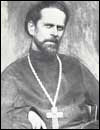
Saint John (Maximovich) of Tobolsk
None of our own attempts and efforts can save us without the help of
God, but neither can God’s help be beneficial to us without our own wish
for it. No other subject was brought up by the Lord to His disciples
so frequently as lack of faith. He warned everyone against lack of
faith not only by His words, but also by the multitude of events which
amazingly proved the power of faith and the powerlessness of mistrust or
doubt in God’s protection and salvation from danger. Lack of faith
comes in different forms: some people have little faith in God because
He does not punish His enemies; others doubt they would be able to
entreat God to grant them their desires, especially when their
conscience bothers them with the thought that God will not forgive them
their sins; still others fear that God will deprive them of all earthly
goods and subsistence. This triple manifestation of lack of faith
estranges many people from God and immerses them in various forms of
perdition.
The source of our lack of faith is our excessive conceit,
i.e. when we think more of ourselves than of God, rely more on our own
powers than on God’s help. What is the reason for God allowing the
destruction of such a great number of people, who are injured or killed
through sorcery? It is not surprising: lack of faith has become so
widespread among the people that it merits punishment. Many do not look
for other doctors except sorcerers (extrasensorists), nor other
pharmaceuticals except deviltry. God justly punishes us by the same
means that we use to sin against Him. As our faith and hope in God
increase, so increase His mercy and benevolence to us. But woe unto us,
that there are so few of us who believe in God with all their heart!
If we analyze human customs and habits, we will see that in all places
and at all times lack of faith becomes prominent and widespread, which
gives rise to empty and false fears. People often fear a shortage of
food supplies; sometimes they fear that they will lack necessary items
during an illness; at times they fall into despair over ever-growing
rumors of war. All of this occurs because they have an erroneous and
doubtful understanding of God’s benevolence and His omnipotent strength:
this is also the cause of our mind’s poor and sad concern over
temporal things, as opposed to a concern for achieving a blessed eternal
life.
God’s Providence manifests itself with the greatest
wisdom: not every transgression is normally punished straightaway;
however, neither is it left totally unpunished. If God never punished
vileness, many people would think that there is no Providence. On the
other hand, if every transgression were immediately followed by
punishment, it would then be thought that there is no reward or
punishment after death. Therefore God, by punishing only some people,
reveals His Providence; by not punishing others directly after their
transgressions, He threatens them with punishment directly after death,
in the next life, if they do not repent in this life. Everything is
done by God with great wisdom and forethought.
In a like manner, all the contradictory manifestations
that we come across in our lives, are all wisely directed by God’s
Providence; all earthly misfortunes are transformed by God into a
benefit and advantage for us; even sinful transgressions are tolerated
in order to bring us to our senses, and to achieve our salvation through
repentance. For to do good deeds and to tolerate heinous ones is
characteristic exclusively of divine Providence, since God would never
allow the existence of evil were He not as mighty and good as to produce
good consequences from all evil deeds.
God’s Providence is concealed from us, unfathomable to
us, but it comprises an all-encompassing order for ruling the world
rationally and justly. We are usually quite observant of the external
order of universal and particular events; however, the wondrous and
wise Providence of God, which activates the cosmic mechanism and
preserves and directs its activity, is hidden from us, and we cannot see
it. It is for this reason that many people, seeing a contradiction –
from a human point of view – in the well-being of bad persons and the
tribulations of good ones, assert that God’s Providence does not exist,
but that everything occurs through man’s will and reason, or through
blind luck or misfortune. However, all these things are seen and
understood quite differently by those who believe in the great wisdom of
God and in His Providence, which directs everything to the good. If,
seeing how God-fearing people are often humiliated and insulted, while
heinous scoundrels prosper, we think that Providence is sleeping, this
is because we are looking upon only one side of God’s Providence, while
the other side is hidden from us because of our narrow viewpoint, which
is unable to extend itself to fully encompass God’s destinies. Only in
the second coming of Christ will we learn of God’s just judgment of
everyone and everything.
Saint John (Maximovich) of Tobolsk
Our constant mistake lies in the fact that we do not treat the current,
passing hour of our life seriously, that we live either in the past or
in the future, that we keep expecting the arrival of some unique hour,
when our life will unfold in all its significance, and we do not notice
that our life is slipping away like water between fingers, like precious
gain from a poorly tied bag.
Constantly, daily, hourly God sends us people, circumstances, affairs
from which our renewal should begin, while we disregard them and thus
continuously resist God’s will concerning us. In fact, how can God help
us? – Only by sending us certain people and certain confluences of
circumstances in our daily lives. If we were to accept each hour of our
life as the hour of God’s will concerning us, as the decisive, most
important hour of our life – what hitherto hidden sources of joy, love,
and strength would be revealed within our souls!
Priest Alexander Elchaninov