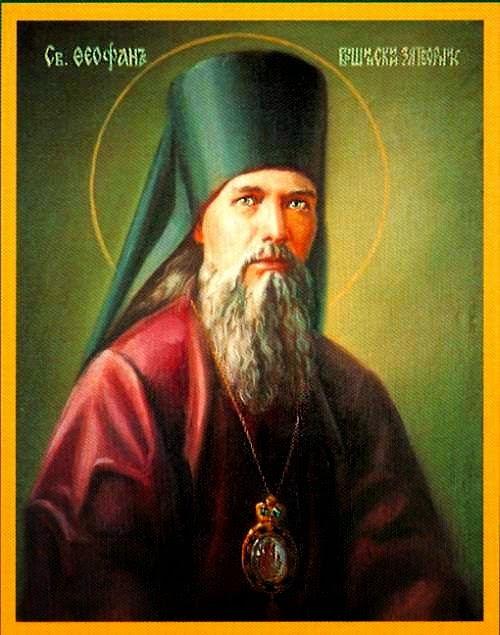
Elder Joseph of Vatopaidi (Mount Athos)
The greatest benefit which God has granted our fallen nature is none other than repentance. Without it no man would ever secure his salvation no matter how perfect God’s plan to save the world is. Because man’s “every inclination of his heart is evil from childhood”( Genesis 9:21). Given that our inclination towards sin is therefore natural, no one is able to remain without sin, “even if his life is only one day”. Repentance is dual in essence and both of its forms are beneficial to our lives. Its initial stage takes the form of regret for our past sins, followed by the rectification of the wrong deed which brought about the sin.
According to the spiritual judgement of our Fathers, the whole human activity originates in the mind. This is where every thought is captured as an image and it is gradually being acted out. This is what our most discreet of our fathers, Saint Maximos the Confessor says: “Do not misuse the thoughts, so that you do not abuse things with your actions out of necessity. Because, if one does not sin in his thoughts he will never sin with deeds”. «Μὴ παραχρῶ τοῖς νοήμασιν, ἵνα μὴ ἐξ ἀνάγκης καὶ τοῖς πράγμασι παραχρήσῃ. Ἐὰν γὰρ μή τις πρῶτον κατὰ διάνοιαν ἁμαρτάνῃ, οὐκ ἂν ἁμάρτῃ ποτὲ κατ᾿ ἐνέργειαν»(( Μαξίμου Ὁμολογητοῦ, Τετρακόσια Κεφάλαια περὶ ἀγάπης,Ἑκατοντὰς Β΄, §78.))..( Saint Maximos The Confessor, Four Hundred Chapters on Love, Second Hundred, paragraph 78) When one misuses the thoughts, the abuse of things will follow. Repentance means: literally recalling the mind to its former position, whereby things are properly ranked. In our generation however, repentance takes more the form of begging God for forgiveness.
When one describes our sinful nature, using humble words, one truly expresses the pitiful and miserable state to which we have been drawn into because of the perversion of the law of sin. Therefore as Paul says: we constitute a hideous “body of death”( Romans 7:24) since we are “wretched because of the law of sin at work within our members” ( Romans 7:24). This is as far as we are concerned. However, “ Praise be to the God and Father of our Lord Jesus Christ, who has blessed us in the heavenly realms with every spiritual blessing in Christ. For he chose us in him before the creation of the world to be holy and blameless in his sight. In love he predestined us to be adopted as his sons through Jesus Christ, in accordance with his pleasure and will- to the praise of his glorious grace, which he has freely given us in the One he loves”. We brag about this selection and we experience our Father as “ He who lives in unapproachable light” ( A Timothy 6:16). However, this secret mystery remains with us untouched, not just when we find ourselves in a state of contemplation but even when we are inundated with its proximity. Is it not, however, our initial value as created beings in “ his image and likeness” another mystery? We must therefore, quickly endeavor to increase our thirst and dwell deeper and deeper unto Himself through our struggle and into the magnificence of our predestination since the beginning of time.
Who is He, after all? Isn't He the absolute “ Being”, the beginning of everything, the One who has revealed Himself as a person and as an existence “I Am”? We have just now come to know Him through his only co-substantial Son. “No one has ever seen God, but God the only Son, who is at the Father’s side, has made him known”.( John, 1:18) We have also come to know God the Father through the Holy Spirit. “But the Comforter, the Holy Spirit, whom the Father will send in my name, will teach you all things and will remind you of everything that I have said to you”(John 14,26) The incarnate Word of God, who is a joint ruler and co eternal with the Father and the Holy Spirit, began his gospel saying: “Repent. The kingdom of Heaven is at hand”.(Mathew 4,17) Our sweetest Jesus, our Saviour, the Path, has become our path towards the Father and the Spirit. And They have also connected us with Him. Therefore, the ultimate in the knowledge of God is our true faith and our hope. Many psalms of David constitute a confession of repentance. “My God, my God why have you forsaken me? Why are you so far from saving me? So far from the words of my groaning? Oh my God I cry out by day, but you do not answer, by night and I am no silent.Yet you are enthroned as the Holy One; you are the praise of Israel. In you our fathers put their trust; they trusted and you delivered them. They cried to you and were saved; in you they trusted and were not disappointed” ( Psalms 22,1-6)
Our fathers, next to whom we have studied and whose mouths we have heard speaking the truth, have described as much as possible and as much as we could grasp, the depth, the breadth and the stature of comprehensive repentance. From all these explanations we cite just a few. Repentance, or rather the person who repents, begins with asking God to forgive him his trespasses. As long as he does not repeat the deeds for which he repents, he reaches unto “Third heaven” through the grace of Christ and the meticulous application of the rules of repentance. There, he hears and learns unutterable and unfathonable expressions and contemplations, which he cannot speak of or explain to those who are not familiar with this grace. “Whether it was in the body or our of the body I do not know”. ( B Corinthians 12,2) This state of affairs belongs not just to Paul but to anyone who ardently repents.The crashed and humiliated spirit of man, which thirsts for the wholesome love of Christ, is captured by Him and is lifted up to where the Lord takes him without being able to comprehend where, how and how much is the measure of this.
As our unforgettable elder used to say, the human senses are not functioning during this state, neither is the mind thinking but it is just admiring. Only when it returns to its normal state can it express, or vaguely describe if at all, that which it has experienced. Paul was writing to the Corinthians that he was “caught up to paradise and heard inexpressible things which man is not permitted to tell” ( B Corinthians12, 4) Because “No eye has seen, no ear has heard, no mind has conceived what God has prepared for those who love him” ( A Corinthians: 2,9). We only partly conceive and partly comprehend what is beyond the physical world.
Our Fathers tell us that recognizing one’s corrupt nature is a great gift of God, even greater than the contemplation of deep theories. When we recognize the internal darkness and when the infernal and dreadful nature of sin is being revealed to us, provoking our repugnance, then the divine grace perceptively grants us its own consolation.
Saint Isaac refers to various types of consolation and perception of the divine grace, especially at times when one has to endure long lasting trials. «When I stand in prayer, I can only utter one praise. From there on, even if I stand up in prayer for three days, I remain in awe of God and I have no sense of the effort required”.( Saint Isaac, Third Ascetic Treatise “ On the departure”) And he goes on to say: “I stood outside in the yard of my cell, in bright sunlight. As soon as I started to utter one praise, I was conscious of my spiritual task, but nevertheless, I was captured, without realizing where I was. I remained captivated in this state all night until the next day when the sun burnt my face again. Then I came to my senses and I immediately realized that it was the next day”. Let no one ever think that those were achievements of the early Fathers. Since the Lord “who is the same yesterday, and today, and forever” will grant His grace today to those who are willing to begin the struggle.
Blessed Elder Joseph, the Hesychast, was telling us that the divine grace presents in itself perceptively at the end of exhausting endurance.“Even to me”, he said, “when trials would increase so that they would exceed my endurance, then out of the blue I would have a comprehension, which according to the Psalms, was relevant to the pressing burden”. “When anxiety was great within me, your consolation brought joy to my soul” ( Psalms 94, 19)”. Once an angel of God gave me the holy communion, another time the Lord, seen hanging on the Cross, reminded me of the love for hard work. Our sweetest Lady has also consoled me several times, appearing to me in person in accordance with her motherly providence, which she especially demonstrates to us, the residents of the Holy Mount Athos. Oh, how pleasing it was to hear her voice, which was as sweet as honey, guaranteeing my salvation!”
The divine grace which appears because of repentance, tosses the soul towards God, whose light attracts it. In the beginning, this is not so obvious, but His warmth, which is love, begins to soften the heart. Then surprisingly, a dispute shows up. On the one hand, one is consumed with fear, or rather horror, realizing his own awful guilt. On the other hand, he is swamped with the grace of the presence of God with which he has not been familiar so far. The division of fear is excessive, since the presence of grace opens up one’s eyes and he consciously experiences his own filthiness. The perceived presence of the grace consoles him but he cannot contain his tears, which indicate his honest repentance and his return from the “far away land” where he had spent his “father’s possessions”. Several times the intensity of the horror of the personal sin becomes so strong that hatred against oneself is aroused as well as positive revulsion towards the passions which cause his separation from the beloved God.
“If anyone comes to me and does not hate… even his own life, he cannot be my disciple” ( Luke 14, 26). This real intensity of loathing, which is caused by “ the experience of God”, increases the fervor of prayer and becomes like flame. Then, the soul conceives the darkness of death as well as the hope to our Saviour Christ. Such conditions do not come about through human effort but are the results of the philanthropy of the heavenly goodness. I recall how our blessed Elder Joseph was describing this kind of prayer. He had a peaceful look and was expressing, to the extend which we could comprehend, the tranquility of his thoughts. After this meeting, because it is indeed a divine meeting, a wonderful peace descends on the soul and the perception of the full presence of God reigns in everything.
“Give blood and take spirit”, says Saint Peter of Damascus. While Saint Maximos the Confessor says: “He who believes is afraid; he who is afraid is humbled; he who is humbled becomes peaceful; he who is peaceful observes the commandments; he who observes the commandments is cleansed; he who is cleansed is illuminated and he who is illuminated by the coffer of mysteries becomes bed-fellow with the groom Word” ( Saint Maximos the Confessor, Four Hundred Chapters on Love, One hundred, paragraph 16). “Small is the gate and narrow the road that leads to life” ( Mathew 7,14). Therefore, the struggle which delivers us from the passions which prevent our illumination, is painful. The long experience of our Fathers has proven this beyond doubt. “God will not enter a body full of sin” (Wisdom of Solomon 1, 4). “The source of all passions is self love and the end result is pride. Self–love constitues the irrational love towards one’s body. He who has uprooted it, has detroyed with it all other passions” ( Saint Maixums the Confessor, Four Hundred chapters on Love, Three Hundred, paragraph 57). Both the source and the final result of this calamity are deadly, but they are especially harmful to prayer. The divine grace only approaches the humble. Both the early and the present day holy fathers, illuminated by grace, have given our super- substantial God, various names, either in accordance with His divine atributes, or in accordance with the way He appears: as the light, the truth, the all- goodness etc. One more attribute which He Himself has testified is: “learn from me, for I am gentle and humble at heart” ( Mathew 11:29) This attribute is particularly significant and that’s why the warriors of all times have not conceived it as a simple virtue but as an indication of His divine character, which has a special referrence to His personality. “Those who belong to Christ” ought to resemble their Father’s character, so that their entry into the kingdom of God is safeguarded and are not sent away as illegitimate children and hear the horrifying saying: “ I do not know you”( Mathew 25, 12) since “ God opposes the proud but gives grace to the humble” ( James 4:6). Pride is a horrible darkness. It is the opposite of the divine goοdness; it is the source of every evil, the root of every tragedy, the sower of hatred, the body of vice whence the disastrous individualism arises. Christ “is the light, the truth and the life”. When this true light embraces us, we feel its love, its wisdom, we perceive Him as the self truth. We obtain with indescribable pleasure discerning knowledge as a state of our spirit. He has said of Himself: “ I am the truth” ( Mathew 14: 6). The Father and the Holy Spirit testified on this. However, one cannot attain a cognitive perception of this theological reality only by hearing about it. “Not everyone who says to me ‘Lord, Lord’ will enter the kigdom of heaven, but only he who does the will of my Father who is in heaven” ( Mathew 7:21). A comprehension of this truth and the discovery of God Word, who is found concealed in His commandments, is only attained to through prolonged and long perseverence in prayer and repentance. The more one perseveres in the observance of the commandments the more illumination and expansion one receives in his mind. “ You have led down precepts that are to be fully obeyed”.( Psalms 119 ,4) “ How sweet are your promises to my taste, sweeter than honey to my mouth!” ( Psalms 118, 103) “The Lord is a lamp to my feet and a light for my path.( Psalms 119, 105)
The meaning of the cross is distinguished by obedience to the commandments and perseverance in the face of tribulation. Blessed is he who willingly carries his cross. He who generally accepts this burden for the rest of his life, perseveres in a different way. He accepts it as a call by the Heavenly Father. The Christian mission is completed on the cross and through the cross the created being convenes with the uncreated divine Being. Hard pressed by the violence of the lowly passions and the evil spirits, our only safeguard is to take shelter under the One who is able to save us. We therefore, endlessly call out: “ Awaken your might; come and save us.”( psalms 80,2) Our Lord’s uncreated divine grace takes the place of a mother. It comes to our assistance and not only does it rescue us from the symptoms and the hardships, but it also consoles our spirit through its sweet presence and inspires us to have courage in the face of new defenses and assaults. Our spirit broadens and our spiritual cognition is enhanced in the face of trials and of various hardships in general. “Through trials Thou have broaden my spirit” ( Psalms 4,1). When the valuable habit of perseverance in hardships is formed, then the Lord permits harder tests so that we become perfect. This is the meaning of these words: “Blessed is the man you discipline Oh Lord, the man you teach from your law”( Psalms 94:12). Our Fathers say: “ It is not possible for one who has sinned to escape the future judgement if he does not persevere willingly in the face of hardships or of the undesirable tribulations”( Saint Maxiums as above, two hundred chapters, paragraph 66)
Humility is the greatest benefit derived from the onslaught of temptations. The awful beast of pride is crashed and divine knowledge approaches the mind. It is not inappropriate to metaphorically describe the idol of egocentrism as “the abonination that causes desolation which stands in the holy place” ( Mathew 24:15) Nothing is more effective to steer the mind towards humility than the various hardships which befall man, whether willingly or unwillingly. The weakness to free himself by his own efforts, teaches him practically how worthless and vile one is. Then the Lord’s saying : “without me you can do nothing” ( John 25, 5) becomes absolutely true and thus the mind is shifted to the true world of the kingdom of heaven through the divine grace.
The second point regarding the usefulness of trials is the deeper knowledge of the unknowable designs (κρίματα) of God’s providence which govern the universe. Various events, usually painful and intensive, are the proper therapeutic tools through which τηε divine goodness maintains the equilibrium of our rebellious, fallen nature.
“If we judged ourselves we would not come under judgement. When we are judged by the Lord we are being disciplined so that we will not be condemned with the world”( A Corinthians 11:31-32) Once we realize that it is necessary to go through “fire and water” ( Psalms 66.12) in the face of various temptations, so that they shape the sympathetic image of the wounded man in us and of other human beings, then the real meaning of our fallen nature is formed inside us and the truth of our resurrection follows. God’s philanthropy, which is the result of his fatherly affection and providence, introduces us to the cognition of the divine love. It is true that “The Lord disciplines those he loves, and he punishes everyone he accepts as a son” ( Hebrews 12: 6). As a result, the devout become merciful to their fellow human beings in accordance with the law of influence since “their father is merciful”! (Luke 6,36)
The Holy Spirit as an educator conveys through Its descend the pain of mankind inside the souls of the devout, since these souls are communicating with the uncreated divine grace, which comprehensively embraces the entire pain of mankind. Let us just stress that we are explaining the meaning of the cross, about which Paul was boasting. He was only relying on the cross for his spiritual existence; he was believing in it, was hoping in it and was boasting about. All those who have “crucified their sinful nature with its passions and desires”( Galatians 5, 24) have followed in his footsteps. The reason for God’s emptying of himself was to tackle the wrongful preference towards hedonism- whence came the fall- with its antidote: love for hard work.
The Word God emptying himself just once because of His all consuming love for us, renders unnecessary all comment and questions. Peter, the best of the disciples, emphasizes that “since Christ suffered in his body, arm yourselves also with the same attitude” ( A Peter 4,1). This begs the question: Is any logical being’s foremost duty to love God totally as Divine and therefore, as his Lord and Creator? This God becomes a reformer and a re-generator and raises the fallen higher than his first position and value and not just higher but “far above all rule and authority, power and dominion and every title that can be given” ( Ephesians 1,20). Is n’t He worthy of our honour and respect? Our sweetest Jesus, our Lord, by becoming dual in His nature because of the enormity of His self sacrifice, has taken away any pretext that we may have about the so-called freedom of choice or of any other alternative. We have now become spoils of His love. We ought to love him absolutely ( κατά πάντα) since “ he loved us first”( A John 4,19). If therefore, we recognize none other than our one and only crucified Lord Jesus Christ, is n’t it our absolute duty to practice our love for hard work( φιλοπονία- philoponia)? This is the reason why all those who belong to Christ, during the three major periods of the life of the Church, have been crucifying themselves because they “want to know Christ and the power of his resurrection and the fellowship of sharing in his sufferings, becoming like Him in his death and so, somehow, to attain to the resurrection from the dead” ( Philippians 3:10-11). It is for this reason that we have been constantly underlying the need to bear one’s cross and practice the comprehesive love for hard work. The Triadic essence of the divine Being rests at the centre of the knowledge of God. “The Father, the Word Son and the Holy Spirit, are one”( A john 5:7) and each one testifies for the other. This testimony extends towards our own nature. The Lord has entrusted His disciples with the task of bearing witness about Himself. “When the Cousellor comes, whom I will send to you from the Father, the Spirit of the truth who goes out from the Father, he will testify about me; but you must also testify, for you have been with me from the beginning” ( John 15, 26-26) The relationships between people as persons are of the same kind. The testimony, as true life, is forever spinning inside love and creates communion. A person, by nature, cannot live isolated but behaves lovingly towards other fellow human beings and through the virtue of solidarity responds to the others and testifies for them. It is for this reason that our Creator has said that “It is not good for the man to be alone” ( Gen 2,18). The more we adhere to divine precepts through faith and obedience, the more the divine illumination is amplified inside us. True repentance, with all its components, but especially through deep prayer, leads us towards communion and assosiation with the uncreated divine grace, which explains the form of the divine reality. Why is it suprising that we find in Him the comprehension of ourselves through His grace, since we have been initially created in His image and likeness? It is this comprehension which reforms our existence in accordance with the divine attributes, since to all those who “received him, he gave the right to become children of God” ( John 1,12). Is there anything more natural than children exhibiting their father’s character? By ‘character’ I mean the most crucial of the divine attributes, that of love, which is immediately manifested inside the soul of the person who has received the divine illumination. It is through love that the faithful communicates with his fellow human beings and completes his testimony. Here is a testimony of our fathers who “did not fail to confess, but confessed freely”( John 1,20 )about the truth and the divine promises and about the entire divine revelation. They did not hide from their children nor their brothers, that which they have heard and seen, so that their testimony represents unambiguous evidence and becomes our whole expectation.
According to the revelation to Moses, man has been created “in the image and likeness of God” ( Genesis 1,26) What does this mean? It means that man has the ability to become like his Creator. Therefore, the knowledge about the existence of the absolute Being comes naturally to man also. That is the reason why as soon as man approaches his God through the divine grace, he recognizes Him. The narrow human mind begins to perceive God “as He is” ( A John 3,2) as soon as the divine grace illuminates it and allows it to approach Him, always of course within its human limitations. Naturally of course, it is not possible to conceive the debth of this mystery through these meagre descriptions, but truth is unchangeable. “Blessed are the pure in heart for they will see God” ( Matthew 5:8). This promise is certainly true, but the means which we will use and the way through which we will reach it, differ. We will cite these now.
From the very beginning, our treatise refers to repentance. The prayer of repentance and the resulting hot tears, restore the energy of the divine grace which has been kept from us as well as its divine purification.“If we claim to be without sin, we deceive ourselves and the truth is not in us” ( A John 1,8). Therefore, we are stressing the need for repentance more than any other preoccupation with our sinful character, because it is the only way to reach the boundaries of the divine truth. The more we perceive sin as a fatal wound, the more we drop to our knees in front of God and mourn. This kind of prayer occasionally absolves us from the limitations of place and time, so that we do not have a sense of ourselves. In this condition our intellect is illuminated and enters the realm of the divine contemplation. Sometimes it just contemplates, at other times it is educated on the mysteries of divine creation or the ways of the all-saving providence with which Word God preserves everything with His cohesive power and maintains into balance. “How many are your works, O Lord, in wisdom you made them all”( Psalm 105,24). This is a mystery of mysteries! No material substance pre-exists, neither any other system nor word, but Word God creates everything just through His will. “But the Counselor, the Holy Spirit, whom the Father will send in my name, will teach you all things and will remind you of everything I have said to you” ( John 14:26)
Let us think like Him, lets us love like Him, because this is the true meaning of his calling through the Gospel. All the Apostles and God-bearing Fathers bear witness to this through the generations. “If you love me, you will obey what I command. And I will ask the Father, and he will give you another Counselor to be with you for ever-the Spirit of Truth. The world cannot accept him, because it neither sees him nor knows him. But you know him, for he lives with you and will be in you… you will see me. Because I live, you also will live. On that day you will realise that I am in my Father, and you are in me, and I am in you. Whoever has my commands and obeys them, he is the one who loves me. He who loves me will be loved by my Father, and I too will love him and show myself to him” ( John 14,15-21). “If anyone loves me , he will obey my teaching. My Father will love him, and we will come to him and make our home with him. He who does not love me will not obey my teaching. These words you hear are not my own; they belong to the Father who send me. All these I have spoken while still with you. But the Counselor. The Holy Spirit, whom the Father will send in my name, will teach you all things and will remind you of everything I have said to you. ( John 14, 23-25)
We are consoled and encouraged when we are reminded of this passage. Here the comprehensive way to achieve this total blessing is being revealed, and man is being transformed “through the Holy Spirit” ( B Corinthians 3,18) and “ just as we have borne the likeness of the earthy man, so shall we bear the likeness of the man from heaven”( A Corinthians 15,49).
We also get acquainted with the Holy Spirit through the Holy Tradition of the Church and the teachings of our Fathers by the energies of the divine grace, which work inside us when we are in a state of repentance. “He will remind you of everything”( John 14,26). And again: ““If anyone loves me , he will obey my teaching. My Father will love him, and we will come to him and make our home with him.” ( John 14,23). When God makes home with man, what else is this other than complete deification, which is at the epicenter of our expectation? Paul agrees: “We have not received the spirit of the world but the Spirit who is from God, that we may understand what God has freely given us… (A Corinthians 2, 12) “For who has known the mind of the Lord that he may instruct him? But we have the mind of Christ” (A Corinthians 2, 16). By obeying the Lord’s commandments we accomplish some kind of kinship with our Creator and He reveals Himself “as he is”(A John 3,2). When this obedience to the commandments, which is God’s wish, becomes the only purpose of our existence, and “what is mortal may be swallowed up by life”( A Corinthians 5,4), it conveys to us the knowledge of God.
“We know also that the Son of God has come and has given us understanding, so that we may know him who is true” ( A John 5,20). Disobedience to the commandment caused man’s fall: This means that man is separated from God and “from all that belongs to him”.The Lord has received our repentance, our return and submission to His divine wishes, and restores our relationship with His own love and holiness. The most acceptable form of repentance, according to the Fathers, is the torrent of bitter tears which spring from the heart when it aches for its abhorrent guilt and treachery in the face of God’s fatherly love. If this kind of tears is not corroded with pride and carelessness, the divine grace will transform them into spiritual and painless tears, just as fruit follows the bloom. The sense that “there is no more time” (Revelation 10,6), which is also the outcome of the memory of dying, extends our urgency to make amends with God, fearing that we may die before the Lord hears our cry and gives us His mercy. A recognition of God’s love follows super naturally the tears of repentance. This feeling does not depend on our thoughts or conceptions or on any other external device, but comes naturally when one finds what he has lost, or rather when a wanderer returns home. At this time true sympathy towards fellow human beings is being raised. Man feels someone else’s pain as his own and wishes to cry for everybody and take upon himself if possible, the entire human pain, so that everybody becomes well.
This phenomenon seems somewhat strange to those who hear it. The Lord said: “ You will know the truth and the truth will set you free”( John 8,32). The Lord, as the “self-truth”, intervenes at this point and appears not as a scientific neither as a philosophical truth but as a truth which unquestionably supersedes any intellectual activity. It is not an abstract idea or a mathematical equation but a “PERSON”. It is He Who Is, the One who was from the beginning, the uncreated God, who has been revealed through the “ I Am”. He is the Father, the Son and the Holy Spirit. The created intellect cannot conceive what is real by the use of symbols and images: the “Being” of God is inconceivable in essence. We believe and experience the blessed Trinity of the Divine persons as the absolute truth. Just as God is Triune and at the same time One, a triad of persons “in one, God” («ἐν μιᾷ, Θεότητι») similarly, man ought to become ‘one man’ in various bodies as his accomplishment; namely, not to live for himself. “ We ought to lay down our lives for our brothers”( A John 3, 16) “Nobody should seek his own good but the good of others” ( A Corinthians 10,24). “Carry each other’s burdens, and in this way you will fulfill the law of Christ”( Galatians 6,2). Similarly, The Holy Trinity, the God of love, is not isolated within Himself, but lives inside those He loves. “Greater love has no one than this,that one lay down his life for his friends” ( John 15,13). Our Jesus “having loved his own who were in the world, he now showed them the full extend of his love” ( John 13,1). In teaching the practical way of this “emptying of oneself”, which is included in love, He says: “ The greatest among you will be your servant. For whoever exalts himself will be humbled and whoever humbles himself will be exαlted» ( Matthew 23, 11-12)
Therefore, what do we mean here? This emptying of oneself, which is a general characteristic of the divine love, is required of us. The comprehensive repentance given by God, has this emptying core, since the repenting man reaches outmost humility and degradation for the Love of God. Moreover, he regards this position as pleasant, because he communicates with the emptying of Word God, who has “emptied Himself” for our salvation, becoming man without sin, and has set us free from corruption and death through His pain and made us capable of entering into His eternal kingdom. This God, in His eternal divine Magnificence, is the actual and absolute truth. It is the truth which we are looking for. If we are to succeed, God must make His home inside us, so that we are united in His essence. However, this cannot be done through external pressure, nor through God’s offer alone, but also through our own acceptance.
As a created being, man is not capable of reaching the truth alone, since this is purely the Creator’s gift to man without the exertion of force or compromising of his freedom. Therefore, it is necessary that the two wills, of man and of God, agree and cooperate together. Man’s resolve to desire goodness just like God, so that the two of them may cooperate, is also granted by God to those who are receptive, since “Every good and perfect gift is from above,coming down from the Father of the heavenly lights” ( James 1,17)
Our Lord is again urging us: “Seek first his kingdom and his righteousness, and all these things will be given to you as well” ( Matthew 6,33). This means that we must first seek the comprehension of the truth, followed by the fulfillment of our duties. Seeking the comprehension of the truth is none other than what the prophet-king David declared: “ for the word of your lips I have gone through difficult paths”( Psalm 17,4). These are the difficult paths: “In the world you will have trouble”( John 16,33). But we also learn through our patristic tradition that “everyone who wants to live a godly life in Christ Jesus will be persecuted” (B Timothy 3, 12). If we declare Christ as “the original character of the Father” and therefore, “God’ and “the self truth”, we ought to follow in His footsteps and reach the point where we have to make a hard choice, which He himself has stated: “If anyone comes to me and does not hate his father and mother, his wife and children, his brothers and sisters-yes, even his own life- he cannot be my disciple… and anyone who does not carry his cross and follow me cannot be my disciple… any of you who does not give up everything he has, he cannot be my disciple”.( Luke 14,(26,27,33)) In explaining the way the nature of this declaration works, Our Lord gave the example of the woman who is about to give birth. “A woman giving birth to a child has pain because her time has come; but when her baby is born she forgets the anguish because of her joy that a child is born into the world. So with you: Now is your time of grief, but I will see you again and you will rejoice, and no one will take away your joy”.( John 16,21-22) To those who remain steadfast unto the end in accordance with the divine definition, the divine grace is offered perceptively, like the wage is given to those who work. Then it is correct that “no one will take away the joy” from those who accomplish the perception of divine grace, which our Fathers call “the experience of the divine cognition”.
The holy Fathers describe the permanent, as opposed to the temporary, presence of the divine grace in the whole “being” of man, as a “perception in God” (αἴσθησιν ἐν Θεῷ). Once this happens, especially to those who repent consciously, the meaning of the cross is being revealed, as well as the meaning of the comprehensive love for hard work, which is the genuine self-denial. They will then recognize that indeed “everyone who wants to live a godly life in Christ Jesus will be persecuted” ( B Timothy 3, 12). They will also comprehend the command : “love your enemies and pray for those who persecute you, that you maybe sons of your Father in heaven” ( Matthew 5,44) This confessing (ὁμολογιακὴ) aspect of Christianity seems difficult to all those who are not acquainted with the true meaning of the cross. Perhaps this is the main reason why many people “turn back and walk with Christ no more”. (John 6,66) “This is a hard teaching, who can accept it?” ( John 6,60).
Until such time as man is capable of going beyond the first step of the introduction to faith, which introduces one to the so called “practicals”, he cannot understand the decrees and commands of the supernatural self-denial. Namely, that he ought to totally give up “his life” (his personality) in order to find it again, as our Lord said.
Once, however, the divine grace upgrades him to the second step: the “faith of contemplation”, which is born out of the “experience of the divine cognition”, not only does he not hesitate in the face of hard work to practice self-denial, but he also zealously hurls himself into the rough seas of tribulation. This behaviour reminds us of the words of the great Father, the Saint John of the ladder, who describes such a person as “stirring the demons to battle”. Who is now able to convince the faithful that “we must go through many hardships in order to enter the kingdom of God”? ( Acts 14,22)
Let us now return to the initial premise: to our Lord’s first insistence during His public appearance: “Repent”. No one is obliged to repent if he has kept thoroughly all the promises he has made during the mystery of his baptism. However, he who has disobeyed even one of the most insignificant of the commandments, he needs to repent and all that it entails. Since, therefore, the issue of not committing a sin does not arise, even if we only live for one day, repentance becomes our absolute duty and desirable vocation.
“Everyone who asks receives; he who seeks finds; and to him who knocks, the door will be opened….If you then, though you are evil, know how to give good gifts to your children, how much more will your Father in heaven give the Holy Spirit to those who ask him!”( Luke 11, 10-13) Christ’s particular encouragement that if we ask and seek and obey we will be heard, strengthens us to get on with our intensive repentance. According to our Fathers, the divine promises are fulfilled through repentance. Repentance, therefore, is rightly described as the biggest gift which the divine philanthropy has granted to mankind.
Who, then is the most vigilant schemer against this divine blessing? The internal sickness constitutes the most horrible evil and obstacle against man’s approach to the entrance and the gate of life, since it is the most hateful and abhorrent structure( σύστημα) which provokes God’s repulsion. It is pride: the outer darkness in which the fallen Eosphoros resides. It is the darkest gloom, where man sank after his fall. “ God opposes” all those who insist on denying the deity of our Savior Christ, who is gentle and humble in heart. According to the saying, “the arrogant mock me without restraint” ( Psalm 119,51). All those who are driven by this demonized darkness are being totally transformed in accordance with the law of perversion and are either demonized or become like animals, as if they came under the spell of the mythical Kirke. All those who succumb to the law of perversion are in need of the prayers by many holy fathers, until they “open their eyes and turn from darkness to light. And from the power of Satan to God, so that they may receive forgiveness of sins”.( Acts 26,18) It is only those who have practically conceived the divine love that may become aware of the poisonous stench of this horrid passion, which is called pride, even from a distance. When man is separated from God because of his pride, he becomes isolated in his incurable individualism. He will remain in this state forever, far from the unifying power of the love of Christ. This God-hated passion is capable by itself to destroy man, since it has even caused the fall of the bodiless and luminous angels. This passion is the root and cause of most perils which have been and will continue to wrench and drown mankind. It is the spine of the “old person” of “the body of death”( Romans 7,24), “the abomination which causes desolation”( Matthew 24,15) standing in this remarkable specimen of image and likeness. If this beast is not dethroned from the heart, the divine grace will never approach to bear the illumination and the results of the divine charismas: the resurrection of the human nature.
Since we have spoken about repentance, we have specifically stressed one of the most horrid passions of the absolute distortion, in order to show that repentance is necessary for the cure and salvation of the soul through Christ’s grace. When this passion takes over, it prevents the divine grace from residing with man, because as an unreasonable and unnatural passion, it is the practical essence of sin. We know that “ God does not enter a body full of sin. Pride is not partial evil but the complete destruction, the comprehensive distortion and deformation, which ruins not only the image but also man’s nature. As an illustration we have the one who invented and employed it: Satan.
Save us, Lord Jesus Christ, You who are the only Saviour, from this abomination and give us a humble heart in accordance with Your own attribute, because Yours belongs the kingdom, the power and the supremacy for ever.
The prophet-king David, indicating the danger told us “God scattered the bones of those who attacked you ” ( Psalms 53,5).
Our preoccupation here is repentance and therefore it is natural that we are pointing out the causes of sin: that is, passions with pride as the ultimate. Pride by itself constitutes the entire charter of the unnatural way of life.The Lord has reversed, through His mighty wisdom, the corrupted operations of the causes of sin and placed on each wound the proper medicine, which is none other than virtue: “Blessed are the poor in spirit” (Matthew 5,3) in the place of anger and fury; “Blessed are those who mourn”( Matthew 5,4) as the ransom and the pay off for our wicked and lavish former sinful way of living; “Blessed are the merciful” (Matthew 5,7) as a medicine for the terrible Hades of greed and ruthlessness; “Blessed are the pure in heart” (Matthew 5,8) against comprehensive immorality and corrupt life; “Blessed are the peacemakers for they will be called sons of God”( Matthew 5,9) is the beatitude which alone explains the task and its wage. “Blessed are you when people insult you, persecute you and falsely say all kind of evil against you because of me”(Matthew 5,9). This constitutes the anchor of our hope and our consolation in our concessionary mission. Since our Lord says: “If they persecuted me they will persecute you also” ( John 15,20) and harm you, but for all these “rejoyce and be glad because great is your reward in heaven”(Matthew 5,12).
“ Whoever is wise let him heed these things and consider the great love of God” ( Psalm 107,43). Through His commands, our Lord has drawn up for us the true path in this life and everyone knows where he is heading to from now on. This is our practical duty, since we are found obeying His gospel and therefore we remain within the range of His love. “Whoever has my commands and obeys them, he is the one who loves me”(John 14,21). Since “ there is nothing concealed that will not be disclosed, or hidden that will not be made known”(Luke 12,2) our duty is even greater than before, since at the end of our lives we will display on ourselves traces of our entire life and the ways we have lived whether good or evil. “Each one should be careful how he builds”( 1 Corinthians 3,10) …his work will be shown for what it is, because the day will bring it to light. It will be revealed with fire and the fire will test the quality of each man’s work” (1 Corinthians 3,13) Our entire lives, from the day we are born to the day we die, will be exposed at the world arena of Judgement without cover, unless our sincere repentance has revised the deformation of our former sinful existence. Only those who have repented have been freed by the Spirit of the life in Christ from the law of sin and death. Those “who are led by the spirit of God” are “sons of God”. ( Romans 8,14) It is only through repentance that we are transformed into another way of thinking because we are exchanging the former image and form of the mortal for the image of the heavenly being so that “the mortal is consumed by life”. The ‘baptism’ of repentance has relocated ourselves to the virtuous way of living. Thus, “just as you used to offer the parts of your body in slavery to impurity and to ever-increasing wickedness, so now offer them in slavery to righteousness leading to holiness”( Romans 6,19) As evidence we have the ladder of virtues whose accomplishment is from now on our main duty. “ Turn from evil and do good, seek peace and pursue it” ( Psalm 34,15) . This verse is somehow the first step to repentance.
The beginning of every virtuous deed is fear of God, which, as we have already said, is the offspring of faith. The first signs of this task are: the mind wakes up to remember God and is disgusted by its former memories, which have been mixed up with the causes of sin. If the mind keeps up with this task of remembering God, it is quickly being led to indigence (ακτημοσύνη), which assists the virtue of the love for hard work, which itself is the dwelling of virtues. The saying: “offer the parts of your body in slavery to righteousness leading to holiness”(Romans 6,19) means all parts, bodily and mental. These are the senses which capture the causes of sin. When we sacrifice amplitude with the virtue of willing poverty, then our intellect entices the senses to operate naturally. Then the divine grace appears and consoles man. “The soul which holds on to(κατέχουσα) the fear of God, is not afraid of anything which may harm its body” (Saint Isaac the Syrian. Ascetic Treatise, D ).
It is therefore a solid rule that one must avoid the causes which enthrall him towards wickedness. That is the reason why every man must necessarily have a regime. The senses are captivated by material things. The mind is scattered by the various thoughts.
Indigence and frugality must prevail in our lives since they generate the love for hard work, prayer and the contemplation of virtuous thoughts (ἀγαθῶν νοημάτων). The great Father, Saint Diadohos , bishop of Fotikis, has confirmed this issue. “Any soul which does not rid itself of worldly preoccupations, would neither love God in a genuine way, nor will repel the Devil as he deserves” (Treatise πΗ, Ascetic). This initial point which we are describing here, constitutes the practical method in accordance with our Fathers’ teachings; the theoretical method always follows the practical and is generated from it.
The practical work in obeying the commandments is found in the tasks performed by the body, like fasting, holding vigils, praying, being submissive, humble, tolerant, showing solidarity and generally speaking, by undergoing any kind of hardship, which constitutes the bearing of the cross. If with the grace of God one manages to persevere in the performance of these tasks, he is raised from the unnatural life of the irrational, of the deficiency and of the abundance, to the rational state called “purifying”. Here all passions stop enslaving the senses and things happen only if there is a need ( χροία), which reduces the fervent love for hard work. This achievement is a gift of the grace but also a triumph performed by the intellect, which has skillfully restrained the senses to that which is “needed” by restricting irrational desires and waste. From here onwards we have the second stage and the upgrading of the fighters. The intellect accepts its own purification as a reward for achieving its own rational performance by taming the senses and placing the passions under its control. Previously the mind had become tainted in its thinking, enslaved and blind because it had succumbed to passionate ideas and thoughts. In the same way, the senses had also become impure by yielding to various passions through deeds. Therefore, the mind through the illumination offered by the grace achieves its purification, its illumination and its freedom. And then.. Oh! Blessed indeed and thrice blessed is this particular intellect, since according to our Fathers, it “sees beyond the demons”. It is capable of detecting through its own natural illumination- since the intellect has its own light apart from the light of the grace- how the evil spirits conspire against it from afar. The faithful is exhibiting his most fighting spirit at this stage, since the struggle is mostly mental and its outcome crucial. Since the intellect has begun seeing and therefore understanding “where it is coming from and where it is heading to”, no violations to its own duty are permitted. The intellect is thus watching his own conscience very carefully. This is what our great Father Isaac the hermit says on this: “let us stand, therefore, my dear brothers, in fear of God, keeping and observing the practical side of virtues. We must not set obstacles to our conscience but must watch ourselves carefully while fearing God (ἐν φόβῳ Θεοῦ)
Just as in the first stage of our “practicals” we have tried to avoid sinning in deeds via our senses, in the same way we must now keep our intellect from contemplating impassionate and sinful thoughts. Here we must mention something to prevent one from being frightened if sinful images occupy his mind unwillingly. Every single thing comes in contact with us via an image projected on the mind. Therefore, it is not intentional if a simple thought of something which we have preference on, appears on the screen of our brain. Just like the eyes when open they see everything that appears inside their optical range, in the same way every idea or thought from the three dimensions of place, time and space, enters our minds. Therefore, various images may be projected onto the screen of our minds as a simple assault. It is after this attack that we begin to be responsible for and need to control our stance. We must not be worried because suddenly some sinful thoughts have entered our minds, but we must be concerned about our behaviour after they show up. “O daughter of Babylon doomed to destruction, happy is he who repays you for what you have done to us-he who seizes your infants and dashes them against the rocks” ( Psalm 137,8-9). The assaults on the brain are the infants of Babylon. Blessed is he, when immediately after they are born, i.e from the beginning of their “attack”, dashes them against the rocks: Christ( A Corinthians 10,4).
After the first attack, an association or a conversation with the thought begins, to be followed by an approval or denial- i.e the ‘yes’ or the ‘no’- the fight against it and its implementation. It is up to the intellect to succeed in this task; that is to justify or condemn man’s intention and declare him as a friend of God and a confessor or as a sinner and a traitor. That is the reason why the scriptures from early on specifically stress the need to “guard our heart above else” (Proverbs, 4,23).
The scriptures sometimes describe this intellectual work either as “mind” or “heart”, or “spirit”, but all imply the same thing: man’s spiritual world. The way to reduce the commotion caused by the fighting thoughts is to practice ‘lack of concern’(ἀμεριμνίαν). That is, to keep away from most things and persons, called “causes”. One does all these in order to observe the Lord’s commandments and therefore, the divine grace increases the fervor and the memory of God. When these virtues intensify, they breed anger and fury against any seeds sown by the enemy. This justified defense intensifies the divine fear, which causes us to experience God’s love. Prayer, insistent and painful towards our Lord, who is the only one able to save us, is absolutely necessary during this struggle and it must carried out in humility and in crashed spirit (συντριβῆ). If indeed we manage “every morning to put to silence all the wicked in the land” ( Psalms 101, 8), all the thoughts in their initial appearance by denying them and by calling the name of our Lord, they disappear at source. This is the way “the spiritual battle” is carried out. The cunning devil, as a bodiless intellect, has no other way to deceive man’s soul, except through fantasy and thoughts. If as soon as they attack we reject them, we have been spared the fight and the possible defeat.
Remembering our death is another issue which benefits our spiritual struggle. This memory projects our true form as if through the mirror. In other words it says: whatever happened to our ancestors will also happen to us soon. “A thought precedes every word. Tears and mourning come after the remembrance of death and our sins. That is the reason why we have placed it in this order. The memory of death seems like we are dying every day. Also remembering that one day we will leave this life makes us constantly heave a sigh” ( John of the Ladder, Treatise 6, On the memory of death, paragraph 1-2). This preoccupation is truly beneficial. Many people who have practiced this task convinced us that when this memory was established, they were set free from their passions and relatively achieved peacefulness of thoughts without any further effort; something which others accomplished after a lot of hardship. When this memory and image of our mortality and death takes hold, we are repulsed by what other people regard as pleasant, since everything seems worthless and futile. It is said that Saint Simon, the New Theologian, was mentally seeing the image of destruction and death on beautiful faces when he came into contact with them during the devil’s attacks. He was doing this so much that in the end he could no longer describe anything in its true form, but was only seeing the image of corruption and death on it. Therefore, he who expects everyday to die is definitely a weathered and great warrior. He, on the other hand, who wishes constantly to die has reached the boundaries of holiness since it is said “ remember your last day and you will never ever commit a sin” (Wisdom of Seirah 7, 36.).
I have met an elderly woman once, sitting at the entrance to a cemetery, who was looking depressed. I was encouraged to ask her to explain why she was feeling like this and she said: “Oh my dear father. I have been very silly in the past. Had I been thinking about the squalor of my old age, which I am now ashamed to see in the mirror, I wouldn’t have been doing the foolish things I did while I was young and wouldn’t have abused my life, which not only have drowned me in sin but have also dragged others into it as well. I would also not have been so terribly greedy had I realized that only this tiny space belongs to me. This space I am now looking at while I feel the infinite silence of the nullification of my body. I have honestly been moved and have blessed the accurate views expressed by the depressed woman even now in her old age.
Source: Translated by Olga Konari Kokkinou from the Greek edition: Γέροντος Ιωσήφ Βατοπαιδινού, Αθωνική Μαρτυρία, Ψυχοφελή Βατοπαιδινά 2, Έκδοσις β΄, Ιερά Μεγίστη Μονή Βατοπαιδίου, Άγιον Όρος 2008.