Tuesday, 2 October 2012

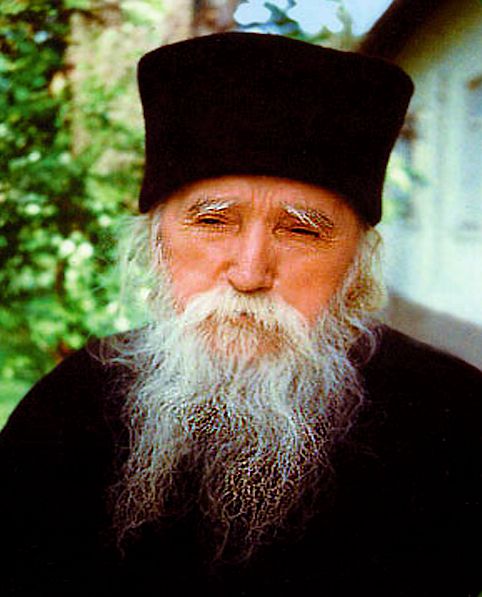
Elder Paisios- On Worldly Desires

       ELDER PAISIOS OF MOUNT ATHOS

A soul moved by material beauty reveals that the vain world lives inside it,and that it is attracted by the creation and not by the Creator,by clay and not by God.It makes no difference if the clay is pure and does not have the mud of sin in it.When the heart is attracted by earthly beauties,which though not sinful are still vain,it feels a worldly and momentary joy,but this joy provides no divine consolation,no inner flutter with spiritual exultation.By contrast,when man loves spiritual beauty,then the soul is filled and becomes beautiful.
Those who do not put the brakes on their heart's desires for unnecessary material things-not desires of the flesh;these are out of the question-and do not gather their mind inside the heart in order to offer everything they have together with their very soul to God,will be very miserable.

-Elder,is it always bad to desire something?

-No,the heart's desire is not bad in itself.But when things,even things that are not sinful,take up a piece of my heart,they diminish my love for Christ.Again,this kind of desire is bad,because the enemy reduces my love for Christ.When I desire  a useful thing,a book ,for example and it ends up taking up a piece of my heart,then that is bad.Why should a book take up a piece of my heart?Will i desire the book or will i yearn for Christ?
Any desire,no matter how good it appears,cannot rival the desire for Christ or for the Panagia(Mother of God).When i give my heart to God, will not God give me His entire Self in Return?God seeks man's heart,"My son give me your heart".If man gives God his heart,God will grant him his heart's desires,as long as they will not be harmful to him.Only a heart given to Christ is not wasted,and only in Christ does one find in abundance the gift of divine love in this life and heavenly exultation in the next life.
We must avoid worldly things and not let them occupy our heart;we must use only the simplest means to accommodate our needs.We must make sure,however,that the few things we use are sound.If I use a beautiful thing,I give all my heart to that beauty and I leave nothing for God.You pass by somewhere and you see a house with pretty marble work,designs,engravings...You admire the stones,the bricks,and you leave your heart there.Or, you see a beautiful eye-glass frame in a store and you desire it.If you  don't buy it,you leave your heart at the store.If you buy it,you are hanging your heart from the eye-glass frames you are wearing.
Women are especially vulnerable to this kind of deception.Few of them do not waste their hearts on vanities.What I am trying to say is that the devil robs them of their rich heart through all these ephemeral,colourful and shiny trinkets.
Let's say,one of them needs a plate.She will search for the one with a flowery pattern,as if the food would turn sour if the plate had no flowers!Some spiritual women may,instead,be moved by serious patterns such as a double-headed eagle and so on.And they wonder,"Why don't spiritual things touch me?" How can the heart be moved by spiritual things,when it is scattered in cabinets and plates?You do not actually have a heart;you only have a piece of flesh,which beats inside mechanically,tick-tack,like a clock,just to make you walk.It's because the heart is dispersed to so many things,a bit of it going here,a bit of it going there,that nothing is left for Christ.

-In other words,Elder, even these simple desires are sinful?

-These simple desires, even when they are not sinful,are actually worse than the sinful ones.A sinful desire will shake a man at some point,and his conscience will bother him,and he will make an effort to repent.He will say,"My God,I have sinned."On the contrary,these other desires,the"good ones",do not concern him at all.He believes that he is doing well."I love well-make and beautiful things,"he thinks."Besides,God created everything beautiful."Yes,but his love does not go to the Creator,it goes to His Creation,which is why we should brake off from every desire.When someone makes an effort for Christ by sacrificing what he loves,no matter how good what he loves is,God will grant him an even greater peace and rest.

Before the heart is cleansed,it has worldly desires and finds joy in them.But when it is cleansed and purified,it no longer tolerates earthly desires and its joys then are spiritual.The heart is purified when it loathes worldly desires.Until this happens,it is attracted to them.But,you see,we do not want to upset the old self;we would rather do him all kinds of favours.How then can we be become imitators of Christ?

Taken from, Elder Paisios of Mont Athos,Spiritual Counsels Vol1 "With Pain and Love for Contemporary Man"

Γερότνισσα Γαβριηλία-Η Αγάπη δεν διδάσκεται ...;


«Η Αγάπη δεν διδάσκεται. Δίδεται άνωθεν όταν την ζητήσουμε με επίγνωση του Εγωϊσμού μας που θέλουμε να συντρίψουμε.
Ποτέ να μην λές «γιατί περνώ αυτό»;
Ή όταν βλέπεις τόν άλλο με τη γάγγραινα, τον καρκίνο ή την τύφλωση, να μην λές «γιατί το περνά αυτό»;
Αλλά να παρακαλείς τον Θεό να σου χαρίσει το όραμα της άλλης όχθης ...;
Τότε θα βλέπεις όπως οι Άγγελοι τα γινόμενα εδώ όπως πραγματικά είναι: ΟΛΑ στο σχέδιο τού Θεού. ΟΛΑ.
Ο πνευματικά προχωρημένος άνθρωπος είναι αυτός που έφτασε να μην έχει «υπόσταση» και που έχει κατανοήσει βαθύτατα ότι ό,τι του συμβαίνει είναι είτε Θέλημα του Θεού, είτε Παραχώρηση του Θεού.
Όποιος ζει στο Παρελθόν, είναι σαν τον πεθαμένο. Όποιος ζει στο Μέλλον με την φαντασία του, είναι αφελής, γιατί το Μέλλον είναι μόνον του Θεού. Η Χαρά του Χριστού βρίσκεται μόνο στο Παρόν. Στο Αιώνιο Παρόν του Θεού.
Δεν πρέπει να παραδοθούμε τυφλά στο Θέλημά Του. Αυτό το κάνουν οι στρατιώτες. Εμείς τα Παιδιά Του, πρέπει να Του το προσφέρουμε το θέλημά μας μαζί με όλον τον εαυτό μας στο χάλι του. Και να Του πούμε: «Σου προσφέρω όλα μου τα στραβά και τα ατελή. Κάνε τα ίσια».
Δίνοντας χαρά στους άλλους, εσύ την νοιώθεις πρώτα.
Για να φτάσεις στο δεν υπάρχω, αγαπάς, αγαπάς, αγαπάς κι έτσι ταυτίζεσαι απόλυτα με τόν Άλλο, τον εκάστοτε Άλλο, και τότε στο τέλος της ημέρας αναρωτιέσαι :
Θέλω τίποτε; Όχι. Επιθυμώ τίποτε; Όχι. Μου λείπει τίποτε; Όχι ...; Αυτό είναι! ...;
Είσαι ήδη γεμάτος με την γλυκειά παρουσία Του Ιησού ! »
 "Ασκητική της Αγάπης"
   Γερότνισσα Γαβριηλία

Από το Γεροντικό-Έπεσα, Κύριε!- Έ, σήκω!

Όποιος πέφτει στην αμαρτία για δεύτερη φορά, με την ελπίδα της κατοπινής μετάνοιας, αυτός πορεύεται με πανουργία ενώπιον του Θεού. Τον άνθρωπο αυτόν τον βρίσκει απροσδόκητα ο θάνατος. Κι έτσι δεν φτάνει στον καιρό πού, σύμφωνα με την ελπίδα του, θα μετανοούσε.


Από το Γεροντικό

Ένας αδελφός έκανε συνεχώς αυτή την προσευχή στο Θεό:
- Κύριε, δεν έχω φόβο Θεού!
Στείλε μου λοιπόν κεραυνό ή καμιάν άλλη τιμωρία ή αρρώστια ή δαιμόνιο, μήπως κι έτσι έρθει σε φόβο η πωρωμένη μου ψυχή.
Άλλοτε πάλι παρακαλούσε κι έλεγε:
- Ξέρω πώς έχω πολύ αμαρτήσει ενώπιόν Σου, Δέσποτα, και πώς είναι αναρίθμητα τα σφάλματά μου. Γι αυτό και δεν τολμώ να Σου ζητήσω να με συγχωρέσεις. Αν όμως είναι δυνατόν, συγχώρεσέ με για την ευσπλαχνία Σου. Αν πάλι είναι αδύνατον, τουλάχιστον τιμώρησέ με στη ζωή αυτή και μη με κολάσεις στην άλλη. Κι αν είναι και τούτο ακόμη αδύνατον, στείλε μου εδώ ένα μέρος της τιμωρίας και αλάφρωσέ μου εκεί την κόλαση. Άρχισε μόνο από τώρα να με τιμωρείς. Αλλά τιμώρησέ με σπλαχνικά, όχι με την οργή Σου, Δέσποτα.
Έτσι λοιπόν μετανοούσε έναν ολόκληρο χρόνο κι αυτά έλεγε με δάκρυα ικετευτικά, ολόθερμα και ολόψυχα, λιώνοντας και τσακίζοντας σώμα και ψυχή με νηστεία και αγρυπνία και άλλες κακουχίες.
Μια μέρα καθώς καθόταν καταγής, όπως συνήθιζε, θρηνώντας και φωνάζοντας σπαραχτικά, από την πολλή του λύπη, νύσταξε κι αποκοιμήθηκε.
Και να! Παρουσιάζεται μπροστά του ο Χριστός και του λέει με φωνή γεμάτη ιλαρότητα:
- Τι έχεις, άνθρωπέ μου; Γιατί κλαίς έτσι;
Ο αδελφός Τον αναγνώρισε και αποκρίθηκε έντρομος:
- Γιατί έπεσα, Κύριε!
- Έ, σήκω!
- Δεν μπορώ, Δέσποτα, αν δεν μου δώσεις το χέρι Σου!
Τότε Εκείνος άπλωσε το χέρι Του, έπιασε τον αδελφό και τον σήκωσε.
Μα κι όταν αυτός σηκώθηκε, συνέχισε να θρηνεί.
- Γιατί κλαις, άνθρωπέ μου; Γιατί είσαι λυπημένος; του ξαναλέει ο Κύριος με απαλή και ιλαρή πάλι φωνή.
- Δεν θέλεις, Κύριε, να κλαίω και να λυπάμαι, απάντησε ο αδελφός, πού τόσο πολύ Σε πίκρανα, αν και απόλαυσα τόσα αγαθά από Σένα;
Εκείνος άπλωσε ξανά το χέρι Του, τ΄ ακούμπησε στο κεφάλι του αδελφού και του είπε:

- Μη λυπάσαι πιά. Γιατί αν έδωσα το αίμα μου για σένα, πολύ περισσότερο θα δώσω συγχώρηση και σε σένα και σε κάθε άλλη ψυχή που γνήσια μετανοεί.
Μόλις συνήλθε ο αδελφός από την οπτασία, ένιωσε την καρδιά του γεμάτη χαρά. Έτσι πληροφορήθηκε πώς ο Θεός τον ελέησε. Κι από τότε ζούσε με πολλή ταπείνωση, ευχαριστώντας Τον.

Από το βιβλίο,"Μικρός Ευεργετινός", Μεταφρασμένος στη Δημοτική
ΚΟΖΑΝΗ Μάρτιος 2006

Monday, 1 October 2012

Those Present and Those Absent during the Liturgy

A story taken from the book, PAPA-NICHOLAS PLANAS, The simple shepherd of the simple sheep.

 One day after the Liturgy we took a carriage and went somewhere together with Father.In the carriage he said to us,"Today Chrysoula also was in church," "No,my Father," we said to him,"she wasn't." "Why,what are you saying?I censed her." "No,"we repeated,"she wasn't there." "Eh,well,well,"he said without concern,and then with conviction,"it was her spirit."
We wondered at what he told us,because the same thing had occurred at a certain monastery,where the priest censed the stall of an absent deacon and would not cense a monk who was in his stall.The monk wondered about this and complained to the priest-how did he omit to cense him,even though he passed in front of him,and yet censed the empty stall?And thus the priest was given an opportunity to hear the confessions of both-that is,what thoughts they had during the Liturgy.
The monk confessed that his mind ran towards thoughts which were sinful and far removed from his sacred calling.Whereas the poor deacon,even though he had undertaken a duty outside of the church,kept his mind present in church.For this reason we also asked the sister what she had been thinking of on the previous day,and she said(with great simplicity,for she was illiterate)that her mind and soul had been present at the Divine Liturgy.Her hands were weaving,but her mind was wholly in church.This was why Father saw her,and censed her,and without hesitation said it was her spirit.
Let us also take care when we are in church-is our spirit also present along with us? The Church cries out with her compunctionate hymn:"Let us lay aside all earthly care,"etc.Do we hear,or does each one of us bring many thoughts unsuitable for the place in which we are present?It is a sad thing that we cannot become masters of the spirit,to control it,to command it to think upon the Heavenly Mystery; the descent of the Lord during the solemn hour of the Liturgy,etc.Whereas we see a simple soul who,even though in reality she was doing other pressing and earthly chores,mentally was found present in church.
Taken from the book",Papa-Nicholas Planas,The Simple Shepherd of the Simple Sheep
Written by his Disciple,the Nun Martha

ΓΕΡΟΝΤΑΣ ΠΟΡΦΥΡΙΟΣ-ΟΜΙΛΙΑ,"Οι άνθρωποι έγιναν από το Θεό αλλά δεν είναι όλοι του Θεού"

The Fruits of Pain-An Orthodox Approach


 An Excerpt from The Book "The Pain"By Georgia P.Kounavi


1.Sanctification and Salvation
 "Affliction,you are a purgative"
(Gregory the Theologian,Sermon 37:On Patience)

The fruit of pain and of the death of Christ on the tree (wood) of the Cross is the redemption and salvation that was offered to us.Pain is the seed that falls in the plowed soul,and grows and bears fruits "in patience"; the fruits are the sanctification and the salvation. Without plowing and sowing there is no produce,nor harvest.But in order to
arrive at the harvest,we must pass through the sieve of the test of tribulations,slanders,and persecutions(Luke 22:31).

From the fruit,the benefit and blessing of pain shall become evident.Because the fruit displays the quality and the thoughts of the heart.When pain is rejected, and its benefits are not valued,it  may"bear fruit of death",while it should and must "bear fruit to God" (Rom.7:4 ff.).
Then it bears the grapes of salvation and not wild grapes (Isa. 5:1-7),that is,denial and alienation.Our union with Christ through pain should be fruitful and fertile.Perhaps before we were in pain we might not have had fruits of virtue and love,or probably very few.Our Christ is the great Father and unique farmer of our souls,who tests"the hearts and minds",and cultivates us with the plow of pain and purges us as the "vine that bears fruit".This happens so that we also"may bear more fruit"(John 15:2)of love,patience,goodness,,faith,hope,sanctification,and salvation.This purification does not happen only once.It happens continuously,so that we may bring forth fruit  an"hundredfold".                                                                                        Pruning is painful to the tree,but is necessary for its fruition and welfare:Dry and dead branches are cut off.This is the Godly method for our sanctification and our redemption,that is,the overabundance of virtue.But this presupposes our constant catharsis through pain and patience (Luke 8:15).Then there will come"the fruits of righteousness,which are by Jesus Christ to the glory and praise of God"(Phil, 1:11; John 15:8),Because wisdom and the cultivation given by pain become the source of life,that is,the source of love.
Love is life itself,since"God is love"(IJohn4:8)and"the fruit of the righteous is a tree of life"(Prov, 11:30).Thus pain becomes love that is produced by the power of Christ.This love that sanctifies and saves is multiplied,it is the love that evolves into all kinds of virtues(Gal, 5:22 ff.).This love that ripens via suffering is "sweet fruit",but not only to our taste (Song of Songs 2:2), but primarily to the heart; it is the love of salvation,of sanctification,of redemption.
It is an expiated love, cleansed in the fire of pain.And when the soul is purified by tribulation and pain,then it is like a bed of flowers,full of the aroma of the Spirit.Then it is prepared,ready to receive the beloved Lord Jesus.And He,the most beloved One,will come down"to His garden and eat of its choicest fruits"(Song of Songs 4:16).
 
"And seek my face,and in their distress they seek Me saying:
"Come,let us return to the Lord,for..... He may heal us....
He may heal us..."(Hosea 5:15;6:2).
 
Thus in the midst of pain and through the Holy Spirit,the believer shares the divine holiness itself.Because when the soul is purified by tribulation,the Lord Jesus gives it sanctification.And furthermore,He gives it His glory that He received from the Father. "And for their sake I consecrate Myself,that they also may be consecrated in truth"(John 17:19).But also the Lord Himself shall "be glorified in His saints"(II Thess. 1:10; 2;14).Thus a Christian,broken and contrite from pain,yet reinforced by his faith and his love for Christ,enters gradually "into the sanctuary of God"(Ps.72:17).He learns how to accept pain as the revelation of a divine plan that leads to redemption and sanctification,to salvation and deification.
He discovers its purifying value,which is similar to the fire that cleans and purifies the metal from its rust(Jer, 9:7; Ps, 64:10).

Sickness exists sometimes for the cleansing of sins,and sometimes to humble our mind.When our good and all- gracious Lord and Master sees people too lazy in their exercises ,He lays their flesh low with sickness,an exercise that gives them no labour;and this,towards sanctification.And sometimes it also cleanses the soul from evil thoughts or passions" (John Climacus).

In the same manner the soul is cleansed,brightened,and purified in the fire and the furnace of pain."Visible,external pride is cured by grim conditions,such as poverty and sorrow;but invisible inner pride can be healed only by Him who is eternally Invisible.The deer is the destroyer of all visible snakes,but humility destroys the spiritual ones".

Taken from the Book "The Pain"An Orthodox Scriptural and
Patristic Approach,By Georgia P.Kounavi, Apostoliki Diakonia.

ΓΕΡ. ΚΛΕΟΠΑΣ: Ο ΚΑΡΚΙΝΟΣ ΟΦΕΙΛΕΤΑΙ ΣΤΗ ΛΑΘΕΜΕΝΗ ΕΙΚΟΝΑ ΜΑΣ ΓΙΑ ΤΟ ΘΕΟ


Πάτερ Κλεόπα, εδώ καθημερινά καταφθάνουν άνθρωποι απ΄όλο τον κόσμο για να σας δούν. Ποιες είναι οι εμπειρίες κι οι εντυπώσεις σας~
-To ότι εμείς οι Χριστιανοί έχουμε μέσα μας μπερδέψει τα πράγματα. Αν κι είμαστε βαφτισμένοι, ωστόσο συχνά δεν ξέρουμε τι πιστεύουμε.Με πόνο και θλίψη βλέπω καθημερινά ότι εμείς οι άνθρωποι έχουμε φτιάξει για τον Θεό μια εικόνα περίεργη κι απαράδεκτη. Μια εικόνα που δεν συμβιβάζεται με τα Ευαγγέλια και τα βιβλία τα ιερά που τον Θεό τον προσδιορίζουν ως άβυσσο ευσπλαχνίας και αγάπης.Σχεδόν το 99% όσων έρχονται εδώ φαντάζονται τον Θεό σαν ένα ανώτερο όν που επιφυλάσσει στον άνθρωπο μόνο θυμούς, οργές, ποινές αλλά σπάνια καλωσύνες.

Εγώ δεν είμαι γιατρός αλλά τσοπάνος, πιστεύω όμως πως η αιτία του καρκίνου εκεί βρίσκεται: στη λαθεμένη εικόνα που ο άνθρωπος έφτιαξε μέσα του για τον Θεό.

Δηλαδή αν εμείς οι άνθρωποι μετασχηματίσουμε την αντίληψη που έχουμε σήμερα για τον θεό, αν αλλάξουμε την εικόνα που φτιάξαμε μέσα μας για τον Δημιουργό, τότε βρέθηκε το φάρμακο και θεραπεύτηκε ο καρκίνος
- Ναι .Τον καρκίνο τον δημιουργούν οι τύψεις, τα άγχη και οι φοβίες, οι ανησυχίες και οι απσοτασίες , οι αμφιβολίες, οι θλίψεις κι οι στενοχώριες.Ο καρκίνος μπήκε στον άνθρωπο γιατί ο άνθρωπος δεν άφησε μέσα του χωρο για να μπεί ο Θεός.Αν νοιώσεις μέσα στις φλέβες σου τον Θεό, τότε ηρέμησες. Αυτό ειναι το φάρμακο τού καρκίνου.
Αρκει να πιστέψει πως είναι πλασμένος απ τον Θεό με αγάπη κι ότι ο Θεός έχει για τον καθένα μας ένα σχέδιο.Άαραγε ποιος ξέρει τι σχέση να έχουν οι ανθρώπινες πτώσεις μ΄αυτό το σχέδιο του Θεού...Άλλωστε μη ξεχνάμε , όλοι μας είμαστε παραβάτες κι εγκληματίες , αφού δεν υπάρχει άνθρωπος που να τηρεί στ΄αλήθεια τούς όρους τού Νόμου.Αν ο πόρνος, ο μοιχός, ο εγκληματίας πιστέψει και πεί στον Θεό «Θεέ μου, Συ που μ΄έφτιαξες μ΄ένα τόσο φτηνό υλικό.Κάνε με τούτο να το χωνέψω», το πρόβλημα λύθηκε.

Ο άνθρωπος ο αμαρτωλός θα συνειδητοποιήσει ότι είναι πάροικος πάνω στη γη κι ότι γι αλλού είναι ο προορισμός του.
Τό άσχημο είναι ότι δεν μάθαμε να δεχόμαστε τον εαυτό μας έτσι όπως ακριβώς είναι, και το χειρότερο ότι δεν συνηθίσαμε αυτό τον αμαρτωλό εατό να τον διατηρούμε σε επαφή με τον Ουρανό.
Γι αυτό και ο καρκίνος θερίζει

από το βιβλίο του Τάσου Μιχαλά «Η Ορθοδοξία στη χώρα τού Τσαουσέσκου» εκδ.Επτάλοφος , Αθήνα 1982
Related Posts Plugin for WordPress, Blogger...