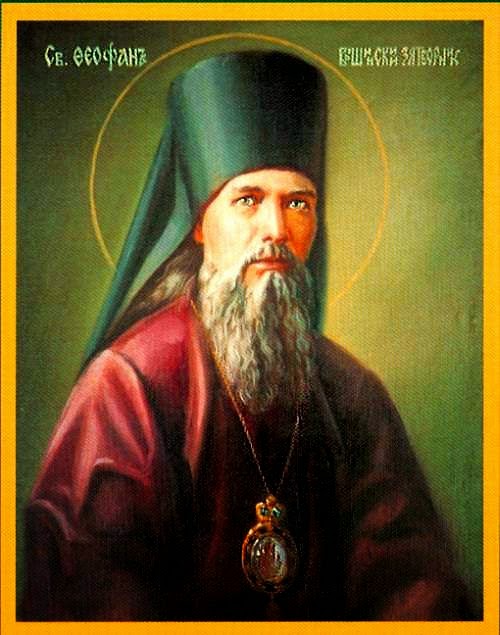
Showing posts with label Όσιος Θεοφάνης ο Έγκλειστος-Saint Theophan The Recluse. Show all posts

Tuesday, 9 January 2018

Understanding the Soul..


I remember many years ago a spiritual teacher asking me this simple question, "Can you describe your soul?"  This question haunted me for several years.  So, what is the nature of our soul? How do we get to know it? Knowing soul is something that requires stillness in the mind. Our mind is continually in motion distracting us from a deep inner knowledge.  Saint Theophan suggests that we divide the soul into different parts to know it –– intellectual, desiring and sensual.


Intellectual Aspect
: You intellect stands about your memory and imagination; this intellect, among with intellectual labor, obtains for you definite concepts or cognitions about things.... This leads to thoughts, opinions and suppositions. Its business is to reason, think things over, and reach necessary conclusions.
But, normally our mind is filled with thoughts of all kinds.  It is not still so we can make reasoned choices. We become driven by our passions.


Desirous Aspect
:  The faculty that operates here is the will... At its foundation lies zeal, or ardor––the thirst for something.... In a person who has lived for some time almost everything is done by habit.
Normally instead of using the will to do God's will we instead override it with our habits to meet the demands of our passions.  So, not only do we have the confusion with the scattering of our thoughts but we also have a distorted inconsistent use of our desiring aspect seeking selfish desires.


Sensual Aspect: the Heart.
Everything which enters the soul from the outside, and which is shaped by the intellectual and desirous aspects , falls to the heart; everything which the soul observes on the outside also passes through the heart, That is why its called the center of life... It constantly and persistently senses the condition of the soul and body, and along with this the various impressions from the individual actions of the soul and body... compelling and forcing man to furnish everything which is pleasant to its.
But it is most commonly tormented by the passions and it does not operate in peace.  It then leads us to emotions and attachments that may not lead us to unity with God.


We can now begin to understand the nature of our spiritual life which is for our soul to regain its proper place so we can center our life on the will of God instead of the passions of our body.  Of course it still needs to care for the body but as a secondary effort.  The soul longs to be reunited with God, a unity broken by Adam and Eve, and a brokenness that Christ showed us how to heal, establishing His Church to help us in this effort.


Source: The Spiritual Life, pp 48 - 60

Sunday, 28 December 2014

Curing the Poison of Gossip By Saint Theophan the Recluse.

       
    A fool’s mouth is his destruction, and his lips are the snare of his soul [Prov 18:7]
†
† †
The Poison
 
Evil speech is worse than all poisons. All other wounds may be healed, but the wound of the tongue has no cure. The tongue of the dragon is less evil than that of the whisperer, which in turn comes from a most evil demon: for it provokes quarrelling and bitter strife between brethren,sows evil and discord among the peaceful, scatters many communities. If you permit the whisperer to approach you,he will strip you of every merit you possess.
 
Whosoever becomes involved with him has already become a confederate in his bloodshed, in his murders, and in his slayings! For a whisperer and a murderer spawn the same whelp: if they do not slay you with the sword, they will bring the same disaster on you with the tongue.
 
Because of these things I charge you severely, that you separate yourself from a whisperer as speedily as you can.
 
Let him be a monk, let him be an anchorite, let him be a champion of virtue or but a novice, whoever he is, as long as he is a whisperer, fly from him. Though he should be your own father, or your brother, if he is a whisperer keep far away from him. For it is better to dwell with a lion or with a lioness than with one who is a whisperer. And do not be ashamed to fly from him; so that he shall not infect you with the poison of his sin.
 
So then, my sons, have no part in murmuring. Do your work earnestly and in silence; for he who is devoted to silence is close to God and His angels and dwells in heaven. For the Lord tells us that: 
 
He that keepeth his mouth keepeth his life: but he that openeth wide his lips shall have destruction.(Prov 13:3).
And then in the day of our visitation He shall say to us:
Blessed art thou, O Israel, because you kept watch on your
tongue;who is like unto thee
. (Deut 33:29).
 
May the Lord preserve you in His grace and peace. Amen. 
 
The Cure Set, O Lord, a watch before my mouth, and a door of enclosure round about my lips. The greatest necessity of all is to control and curb our tongue. The mover of the tongue is the heart: what fills the heart is poured out through the tongue. And conversely, when feeling is poured out of the heart by the tongue, it becomes strengthened and firmly rooted in the heart. Therefore the tongue is one of the chief factors in building up our inner disposition.
Good feelings are silent. The feelings which seek expression in words are mostly egotistical, since they seek to express what flatters our self-love and can show us, as we imagine, in the best light. Loquacity mostly comes from a certain vainglory,which makes us think that we know a great deal and imagine our opinion on the subject of conversation to be the most satisfactory of all. So we experience an irresistible urge to speak out and in a stream of words, with many repetitions, to impress the same opinion in the hearts of others, thus foisting ourselves upon them as unbidden teachers and sometimes even dreaming of making pupils of men, who understand the subject much better than the teacher.
 
When you have to speak, before expressing what has entered your heart and letting it pass to your tongue, examine it carefully; and you will find many things that are better not let past your lips. Know moreover that many things, which it seems to you good to express, are much better left buried in the tomb of silence. Sometimes you will yourself realize this,immediately the conversation is over.Silence is a great power in our unseen warfare and a sure hope of gaining victory. 
 
Silence is much beloved of him,who does not rely on himself but trusts in God alone. It is the guardian of holy prayer and a miraculous helper in the practice of virtues; it is also a sign of spiritual wisdom.
 
 St.Isaac says:
 
Guarding your tongue not only makes your mind rise to God, but also gives great hidden power to perform visible actions, done by the body. If silence is practiced with knowledge,it also brings enlightenment in hidden doing. In another place he praises it thus:
 
If you pile up on one side of the scales all the works demanded by ascetic life, and on the other side—silence,you will find that the latter outweighs the former. Many good counsels have been given us, but if a man embraces silence, to follow them will become superfluous. In yet another place he calls silence the mystery of the life to come; whereas words are the instruments of this world.
 
It can be said in general that:One that keepeth silence is found wise: and another by much babbling becometh hateful.
(Sir 20:5).
 
I shall indicate to you the most direct and simple method to acquire the habit of silence: undertake this practice, and the practice itself will teach you how to do it, and help you.To keep up your zeal in this work, reflect as often as you can on the pernicious results of indiscriminate babbling and on the salutary results of wise silence. When you come to taste the good fruit of silence, you will no longer need lessons about it.
 
 
Source- Orthodox Heritage

Thursday, 2 October 2014

Μέσα στα ξύλα υπάρχει φωτιά, μα είναι κρυμμένη!(Οσίου Θεοφάνους του Εγκλείστου)


Το άγιο Βάπτισμα μας δίνει κάτι, που τίποτ’ άλλο πάνω στη γη δεν μπορεί να μας δώσει: Ενώνει και συνδέει τη φύση μας με τη θεία χάρη. Έτσι, ο άνθρωπος βγαίνει από την κολυμβήθρα όπως ένα αντικείμενο από το εργαστήριο. Πάρε, για παράδειγμα, μια χάλκινη καμπάνα, στην οποία έχει προστεθεί και ασήμι. Μια όμοια χάλκινη καμπάνα χωρίς ασήμι δεν διαφέρει εξωτερικά από την προηγούμενη, αλλά η σύνθεσή της είναι διαφορετική, ο ήχος της διαφορετικός, η ποιότητά της διαφορετική, η αξία της διαφορετική. Όμοια διαφέρουν και δύο άνθρωποι, από τους οποίους ο ένας είναι βαπτισμένος και ο άλλος αβάπτιστος. Στην περίπτωση αυτή η διαφορά τους είναι ότι ο πρώτος έχει τη χάρη του Αγίου Πνεύματος, ενώ ο δεύτερος δεν την έχει. Η χάρη του Αγίου Πνεύματος συμπράττει με το βάπτισμα, αφού ο άνθρωπος βαπτίζεται τόσο με το νερό όσο και με το Άγιο Πνεύμα. Βαπτισμένος και αβάπτιστος είναι φαινομενικά ίδιοι. Στην πραγματικότητα, όμως, ως προς τη σύνθεσή τους είναι εντελώς διαφορετικοί.
Κατά το άγιο Βάπτισμα ένα νέο στοιχείο, στοιχείο υπερφυσικό, προστίθεται στη σύνθεσή μας. Και αφότου προστεθεί, παραμένει κρυμμένο και ενεργεί μυστικά στη φύση μας. Βαπτιζόμαστε νήπια ή και βρέφη. Μολονότι αγνοούμε τι συμβαίνει μέσα μας, η χάρη ενώνεται μαζί μας και αρχίζει να ενεργεί στην ύπαρξή μας κατά την άπειρη αγαθότητα του Θεού και κατά την πίστη των γονιών και των αναδόχων μας. Μεγαλώνοντας, δεν μπορούμε να διακρίνουμε τι σ’ εμάς είναι από τη φύση και τι από τη χάρη, η οποία, από την ώρα ακριβώς του βαπτίσματος, βρίσκεται και ενεργεί μέσα μας με τον δικό της ιδιαίτερο τρόπο. Στα πρώτα χρόνια του χριστιανισμού, όταν οι άνθρωποι βαπτίζονταν σε μεγάλη ηλικία, η ενέργεια της χάριτος στους νεοφώτιστους ήταν άμεσα αισθητή από τους ίδιους και αντιληπτή από τους άλλους. Ιδιαίτερα εντυπωσιακές ήταν οι αλλαγές στα ήθη και το βίο των νέων χριστιανών. Ένας οργίλος άνθρωπος, λ.χ., γινόταν πράος, ένας υπερήφανος ταπεινός, ένας φιλάργυρος γενναιόδωρος, ένας ακόλαστος αγνός κ.ο.κ. Κάτι τέτοιο έγινε, αναμφίβολα, και μ’ εμάς στη κολυμβήθρα του αγίου βαπτίσματος. Μεγαλώνοντας, όμως, και συνειδητοποιώντας τα χαρίσματα μας -όποια και όσα έχει ο καθένας μας-, περηφανευόμαστε και ξιπαζόμαστε, γιατί τα αποδίδουμε στον εαυτό μας. Κά8ε χάρισμά μας, ωστόσο, πρέπει να το αποδίδουμε στη χάρη του Θεού, που αναδημιουργεί ό,τι φυσικό έχουμε μέσα μας, αλλά και μας δίνει πολλά νέα δώρα.
Η χάρη ενεργεί μυστικά στον άνθρωπο από τη νηπιακή ηλικία, αμέσως μετά το βάπτισμα. Ανανεώνεται με τη μετάληψη των αχράντων Μυστηρίων του σώματος και του αίματος του Χριστού. Το περιβάλλον μέσα στο οποίο μεγαλώνουμε, και πρώτιστα η οικο¬γένειά μας, αν έχει πίστη και ευσέβεια, αφήνει ελεύθερη τη χάρη να ενεργήσει σ’ εμάς μέσω της χριστιανικής ανατροφής. Έτσι περνάμε την παιδική και εφηβική ηλικία σε συνθήκες εντελώς ανόμοιες μ’ εκείνες των αβάπτιστων. Δεν σου δίνει ευχαρίστηση η ιδέα ότι είσαι πολύ ευνοημένη από τη θεία πρόνοια; Δόξασε γι’ αυτό τον Κύριο.
Η χάρη ενεργεί μυστικά, αλλά συχνά εκδηλώνεται ανοιχτά σε ιερά έργα. Όσο πιο πολύ ασκείσαι, όσο πιο πολύ τρίβεσαι, όπως λέμε, στη χριστιανική ζωή, τόσο πιο έντονα θα δοκιμάζεις την ενέργεια της χάριτος. Μέσα στα ξύλα υπάρχει φωτιά, μα είναι κρυμμένη- τρίψε δύο ξύλα, και θα δεις να εμφανίζονται πρώτα καπνός κι έπειτα φλόγα. Στο κεχριμπάρι και στο ισπανικό κερί υπάρχει ηλεκτρισμός, μα δεν φαίνεται· τρίψε ένα κομμάτι, και θα το δεις να σπιθοβολάει και να έλκει μικρά σωματίδια. Ο τηλέγραφος είναι σιωπηλός, αλλά με την τριβή η συσκευή του παράγει ηλεκτρισμό και τον ενεργοποιεί. «Τρίψε», λοιπόν, κι εσύ τη ψυχή σου, θέρμανε την με τη χριστιανική ζωή, για να εκδηλωθεί μέσα σου η ζωντανή ενέργεια της θείας χάριτος. Μόνο, μη λυπάσαι τον εαυτό σου.

(Οσίου Θεοφάνους του Εγκλείστου, «Ο δρόμος της ζωής», εκδ. Ι.Μ.Παρακλήτου)

Wednesday, 20 August 2014

On Truth and Love in the Writings of St. John the Evangelist By St.Theophan the Recluse

St.Theophan the Recluse

The Holy Apostle and Evangelist John the Theologian, the beloved disciple of the Lord, is above all an example and a teacher of love. Love breathes through his gospel, lessons about love fill his epistles and his life serves as a striking example of love.

He expounded on all the mysteries of love - its source, its movement in deeds, and its culmination - and where it leads all that follow it, to the heights. In this subject of love St. John is especially well known, and no matter who would begin to muse, about love he would immediately bring to mind St. John as the model of love and turn to him as to a teacher of love.

Now let us examine how contemporary wise men have made use of this teaching. They possess a special kind of vain wisdom called "Indifferentism" by which they reason say: believe as you like, it makes no difference - just love everyone like brothers, be charitable to them, and have a good influence on them. They point out that the Evangelist John the Theologian writes only about love. For him love is light and life and all perfection. According to his words the person who does not love walks in darkness, abides in death, and is a murderer. It is well known that when St. John grew old and was unable to walk they carried him to church. There he only admonished, "Brethren! Let us love one another." Thus he so valued love. They tell us that we also should love like that and only love, believing any way we wish.
I myself have had to listen to such "wisdom." Perhaps you have also had to listen to or will hear something similar to this. Let us contrast their false teaching with the true teaching of St. John the Theologian and then protect our thoughts from wavering from the fundamentals of Christian good sense into the vain wisdom of the "indifferent ones." These so-called "wise" people desire to build everything without God - their external welfare and their morality. From this they strive wherever possible to craftily weave a school of thought where there is no need to talk about God. And they beat their drums about love. They tell us to love one another and here there is nothing to think about God. It is especially on this point where the Holy Evangelist routs them.

Although St John continuously, and exactingly reminds us to love one another, he also places love in such a close bound with God, with love for God and the knowledge of God, that it is impossible to separate them. Behold where St. John's love originates, Herein is love, not that we loved God, but that He loved us, and sent His Son to be the propitiation for our sins. And he adds, Beloved, if God so loved us, we ought also to love one another. (I John 4:10, 11). According to his reasoning, our mutual love must be built up by the action of faith in the Lord, Who came to save us, and consequently it is not all right to believe as you want. Further he teaches, Beloved, let us love one another: for love is of God; (John 4:7) If we love one another, God dwelleth in us ... (I John 4:12) God is love; and he that dwelleth in love dwelleth in God and God in him. (I John 4:16).

You see, he does not say a word about love without speaking about God and the Saviour. Love is from God and leads to God. Thus he who says that he loves his brother, and does not know and love God and the Saviour, is a liar and the truth is not in him cf. (John 4:20,2:4). Therefore it is possible to summarize the entire teaching of the Holy Evangelist on love in the following words: in order to love your neighbor you must love God, and in order to love God, you must, of course come to know Him within yourself and especially in His salvific activity on us. We must know and believe. What does the will of God consist of? In faith and love: thus the commandment says: That we should believe on the name of His Son Jesus Christ, and love one another. (I John 3:23). It does not only command us to love but to believe in the Lord, and in such a way that faith is the source of love. If one were to gather into one all the places where St.John the Evangelist speaks only of love, one could still not confirm his teaching by the false reasoning: only love and believe as you want.

Besides his teaching on love he also speaks of faith, independent of the law of love. Behold how he categorically rejects those who say, believe as you want. What does he preach about from the very first verses: That which was from the beginning, which we have heard, which we have seen with our eyes, which we have looketh upon, and our hands have handled, of the Word of life; For the life was manifested, and we have seen it, and bear witness, and show unto you that eternal life, which was with the Father, and was manifested unto us; That which we have seen and heard declare we unto you, that ye also may have fellowship with us: and truly our fellowship is with the Father and with His Son Jesus Christ. (I John 1:1-3). The most important point with St. John and all the apostles is the teaching about communion with God though the Lord Jesus Christ, from which proceeds communion of the faithful with one another. How can we have the one without the other. Further St. John asks the question: who is a liar? and answers thus: Who is a liar but he that denieth that Jesus is the Christ? He is antichrist, that denieth the Father and the Son. Whosoever denieth the Son, the same hath not the Father... Whosoever shall confess that Jesus is the Son o f God, God dwelleth in him, and he in God. (I John 2:22, 23. 4:15). The whole matter is summed up in confessing the Lord Jesus Christ to be the Son of God and to be God. How then could one possibly say, "Believe any way you want"?

Then there follows the warning: Beloved, believe not every spirit, but try the spirits whether they are of God: because many false prophets are gone out into the world. Herein know ye the Spirit of God: Every spirit that confesseth that Jesus Christ is come in the flesh is of God: And every spirit that confesseth not that Jesus Christ is come in the flesh is not of God: and this is that spirit of antichrist. (I John 4:1-3) He who says, "Believe as you want" does not confess Jesus Christ, for if he did confess Christ he would not speak thus. Therefore he cannot be from God. Where then is he from? - truly from the antichrist.

Finally, the Holy Evangelist describes the whole essence of Christianity thus: And this is the record, that God hath given to us eternal life, and this life is in His Son. He that hath the Son hath life; and he that hath not the Son of God hath not life. (I John 5:11-12). Who possesses the Son of God? Those who believe in His name. Therefore he says, and writes: unto you that believe on the name of the Son of God, that ye may know that ye have eternal life ... (I John 5:13). Consequently, he who does not believe in the Son of God, has not eternal life. Could it possibly make no difference how one wants to believe? No. We know that the Son of God is come, and hath given us light and understanding, that we may know the true God, and that we may be in Him that is true, even in His Son Jesus Christ. This is the true God, and eternal life. (I John 5:20).

These excerpts should be enough, I suppose, in order to show the Indifferentists that in vain do they seek to find support for their lie in the teaching of St. John the Theologian. It is more than likely that they make such claims without having ever read St. John's holy and divinely inspired writings, but rather quote him based on rumors about his overflowing love. Let them even now find something else besides the above argument, to defend their teaching to us believers. One word alone from the beloved disciple is sufficient to discredit their teaching and without any doubt to confirm our belief explicitly in that which was given to us by the Lord through the Holy Apostles and preserved by the Church.

I would only add the following consideration to the decisive words of the Apostle and Evangelist John: having estranged themselves in their minds from the Lord, these unbelievers grasp at acts of charity whose source and support are precisely love. They act in this way only to be founded on something without the assurance that they have found a solid basis. If only they had a clear understanding of how it is indeed possible for man to act in a fruitful way, they would never remain fixed on their teaching. The essence of the matter is - that we are not in the proper state. Therefore we cannot act in the right way. In order for us to act in the correct way we must enter into the right state. By our own powers we are not capable of doing this. The Lord, having come to the earth, lifted up man to the right state. He did not lead man into this state for His own sake but rather that man would accept from Him renewed humanness and thus gain the possibility of acting properly. We obtain this state through Holy Baptism, for those who are baptized into Christ have put on Christ. From the time of Baptism we become one with the Lord and begin to live His life and act by His power. Those who would claim love or the right action (for love is the fullness of the law) should first accept all the premises of Christianity in order to be able to walk rightly and deny their own falseness (lie). This is impossible without faith, for faith is the root of Christianity and beginning of everything. The Lord Himself says this: Abide in Me, and I in you. As the branch cannot bear fruit of itself, except ye abide in the vine; no more can ye, except ye abide in Me. I am the vine, ye are the branches: He that abideth in Me, and I in him, the same bringeth forth much fruit: for without Me ye can do nothing. If a man abide not in Me, he is cast forth as a branch, and is withered; and men gather them and cast them into the fire, and they are burned. (John 15: 4-6)

When someone begins to expound to you about love or fruitful action independent of true belief, tell him: Wait, first believe correctly. By faith acquire all the salvific precepts of Christianity. Through them be united with the Lord, make your life and strength depend on Him like you would on an injection for your health and then you will begin to act in a fruitful way. It is a fact that the witness to a righteous life is fruitful activity in love, but in order to attain it and to remain in it one must accept all of God's Truth with faith and pass through all of God's sanctifying actions [on one's self]. Only under these conditions, i.e., by abiding in True Love, m ay we grow up into Him in all things, Who is the head, even Christ (Eph. 4,15). We could summarize thus: he who does not have the right Faith cannot enter into the proper state, and he who does not enter into the right sta te cannot properly act. Now do you see how one cannot say: Believe as you wish, only love"?

Faith is not only the image of the knowledge of God and of our relationship to Him; it also includes all the salvific institutions [not just the Church as establishment but all that is contained within the Church for salvation] given by God. These salvific institutions maintain active faith. Our so-called wise men might not actually be opposed to Christian teaching, but, more than anything else, they are repulsed by Christian institutions. Since these institutions are nothing more than faith in reality and in action, then their main sin is that they do not want to act in the spirit of the Faith. One is only amazed at how these people so persistently expound about deeds and labors but remove themselves from activity in the realm of holy Faith. There is something amiss here. Surely they are acquainted with the laws of logical thought. There is such duplicity here that one must assume that they are not in fact doers, but are acted upon - they are the tools of a foreign spirit, and such a spirit that is itself foreign to Truth.

Brethren, having understood this, let us guard ourselves from the evil reasoning of this world. Only those who have never tasted the Truth can waver in it. Let us fulfill with humility and in the spirit of truth all that our holy Faith demands. Then we will have, and carry within, a witness which will bring to naught all false arguments from without. May the Lord illumine us by His Truth. Amen.

Originally published in "Orthodox Life", No. 6, 1996
Translated from "A God-pleasing Life, General Themes,"
Homilies of Bishop Theophan (the Recluse), pp. 56-62.

Tuesday, 19 August 2014

Πῶς οἱ ἅγιοι ἀκοῦνε τίς προσευχές μας..


Όσιος Θεοφάνης ο Έγκλειστος
Πολύ χαίρομαι που σου άρεσαν όσα σου έγραψα για τον αιθέρα. Δέξου πως υπάρχει και κράτα τον αδιάλειπτα στο νου σου. Θα δεις πόσο θα σε βοηθήσει αυτό. Εξηγεί τόσα πράγματα, δίνει τόση παρηγοριά!
Ίσως έχεις ακούσει κάποιους να ρωτάνε: “Πώς ακούνε οι άγιοι τις προσευχές μας;”. Ίσως κι εσύ να έχεις αναρωτηθεί για το ίδιο πράγμα. Απαντήσεις και απαντήσεις έχουν δοθεί, μα το ερώτημα παραμένει ακόμη αναπάντητο.
Κατά τη γνώμη μου, αν δεχθούμε την ύπαρξη ενός στοιχείου, όπως ο αιθέρας, τότε δεν είναι δυνατό να μην ακούνε οι άγιοι τις προσευχές μας.
Ξέρεις πώς λειτουργεί ο ηλεκτρικός τηλέγραφος; Στην Πετρούπολη, για παράδειγμα, ενεργοποιούν έναν ειδικό μηχανισμό. Την ίδια στιγμή η ενέργεια αυτή αντανακλάται σ’ έναν όμοιο μηχανισμό, που βρίσκεται, ας πούμε, στη Μόσχα. Τότε και ο δεύτερος μηχανισμός ενεργοποιείται όπως ο πρώτος. Γιατί; Επειδή οι δύο μηχανισμοί, πρώτον, είναι του ίδιου τύπου και, δεύτερον, συνδέονται με σύρμα.
Η επικοινωνία μας με τους αγίους γίνεται με όμοιο τρόπο. Εμείς και οι άγιοι είμαστε σαν τις τηλεγραφικές συσκευές, σαν δύο μηχανισμοί του ιδίου τύπου, και ο αιθέρας, το στοιχείο δηλαδή μέσα στο οποίο κινούνται οι άγιοι και το οποίο συνάμα περιβάλλει την ψυχή μας, είναι … το σύρμα!
Όταν μέσα στην ψυχή μας ενεργεί προσευχή αληθινή, προσευχή ειλικρινής και καθαρή, η προσευχή αυτή, διαμέσου του στοιχείου που περιβάλλει την ψυχή, πετάει σαν ακτίνα φωτός προς τους αγίους και τους μεταφέρει τα αιτήματά μας. Δεν μεσολαβεί κανένα χρονικό διάστημα ανάμεσα στη στιγμή που κάνουμε στην προσευχή μας και στη στιγμή που αυτή ακούγεται από τους αγίους. Αμέσως μας ακούνε οι άγιοι, φτάνει μόνο να προσευχόμαστε εγκάρδια. Η εγκάρδια προσευχή είναι η τηλεγραφική γραμμή μας με τους ουρανούς.
Η ίδια ακριβώς προσευχή, όταν δεν βγαίνει από την καρδιά μας αλλά μόνο από τον εγκέφαλο και το στόμα μας, δεν φτάνει στον ουρανό και δεν ακούγεται από τους αγίους. Αυτή, βλέπεις, δεν είναι καν προσευχή, είναι μόνο κάτι σαν προσευχή.
Νομίζω πως είχες ήδη κάποιαν εμπειρία αληθινής προσευχής, μολονότι όλα τούτα δεν τα γνώριζες. Περιγράφεις το πώς, ύστερ’ από θερμή προσευχή, γαλήνεψες, παίρνοντας την εσωτερική πληροφορία ότι θα λυτρωνόσουν από το πρόβλημα που σε βασάνιζε, όπως και πραγματικά έγινε.
Φαίνεται, λοιπόν, πως είναι σωστή η παρομοίωση της εγκάρδιας προσευχής, που ανεβαίνει αόρατα προς τα ουράνια μέσω του αιθέρα, με τον τηλέγραφο. Από την καρδιά σου βγήκε μία αστραπή, μια ακτίνα, και πήγε στον ουρανό. Από κει, πάλι, ήρθε μια άλλη ακτίνα σ’ εσένα. Ήταν η ανταπόκριση στο αίτημά σου. Αυτό συμβαίνει μόνο με την προσευχή που βγαίνει από την καρδιά. Τέτοια προσευχή δεν γίνεται πάντα μέσα σε μια στιγμή, εισακούεται όμως πάντα μέσα σε μια στιγμή .
Μη φουσκώσεις από κενοδοξία γι’ αυτή την επιτυχία σου. Μακάρι, με την χάρη του Κυρίου, να προσεύχεσαι με τον ίδιο τρόπο πιο συχνά. Θυμήσου πώς προσευχήθηκες τότε και προσπάθησε να προσεύχεσαι πάντα έτσι, εγκάρδια, όχι μόνο με τη γλώσσα και το νου.
Αν το κάνεις, θα πάρεις μίαν ικανοποιητική απάντηση στο ερώτημα: Πώς μπορεί να χει κανείς πνευματικά; Γιατί η εγκάρδια προσευχή είναι η αναπνοή και η ζωή του πνεύματος. Με την εγκάρδια προσευχή το πνεύμα μένει «εν τω Θεώ», ενώνεται μαζί Του. Και με την ένωση αυτή αποκτά την πλήρη ζωτικότητά του. Μάθε, λοιπόν, πως η ψυχή ζει μόνο όταν προσεύχεται με τον τρόπο που ήδη γνώρισες. Αλλιώς, βρίσκεται ανάμεσα στη ζωή και το θάνατο, αν δεν έχει ολότελα νεκρωθεί.
Δεν θα σου κρύψω πως, αν και μπόρεσες να προσευχηθείς εγκάρδια μια φορά, πολύ δύσκολα θα μπορέσεις να το ξανακάνεις. Ο Θεός είναι που χαρίζει την αληθινή προσευχή και ο φύλακας άγγελος που την ενισχύει. Έρχεται και φεύγει.
Εμείς, όμως, δεν επιτρέπεται να παραιτούμαστε από τον προσευχητικό αγώνα. Η προσευχή επισκέπτεται πάντα τον άνθρωπο που αγωνίζεται για την απόκτησή της, ποτέ τον οκνηρό και ράθυμο. Οι άγιοι πατέρες κοπίασαν πολύ στην προσευχή και μ’ αυτούς ακριβώς τους κόπους άναψαν μέσα τους ένα προσευχητικό πνεύμα, που την εικόνα του μας άφησαν στα συγγράμματά τους. Όσα σχετικά έγραψαν, συνιστούν, μιαν ολόκληρη επιστήμη, την επιστήμη της προσευχής, που είναι η επιστήμη των επιστημών…
… Μου γράφεις ότι έχεις στο νου ταπεινούς λογισμούς και στην καρδιά ταπεινά συναισθήματα για τον εαυτό σου. Αυτά είναι, θα έλεγα, αγγελικά. Πόσο τέλειοι και φωτεινοί είναι οι άγγελοι!
Και όμως είναι συνάμα τόσο ταπεινοί, περισσότερο κι από τον πιο ταπεινό άνθρωπο. Μια ταπεινή ψυχή είναι πάντα φωτεινή. Σκοτεινή γίνεται όταν υψηλοφρονεί, γιατί η έπαρση προέρχεται από τα σκοτεινά πνεύματα. Ο Θεός να δώσει, ώστε, ποτέ να μη χάσεις αυτά τα ταπεινά συναισθήματα, κι έτσι να είσαι πάντα λουσμένος στο φως…

«Από το βιβλίο: «ΟΣΙΟΥ ΘΕΟΦΑΝΟΥΣ ΤΟΥ ΕΓΚΛΕΙΣΤΟΥ
Ο ΔΡΟΜΟΣ ΤΗΣ ΖΩΗΣ
γράμματα σε μια ψυχή»
ΕΚΔΟΣΗ ΤΕΤΑΡΤΗ
ΙΕΡΑ ΜΟΝΗ ΠΑΡΑΚΛΗΤΟΥ
ΩΡΩΠΟΣ ΑΤΙΙΚΗΣ

Sunday, 17 August 2014

St.Theophan the Recluse. WHY ORTHODOX CHRISTIANITY SHOULD NOT CHANGE WITH THE TIMES.

 St.Theophan the Recluse
It reached my ears that, as it seems, you consider my sermons very strict and believe that today no one should think this way, no one should be living this way and therefore, no one should be teaching this way. “Times have changed!”


How glad I was to hear this. This means that you listen carefully to what I say, and not only do you listen, but you are also willing to abide by it. What more could we hope for, we who preach as we were ordered and as much we were ordered?


Despite all this, in no way can I agree with your opinion. I even consider it my duty to comment on it and to correct it, since – even though it perhaps goes against your desire and conviction – it comes from something sinful, as though Christianity could alter its doctrines, its canons, its sanctifying ceremonies to answer to the spirit of each age and adjust itself to the changing tastes of the sons of this century, as though it could add or subtract something.

Yet, it is not so. Christianity must remain eternally unchanging, in no way being dependent on or guided by the spirit of each age. Instead, Christianity is meant to govern and direct the spirit of the age for anyone who obeys its teachings. To convince you of this, I will put forward some thoughts for you to consider.
 

Some said that my teaching is strict. First of all, my teaching is not my own, nor it should be. In this sacred office nobody should, nor even can, preach his own teaching. If I or someone else ever dare to do so, you can put us outside the Church.

We preach the teachings of our Lord, God and Saviour Jesus Christ, of the holy Apostles, and the Holy Church, which is guided by the Holy Spirit. At the same time, we make sure to do everything possible to keep these teachings whole and inviolate in your minds and hearts. Every thought we present and every word we use, we do so very carefully, so as not to overshadow this brilliant and divine teaching in any way. Nobody can act differently.


...a single raising of your mind to God, and a single humble genuflexion to His glory and in His honor has infinitely more value than all the treasures of the world... --St Nicodemos and Theophan the Recluse (Unseen Warfare: Chapter 20)

Tuesday, 29 July 2014

St. Theophan the Recluse - ΟΝ CORRECTING THE HEART


By St. Theophan the Recluse, translated from "Pisma o Khristianskoi Zhizni," Moscow, 1908.

I want everything to be J. MINE" determines the greedy man. This is the second outgrowth from the root of evil. It reveals most noticeably the spirit of self- love which acts here as a kind of independent entity; the greedy man does not say a word, he does not take a step or make a move unless it is to bring him some advantage. Everything about him is calculated, everything is so ordered, everything is motivated in such a way that time and place and objects and persons—in short, everything his hand or mind touches upon—bears their own related tributes into his coffers.

Personal gain or interest—this is the principal incentive which everywhere and always brings his entire being into a flurry of activity, and under its influence he is prepared to transform everything into a means to achieve his own ends: He will seek the highest ranks of dignity and honor if this is advantageous; he will accept the most difficult employment if it is more profitable than others; he will set his mind to endure any and every difficulty—he won't eat or drink—if only his gain is realized. He is either mercenary or acquisitive or stingy, and only under the strong influence of vainglory is he able to love splendor and luxury. His possessions are dearer to him than life itself, dearer than people, dearer than the Divine commandments. His spirit is stifled by things; and he even lives through them and not of it self. Here, then, is the power and the sphere of influence belonging to this second outgrowth from the seed of evil—self-love! And who doesn't have certain things which it would be as painful to part with as it would be to part with happiness?

"I want to live for my own pleasure," says the carnal man. His soul is mired in the flesh and in feelings. He doesn't think about heaven, about spiritual needs or the requirements of the conscience or about responsibility. He doesn't want to, he cannot think of this. His experience is limited to various forms of enjoyment; he cannot do without them; they occupy his thoughts and conversations.

If the carnal man begins to please his palate, he becomes an epicurean; the play of colors cultivates his taste for elegant dress; a variety of sounds inspires pointless or annoying talkativeness; the need for food leads him to gluttony; the need for self- preservation- to laziness; other needs – to dissipation.

Friday, 9 May 2014

St.Theophan The Recluse-On How Grace Settles in the Repentant Soul.


In looking at a person who has repented, we are looking at a person who has actually entered into communion with God, but this communion is still hidden, secret, unmanifest. His goal is to attain communion that is complete, tangible, and perceptible. We must precisely determine all of this for ourselves and be assured, because all the penitent's labor for salvation should be built upon this foundation, namely: that in the Sacrament of Confession (or Baptism) grace descends perceptibly to the spirit but then hides itself from the awareness, although it does not in fact go away. It remains imperceptible until the heart is purified, at which time it dwells visibly and finally. It is obvious that our only instructors in this matter can be the Holy Fathers. None of them expresses it so well as St. Diadochus, Bishop of Photiki, and St. Macarius of Egypt. We present their witness to our suppositions. 

Grace Settles in a Person and Stays with Him from the Moment he Receives the Mysteries.

"From the instant we are baptized," says St. Diadochus, "grace is hidden in the depths of the intellect." Also: "For when through Holy Baptism divine grace in its infinite love permeates the lineaments of God's image — thereby renewing in the soul the capacity for attaining the divine likeness — what place is there for the devil?" St. Macarius says: "Grace is constantly present, and is rooted in us, and worked into us like leaven, from our earliest years, until the thing thus present becomes fixed in a man like a natural endowment, as if it were one substance with him. 


When Grace First Settles in a Person through a Sacrament, it Vouchsafes that Person a Complete Taste of the Blessedness of Communion with God.

Monday, 28 April 2014

Οσίου Θεοφάνους του Εγκλείστου-Πῶς νά σηκώνουμε τήν συκοφαντία


ΟΣΙΟΥ ΘΕΟΦΑΝΟΥΣ ΤΟΥ ΕΓΚΛΕΙΣΤΟΥ
 
Σας συκοφάντησαν. Δεν είστε ένοχος. Οφείλετε, ωστόσο, να υπομείνετε τη συκοφαντία μεγαλόψυχα. Και η υπομονή σας αυτή θα είναι ο κανόνας, το θεραπευτικό επιτίμιο, για παράπτωμα που διαπράξατε και για το οποίο είστε ένοχος. Μέσα στη συκοφαντία, επομένως, είναι κρυμμένο το έλεος του Θεού.
Μολονότι δεν είναι εύκολο, πρέπει οπωσδήποτε να συμφιλιωθείτε με τους συκοφάντες σας. Με μίσος στην καρδιά, δεν μπορεί να σωθεί κανείς. Γι΄αυτό οφείλουμε να αντιδρούμε με αυταπάρνηση στα εμπαθή αισθήματά μας. Έτσι εξαφανίζονται και οι θλίψεις. Η εμπάθεια, βλέπετε, είναι που γεννάει τη θλίψη.

Γνωρίζω πόσο δύσκολα υποφέρεται η συκοφαντία. Είναι λάσπη -μα λάσπη ιαματική. Υπομονή! Αργά ή γρήγορα θα λήξει η δοκιμασία. Ο Γιατρός των ψυχών θα αφαιρέσει το τσουχτερό κατάπλασμα.

Συκοφαντούσαν και τον Κύριο: «Ιδού άνθρωπος φάγος και οινοπότης, τελωνών φίλος και αμαρτωλών» (Ματθ. 11:19). «Δαιμόνιον έχει και μαίνεται» (Ιω. 10:20). Τι μεγάλη δόξα, να μετέχουμε στα παθήματα του Χριστού!

Σηκώστε ταπεινά κι αγόγγυστα το σταυρό σας. Μη λιποψυχείτε. Αν η συνείδησή σας δεν σας κατακρίνει, μπορείτε να υψώνετε πάντα με θάρρος το βλέμμα σας στο Θεό και να στέκεστε με παρρησία μπροστά Του. Τι πιο σπουδαίο απ’ αυτό;.
Να ζείτε και να φέρεστε φυσιολογικά. Το πώς σας βλέπουν οι άλλοι να μην το λογαριάζετε. Μόνο του Θεού η κρίση έχει βαρύτητα, ως αλάθητη. Εμείς οι άνθρωποι δεν γνωρίζουμε καλά-καλά ούτε τον ίδιο μας τον εαυτό, πολύ περισσότερο τον πλησίον.

(Οσίου Θεοφάνους του Εγκλείστου, Χειραγωγία στην Πνευματική Ζωή, Ι. Μ. Παρακλήτου, Εκδ. ε΄, 2005, σ. 18-19)

Tuesday, 1 April 2014

Theophan the Recluse, On prayer, Homily 2


Yesterday I showed you one method of establishing a prayerful spirit in yourselves [see homily 1], namely, how to pray in a way which corresponds to the meaning of the prayers. But this is only the beginning of the art (science) of prayer and it is necessary to go further. Consider the study of language, for example. First one studies words and phrases from books. But this is not sufficient, one must go further, and truly reach the point where he can correctly form phrases in the given language without the aid of the textbook. It is the same in the work of prayer. We get used to praying with prayer books, praying using prepared prayers given to us by the Lord and the Holy Fathers who were successful in prayer. But we should not stop at that, we need to continue on, and having accustomed ourselves to making petition to God for help with our minds and hearts, we must attempt to ascend to Him. We must strive to reach the point where our soul by itself begins speaking, so to speak, in a prayerful conversation with God and by itself ascends to Him and opens itself to Him and confesses what is in it and what it desires.

The soul must be taught how to ascend to God and open itself to Him. I will briefly instruct you how one should proceed in order to succeed in this art.

The skill of praying with piety, attention, and feeling according to a prayer book itself leads to this higher level. In the same way that water flows out of a bowl that is overfilled, so the soul which is filled with holy feelings by prayer begins by itself to spill out its prayer to God. But when pursuing this goal, there are particular steps which each person on this path must take.

Why is it, you ask, that one can pray for so many years with a prayer book, and still not have prayer in his heart? I think the reason is that people only spend a little time lifting themselves up to God when they complete their prayer rule, and in other times, they do not remember God. For example, they finish their morning prayers, and think that their relation to God is fulfilled by them; then the whole day passes in work, and such a person does not attend to God. Then in the evening, the thought returns to him that he must quickly stand at prayer and complete his evening rule. In this case, it happens that even if the Lord grants a person spiritual feelings at the time of the morning prayer, the bustle and business of the day drowns them out. As a result, it happens that one does not often feel like praying, and cannot get control of himself even to soften his heart a little bit. In such an atmosphere, prayer develops and ripens poorly. This problem (is it not ubiquitous?) needs to be corrected, that is, one must ensure that the soul does not only make petition to God when standing in prayer, but during the whole day, as much as possible, one must unceasingly ascend to Him and remain with Him.

In order to begin this task, one must first, during the course of the day, cry out to God more often, even if only with a few words, according to need and the work of the day. Beginning anything, for example, say "Bless, O Lord!" When you finish something, say, "Glory to Thee, O Lord", and not only with your lips, but with feeling in your heart. If passions arise, say, "Save me, O Lord, I am perishing." If the darkness of disturbing thoughts comes up, cry out: "Lead my soul out of prison." If dishonest deeds present themselves and sin leads you to them, pray, "Set me, O Lord, in the way", or "do not give up my feet to stumbling." If sin takes hold of you and leads you to despair, cry out with the voice of the publican, "God, be merciful to me, a sinner." Do this in every circumstance, or simply say often, "Lord, have mercy", "Most Holy Theotokos save us”, "Holy Angel, my guardian, protect me", or other such words. Say such prayers as often as possible, always making the effort for them come from your heart, as if squeezed out of it. When we do this, we will frequently ascend to God in our hearts, making frequent petitions and prayers. Such increased frequency will bring about the habit of mental conversation with God.

But in order for the soul to begin crying out in this way, one must first teach the soul to ascribe everything to the glory of God, all of its works, whether great and small. This is the second way of teaching the soul to turn to God more often during the day, for if we apply ourselves to fulfill the apostolic commandment, that is, do all things for the glory of God, even "if we eat or drink" ({bible}1 Cor 10.31{/bible}), then we will ceaselessly remember God in all that we do. Our remembrance of God will be accomplished not simply, but with care, so that in no case we would act wrongly and offend God by any deed. This will help us to turn to God with fear, prayerfully asking for help and understanding. Since we are almost always doing something, we will always be turning to God in prayer. Consequently, the art of raising up the heart in unceasing prayer to God will develop within our souls.

In order for the soul to do all things as they should be done, that is to the glory of God, one must prepare from the early morning, from the very beginning of the day, before "a man goes forth unto his work, and unto his labors until evening" ({bible}Ps. 103{/bible}). This inclination leads to the contemplation of God, and this the third way of teaching the soul to turn frequently to God. Contemplation of God is the pious reflection on divine properties and actions, and about our necessary response to them. It means to reflect on God's goodness, righteous judgment, wisdom, omnipotence, omnipresence, knowledge of all things, about creation and industry, about the working of Salvation in our Lord Jesus Christ, about grace and the word of God, about the holy mysteries and about the Kingdom of Heaven. If you start to reflect on any one of these things, your soul will immediately be filled with pious feeling toward God. Consider, for example, the goodness of God, and you will see that you are surrounded by God's mercies, both physical and spiritual, and that you would have to be a stone not to fall down before God pouring out feelings of thanksgiving. Consider the omnipresence of God, and you will understand that you are always before God, and God is before you, and thus you cannot avoid being filled with pious fear. Consider the knowledge God has of all things, and you will realize, that nothing inside of you is hidden from the eye of God, and will set yourself to be strictly attentive to the movements of your heart and mind, in order not to offend the all-seeing God in any way. Consider the righteousness of God, and you will believe that not one evil deed remains unpunished. As a result you will firmly set yourself to cleansing all of your sins in a heartfelt way before God with brokenness and repentance. Thus, whatever property or action of God on which you reflect, that reflection will fill your soul with pious feelings and inclinations towards God. It will align all of your human substance towards God, and it is therefore the most direct means of teaching the soul to ascend to God. The most useful and comfortable time for this is morning, when the soul is not yet burdened with many worries and work issues. Specifically, the best time is after morning prayers. Finish your prayers, sit down, and with thoughts cleansed by prayer, begin to think now about one divine aspect, and tomorrow about another, and incline your soul to this aspect. "Come", says St. Dimitri of Rostov, "come, holy contemplation of God, and let us immerse ourselves in contemplation of the great works of God", and he passed mentally through the works of providence and creation, or the miracles of our Lord and Savior, or His sufferings, or something else, and warmed up his heart, and began to pour out his soul in prayer. Everyone can do the same. The work is small; one only needs desire and resolve, but the fruits are many.

Here are three means, other than the prayer rule, by which one can teach the soul to ascend prayerfully to God: first, dedicate some time in the morning to the contemplation of God; second, turn every action to the glory of God, and third, often turn to God with short prayers. When contemplation of God goes well in the morning, it leaves a deep inclination toward thinking about God. Thinking about God makes the soul carefully order all of its actions, interior and exterior, and turn them to the glory of God. At the same time, this sets up a state in the soul that it often will be moved by prayerful cries to God. These three: contemplation of God, doing all to the glory of God, and frequent short prayers are the most active weapons of mental prayer and prayer of the heart. Each of them raises the soul to God. He who decides to practice these quickly attains the habit of ascending to God in his heart. The labor put into these leads to the heights. The higher one ascends on a mountain, the freer and easier he breathes. Thus it is also here: the more one does these exercises, the higher his soul ascends, and the higher the soul ascends, the more freely prayer can act in it. Our soul by nature is the abode of the higher divine world. Our soul should always be in this world by thoughts and feelings of the heart. But the baggage of worldly thoughts and passions leads and pulls the soul down. These methods separate the soul little by little from the earth, and then completely pull it away. When they have completely pulled the soul from the earth, then the soul lives in its own region, and will happily live on high. Here in heart and mind, and later in actual substance it will be vouchsafed to be before the face of God in the choirs of the angels and the saints. May God grant this to all of you through his grace. Amen.


Translated from the Russian by Rev. Fr. Michael van Opstall – January 2007

Friday, 31 January 2014

"Μερικές πρακτικές οδηγίες για την Προσευχή" (Άγιος Θεοφάνης ο Έγκλειστος)


(Άγιος Θεοφάνης ο Έγκλειστος)

Η συγκέντρωση του νου την ώρα της προσευχής.

Τι να κάνουμε, όταν ο νους μας τρέχει εδώ κι εκεί και δεν μπορούμε να τον συμμαζέψουμε στην προσευχή;
Όταν είμαστε μόνοι στο σπίτι, μπορούμε ν’ αναβάλουμε την έναρξη της προσευχής ή, αν έχουμε ήδη αρχίσει, να τη διακόψουμε για λίγο. Αν και ύστερα απ’ αυτό το μικρό διάλειμμα ο νους μας δεν συνεργάζεται με την προαίρεση μας, τότε δεν έχουμε παρά να του επιβάλουμε με τη βία, θέλει δεν θέλει, να συγκεντρωθεί στην προσευχή, σ’ όποιο βαθμό βέβαια είναι δυνατόν. Μέσα στην εκκλησία, πάλι, μερικές φορές δεν ακούμε ή δεν καταλαβαίνουμε όσα ψάλλονται, διαβάζονται ή εκφωνούνται. Σ’ αυτές τις περιπτώσεις, σταθείτε νοερά ενώπιον του Κυρίου και αφοσιωθείτε στην ευχή του Ιησού. Πρέπει να ξέρετε, πάντως, ότι στο ναό, κατά την τέλεση οποιασδήποτε ακολουθίας, και κατεξοχήν της θείας Λειτουργίας, κάθε λατρευτική πράξη, κάθε κίνηση έχει τη σημασία της. Όποιος, λοιπόν, γνωρίζει και κατανοεί τη σημασία κάθε πτυχής της τελετουργίας, συμμετέχει με επίγνωση στη σύναξη των πιστών και τρέφει την ψυχή του με το ουράνιο μάννα, που προσφέρεται άφθονα στα πνευματικά συμπόσια της εκκλησιαστικής λατρείας.

Η νύχτα, ιδιαίτερα οι μεταμεσονύκτιες ώρες, είναι το πιo κατάλληλο χρονικό διάστημα για προσευχή.

Πόσες μετάνοιες να κάνει κανείς, λέγοντας την ευχή;
 
Όσες θέλει, μικρές ή μεγάλες, ανάλογα με τη σωματική δύναμη και την ψυχική διάθεση του. Καλό είναι, πάντως, να καθορίσει έναν ελάχιστο αριθμό μετανοιών για κάθε μέρα και να τις εκτελεί με αυστηρή συνέπεια.

Το Ευαγγέλιο δεν είναι ανάγκη να το διαβάζετε όρθιος. Καθιστός το κατανοείτε καλύτερα, γιατί δεν κουράζεστε, κι έτσι η προσοχή σας συγκεντρώνεται στο ιερό κείμενο, χωρίς να μειώνεται η ευλαβική σας διάθεση. Όσο για τους Ψαλμούς, διαβάζετε όσους μπορείτε και επιθυμείτε. Έναν, δύο, τρεις ή περισσότερους…

Μπορείτε να κοινωνάτε συχνά, φτάνει να είστε κάθε φορά σωστά προετοιμασμένος.
 
Τί σημαίνει να έχουμε καθαρή συνείδηση ως προς τα υλικά πράγματα και αντικείμενα; Σημαίνει να μην κάνουμε κακή χρήση των πραγμάτων, αλλά να τα χρησιμοποιούμε συνετά και να τα συντηρούμε με τη μεγαλύτερη δυνατή επιμέλεια.

Η αδιάλειπτη μνήμη του Θεού
 
Θέλεις να μην ξεφεύγει ο νους σου την ώρα της προσευχής και της ακολουθίας; Αγωνίσου να θυμάσαι το Θεό κάθε στιγμή της ημέρας, είτε είσαι μόνος είτε μαζί με άλλους, στο σπίτι, στη δουλειά, στο δρόμο, παντού. Έτσι, και την ώρα της προσευχής ή της ακολουθίας στο ναό, ο νους σου θα είναι συγκεντρωμένος σ’ Εκείνον και ευλαβικά θα επικοινωνεί μαζί Του.

Πότε είναι ευάρεστη στο Θεό η προσευχή μας
 
Θυμηθείτε ότι η προσευχή δεν είναι λόγια και μετάνοιες, αλλά προσήλωση του νου και της καρδιάς στο Θεό. Είναι δυνατό να διαβάσετε όλες τις τακτές ακολουθίες της ημέρας και να εκτελέσετε όλες τις καθορισμένες μετάνοιες, αλλά η επαφή σας με το Θεό να είναι είτε εντελώς ανύπαρκτη είτε ασήμαντη, με το νου σκορπισμένο και την καρδιά κρύα. Έτσι κάνετε τον κανόνα σας, όχι όμως προσευχή. Μια τέτοια «προσευχή» είναι εφάμαρτη. Ο Κύριος να μας φυλάξει!

Με φόβο και τρόμο πρέπει να επιτελούμε τα έργα του Θεού -αυτό να το θυμάστε πάντα. Με κάθε τρόπο και μ’ όλη σας τη δύναμη προσπαθήστε να έχετε το νου σας στα λόγια της προσευχής ή, όπως λέει ο όσιος Ιωάννης ο Σιναΐτης, να κλείνετε το νου σας μέσα στα λόγια της προσευχής. Τη στιγμή που αρχίζετε να προσεύχεστε, πρέπει όλη σας η προσοχή να είναι συγκεντρωμένη στο Θεό και να μην απομακρύνεται απ’ Αυτόν…

Τότε μόνο να θεωρήσετε ότι προσευχηθήκατε καλά, όταν, τελειώνοντας, η ψυχή σας δονείται από συντριβή και αυτομεμψία. Στη διάρκεια της ημέρας προσπαθήστε, με την αδιάλειπτη προσευχή, να βρίσκεστε νοερά ενώπιον του Κυρίου κάθε στιγμή, όπως βρίσκονται οι άγγελοι. Εκείνοι Του προσφέρουν την ακατάπαυστη δοξολογία. Εμείς ας Του προσφέρουμε τη μετάνοιά μας.

Πότε εισακούεται από το Θεό η προσευχή μας
 
Να πως πρέπει να ζητάς κάτι από το Θεό: “Κύριε, Εσύ βλέπεις ότι χρειάζομαι το τάδε πράγμα ή ότι υποφέρω από τη δείνα συμφορά. Βοήθησε με, όπως ξέρεις και όπως θέλεις! Γενηθήτω το θέλημά Σου…”.

Μ’ αυτή την εσωτερική τοποθέτηση, να προσεύχεσαι πολύ. Όχι μια φορά, έστω και παρατεταμένα, ούτε για μια μέρα μόνο, αλλά για εβδομάδες, μήνες, χρόνια… Όλο να ικετεύεις, όλο να κραυγάζεις: “Κύριε, βοήθησε με! Κύριε, λύτρωσε με! ‘Ωστόσο, ας μη γίνει ό,τι θέλω εγώ, μα ό,τι θέλεις Εσύ”. Αυτό ακριβώς έλεγε και ο Χριστός στη Γεθσημανή, όταν προσευχόταν στον Πατέρα Του. Και η χήρα της ευαγγελικής παραβολής βρήκε τελικά το δίκιο της από τον άδικο εκείνο δικαστή, μόνο και μόνο επειδή δεν κουράστηκε να τον παρακαλάει για πολύν καιρό. Κάποιος σοφός είπε το λόγο τούτο: “Πρέπει να γίνεις φορτικός στο Θεό και στους άγιους Του!”.

Η δύναμη της προσευχής
 
Η δύναμη της προσευχής βρίσκεται όχι στον εξωτερικό τύπο της, αλλά στο περιεχόμενο, στο πνεύμα της.

Προσπαθείτε να βιώσετε την προσευχή. Αυτό ακριβώς είναι που χρειάζεται. Κάποιος από τους πατέρες λέει, πως, όταν προσευχόμαστε, πρέπει να αισθανόμαστε όπως οι υπόδικοι μπροστά στο δικαστή.

Ρώτησε κάποιος έναν ασκητή: “Πώς να στέκομαι στην προσευχή;” Κι εκείνος αποκρίθηκε: “Να στέκεσαι σαν σε κριτήριο, με το βλέμμα σου προσηλωμένο στα χείλη του Κυρίου, που την επόμενη κιόλας στιγμή -έτσι να πιστεύεις- θα προφέρουν την τελευταία απόφαση για σένα: “Έλα κοντά μου!’ ή ‘Φύγε μακριά μου’. Και να κραυγάζεις: ‘Κύριε, ελέησον!”.

Νομίζω, ακόμα, πως η ευχή του Ιησού είναι η καλύτερη και δυνατότερη προσευχή για κάθε περίσταση, μόνο που πρέπει να τη λέμε όχι μηχανικά, δίχως συναίσθηση, αλλά με συμμετοχή του νου και της καρδιάς.
(Αγ. Θεοφάνους του Εγκλείστου, «Ο δρόμος της ζωής»-επιλογές, Ι.Μ.Παρακλήτου)

Tuesday, 14 January 2014

Ἐγωισμός-Ἡ ζωή τοῦ κόσμου

 
 Όσιος Θεοφάνης ο Έγκλειστος

Ο καθένας κλείνεται στο καβούκι του και φροντίζει για το συμφέρον του


Όσο για τις άλλες πλευρές της κοσμικής ζωής που ανέφερες, θα έλεγα πως είναι αναπόφευκτες. Πώς να το κάνουμε; Αυτή είναι η ζωή του μεταπτωτικού ανθρώπου, που χαρακτηρίζεται πρωταρχικά από την υπερηφάνεια, τον εγωισμό. Ο κύριος στόχος και η βασική επιδίωξη του ανθρώπου είναι η ικανοποίηση του εγωισμού του, ενώ όλοι οι άλλοι και όλα τ’ άλλα αποτελούν όργανα και μέσα για την επίτευξη αυτού του στόχου. Έτσι ο καθένας προσπαθεί, έμμεσα ή άμεσα, να επιβάλει τις επιθυμίες του στους άλλους. Είναι αυτό που πολύ σωστά αποκάλεσες “τυραννία”. Δεν έχει σημασία το πόσο έντεχνα καμουφλάρουμε τις επιθυμίες μας, γεγονός είναι ότι πίσω τους στέκει πάντα ο εγωισμός, που πασχίζει να μας μπλέξει στα θελήματά του ή να μας χρησιμοποιήσει ως όργανά του. Ο στόχος του είναι τούτος: Να μας εξαπατήσει, να μας παραπλανήσει. Και χρησιμοποιεί ένα απατηλό τέχνασμα: τη συγκάλυψη των σφαλμάτων, δηλαδή το κουκούλωμα τους, όπως θα λέγαμε, και όχι την επανόρθωσή τους. Γι’ αυτό ακριβώς, επειδή δεν διορθώνουμε αλλά κρύβουμε τον κακό εαυτό μας, δεν σταματάει ποτέ η ιδιοτελής χρησιμοποίηση του ανθρώπου από το συνάνθρωπό του. Και γι’ αυτό παρατηρείται αυτή η γενική ψυχρότητα, επειδή ο καθένας κλείνεται στο καβούκι του, φροντίζει για το συμφέρον του και δεν μπορεί να χαρίζει ζεστασιά, τη ζεστασιά της αληθινής, της ανυπόκριτης, της ανυστερόβουλης αγάπης.


Είναι αλήθεια, βέβαια, ότι θα συναντήσεις αρκετούς ευγενικούς ανθρώπους, ανθρώπους που καλοπιάνουν και κολακεύουν τους άλλους, αγγίζοντας τις καρδιές τους βαθιά και άμεσα. Πρόκειται για το τελευταίο υπόλειμμα ενός αισθήματος με το οποίο προικίστηκε ο άνθρωπος, του αισθήματος της συγγένειας και της ομοιότητας με τους συνανθρώπους του. Κι αυτό ακόμα, όμως, συχνά μπαίνει – αλίμονο! – στην υπηρεσία του εγωισμού, που το χρησιμοποιεί ως το πιο πρόσφορο και αποτελεσματικό μέσο πραγματοποιήσεως των επιδιώξεων του. Ξέρω έναν τέτοιον άνθρωπο. Καλύτερα να είναι κανείς απροκάλυπτα εγωιστής, παρά γλοιώδης κόλακας σαν κι αυτόν.

Λίγοι είναι σε θέση να αντιληφθούν τους κρυφούς σκοπούς αυτών των ανθρώπων. Σε ευεργετούν και σε εξυπηρετούν, αλλά για να σε υποχρεώσουν δέκα φορές περισσότερο. “Μα πώς είναι δυνατό;” θα απορήσεις. “Κάθε άνθρωπος αγωνίζεται να είναι έντιμος. Και όποιος δεν το κάνει, τον εαυτό του βλάπτει”. Πραγματικά, έτσι είναι. Μόνο που αυτή η εντιμότητα, αυτός ο καθωσπρεπισμός, είναι το προσωπείο του εγωισμού. Ο καθένας κοιτάει να μην κηλιδωθεί, να μην εκτεθεί. Και για το σκοπό αυτό επιτρέπονται οι πιο ανέντιμες πράξεις, ό,τι μπορεί ν’ αρπάξει και να κρύψει κανείς από τους άλλους.

Ίσως ακόμα θ’ ακούσεις, ή και έχεις ήδη ακούσει, να λένε για κάποιον πως είναι εγωιστής. Μη νομίσεις ότι εκείνοι που τον κατηγορούν δεν είναι. Απλά και μόνο καταδικάζουν όποιον δεν επιτρέπει στον εαυτό του να γίνει αντικείμενο εκμεταλλεύσεως ή να χρησιμοποιηθεί σαν άβουλο όργανο των εγωιστικών επιδιώξεων των κατηγόρων του. Οι τελευταίοι, συνεπώς, είναι οι αληθινοί εγωιστές.

Έχω ακούσει κάτι τέτοιους να κατηγορούν και τους μοναχούς για εγωισμό. Λένε πως οι μοναχοί αφήνουν τον κόσμο από φιλαυτία. Ταλαίπωροι καλόγεροι! Νηστεύετε, αγρυπνείτε, δουλεύετε υπάκουα νύχτα-μέρα, κόβοντας το θέλημα σας και νεκρώνοντας κάθε γήινη φιλοδοξία, για να σας λένε από πάνω και εγωιστές! Αυτό φτάνει για να καταλάβεις, τί αξία έχουν οι κρίσεις και επικρίσεις των κοσμικών ανθρώπων, θα το πω έξω από τα δόντια: Τολμάει ο γάιδαρος να πει τον πετεινό κεφάλα!

Ξαναδιαβάζοντας όσα έχω γράψει ως εδώ, διαπιστώνω πως ήμουν αυστηρός με την κοσμική ζωή. Ωστόσο, δεν παίρνω πίσω ούτε μια λέξη. Ίσως να μην έγραφα ό,τι έγραψα, αν δεν ήθελα να προσέξεις και ν’ αντιληφθείς πέρα για πέρα το σκοτάδι του κόσμου. Δεν είχα, πάντως, καμιά πρόθεση να σε επηρεάσω, αφού εσύ πρώτη έκανες παρόμοιες διαπιστώσεις. Περιμένω, όμως, να ρωτήσεις: “Πώς ακριβώς, λοιπόν, πρέπει να είναι ένας άνθρωπος;” Σ’ αυτό θα προσπαθήσουμε ν’ απαντήσουμε στη συνέχεια της αλληλογραφίας μας. Προς το παρόν σου λέω τούτο μόνο: Το να κρατηθείς μακριά από τον κόσμο είναι, βέβαια, αδύνατο. Αρνήσου όμως, όσο είναι δυνατό, να μπεις μέσα στον κυκεώνα της κοσμικής ζωής. Και όταν, παρά τη θέλησή σου, σε κάποια περίπτωση αναγκαστείς, φέρσου σαν να μην ήσουν εκεί: Βλέπε δίχως να βλέπεις και άκου δίχως ν’ ακούς. Τα μάτια σου, δηλαδή, ας αδιαφορούν για ό,τι βλέπουν και τα  αυτιά σου ας μη δίνουν σημασία σ’ ό,τι ακούνε. Φαινομενικά να συμπεριφέρεσαι όπως και οι άλλοι. Να είσαι τίμια και ειλικρινής. Φύλαξε, όμως, την καρδιά σου από συμπάθειες και θέλγητρα. Προσοχή προπάντων σε τούτο: Φύλαξε την καρδιά σου! Έτσι θα βρίσκεσαι στον κόσμο μόνο σωματικά, όχι και ψυχικά, εκπληρώνοντας την αποστολική παραγγελία : «… και όσοι ασχολούνται με τα εγκόσμια, ας ζουν σαν να μην ασχολούνται καθόλου μ’ αυτά» (Α’ Κορ. 7:31). Θα βρίσκεσαι, δηλαδή, σε επαφή με τον κόσμο και, όποτε είναι ανάγκη, θα συμμετέχεις σε εκδηλώσεις της κοσμικής ζωής. Εφόσον, όμως, κρατάς την καρδιά σου σε απόσταση, δεν θα κάνεις κακή χρήση αυτής της ζωής. Μ’ άλλα λόγια, δεν θα συμμετέχεις στην κοσμική ζωή επειδή το επιθυμείς, αλλά μόνο επειδή θα σε υποχρεώνουν κάποιες αναπόφευκτες περιστάσεις.

(Οσίου Θεοφάνους του εγκλείστου, «Ο δρόμος της ζωής». Ι.Μ.Παρακλήτου)

http://vatopaidi.wordpress.com/2010/06/24
Related Posts Plugin for WordPress, Blogger...