Fr. Nikon of Mount Athos
Friday, 16 May 2014
THE POWER OF THE SACRAMENTS IN THE LIVES OF ORTHODOX CHRISTIANS ( Fr. Nikon of Mount Athos)
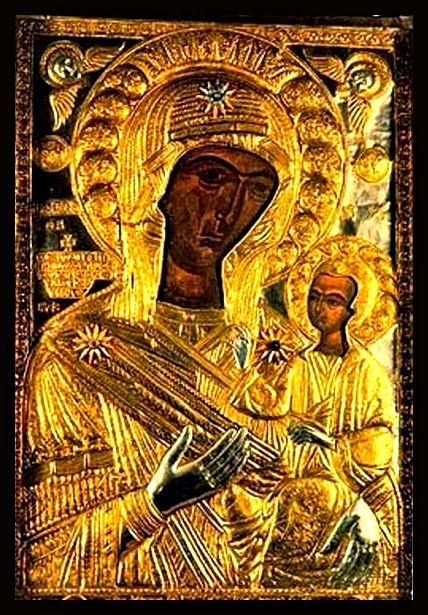
In my daily searches of the internet in Greece, I came upon a wonderful video of Fr. Nikon of Philotheou Monastery, Mt. Athos, giving a talk entitled “The Power of the Sacraments in the lives of Orthodox Christians” in Αίκατερίνη, Greece. He talks about real life experiences dealing with the miraculous through the sacraments of the Orthodox Church. These stories are mind boggling because they speak of a spiritual dimension of Christian life that has been lost in most of the Christians of the West. I was so taken with these stories that I needed to translate them into English for our faithful here in the States. In one of the stories Fr. Nikon refers to the Holy Mother Prousiotissa who is instrumental in directly saving the life of a young Greek soldier who is driving a truck on a mountain road. In looking up Παναγία Προυσιώτισσα I found the following historical roots of this particular miracle-working icon of the Holy Mother.
The Wedding Garment, by Saint Gregory the Dialogist
And when the king came
in to see the guests, he saw there a man which had not on a wedding garment. (Matt.
22:11)
What is meant, brethren,
by this wedding garment? It cannot signify either baptism or faith, because who
can enter this marriage feast without baptism or without faith? Because
undoubtedly the mere fact of not believing excludes one from the Church. So
what can we understand by this wedding garment but charity? We must suppose
then, that this man enters without a wedding garment who is a member of our
Holy Church by reason of his faith, but who lacks charity. It is so called with
good reason because our Maker wore it when He came as a bridegroom to unite
Himself to the Church. There was no other means than God's love by which the
Only-begotten could unite the souls of the elect with Himself. This is why John
tells us: God so loved the world, that He gave His only-begotten Son (John
3:16). He who came to men for love's sake, calls this love the wedding garment.
All of you, then, who are members of the Church and believe in God have indeed come
to the marriage, but you are without a wedding garment if you discard the cloak
of charity. If any of you is invited to an earthly wedding, he changes his
dress so that he may show the groom and bride his participation in their joy;
he would be ashamed to appear shabbily dressed among the guests and
merry-makers. We assist at God's marriage feast and nevertheless, we are loath
to undergo a change of heart. The angels rejoice when they see God's chosen
ones admitted into heaven. How do we visualize this spiritual banquet, those of
us who lack that festive garment which is the only one that gives us beauty in
God's sight?
We must remember that,
as a cloth is woven between two wooden frames, one above and the other below,
thus also charity is founded on two precepts: the love of God and the love of
our neighbor. For it is written: Thou shalt love the Lord thy God with thy
whole heart and with thy whole soul and with thy whole mind and with thy whole
strength ... and thy neighbor as thyself (Mark 12:30). It is worth noting here
that a limit and measure is set to the love of our neighbor , as we read: Thou
shalt love thy neighbor as thyself. The love of God, however, is marked by no
limit, as we are told: Thou shalt love the Lord thy God with thy whole heart,
and with thy whole soul and with thy whole mind and with thy whole strength. We
are not told, then, how much we must love, but the manner in which we must do
so: with everything we have. For only he truly loves God who does not think of himself.
It is necessary to observe these two precepts of charity if we desire to be
found wearing the wedding garment. This is what the prophet Ezekiel means when
he tells us that the front of the gate of the city built on a mountain measures
two cubits (Ezek. 40:9); for undoubtedly we cannot enter the heavenly city if
in this church, which is called the gate because it is outside that city, we
have no love for God or man. As we see also in the book of Exodus that it is
prescribed that the curtains destined for the tabernacle should be dyed twice
in scarlet coloring (Ex. 26:1). You, my brethren, you are the curtains of the tabernacle,
veiling by virtue of your faith the heavenly mysteries in your hearts. But the
curtains of the tabernacle must be twice dyed in scarlet. That is a color like
fire. And what is charity, if it is not fire? But this charity must be twice
dyed, that is, steeped in the love of God and in the love of our neighbor. The man
who loves God so that his contemplation leads him to forget his neighbor has
indeed the color of scarlet, but not twice dyed. Again, he who loves his
neighbor, but whose love leads him to forget God, has the color of scarlet but
with a single dye. In order that your charity may be steeped in both, you must
be inflamed with love of God and of your neighbor, so that compassion for your
fellow-man does not induce you to abandon contemplation of God, nor an
excessive desire for that contemplation make you cast aside all pity. So, every
man who lives among other men should seek God, the object of his longings, but
in such a fashion as not to abandon his neighbor; and he should help his neighbor
in such a way that it will never check his progress towards God to Whom he
speeds.
Τί πραγματικά σημαίνει φτώχεια!
Μια πλούσια οικογένεια ζει -όπως είναι φυσικό- με όλες τις ανέσεις,
απολαμβάνοντας καθημερινά ό,τι επιθυμεί, μόνο που όλα τα μέλη της
δείχνουν να μην εκτιμούν τον πλούτο τους. Το αντίθετο, μάλιστα! Είναι
τις περισσότερες φορές αχάριστοι, δύσκολα ικανοποιούνται και πάντα
ονειρεύονται κάτι παραπάνω από αυτό που έχουν. Ο πατέρας, απογοητευμένος
από την αχαριστία, αποφασίζει να ξεκινήσει τη διδαχή από το γιο του και
να του δείξει στην πράξη τι σημαίνει πραγματική φτώχεια. Έτσι επιλέγει
μια φτωχή οικογένεια που ζει σε ένα ορεινό χωριό και τον παίρνει μαζί
του να περάσουν λίγες μέρες μέσα στην απόλυτη φτώχεια… Όμως τα πράγματα
δεν εξελίσσονται όπως ακριβώς θα ήθελε! Το αποτέλεσμα εκπλήσσει όχι μόνο
τον ίδιο αλλά και όλους εμάς… Πέρασαν τρεις μέρες και δύο νύχτες στο
χωριό. Στο δρόμο της επιστροφής ο πατέρας γεμάτος αγωνία ρώτησε το γιο
του: «Πώς σου φάνηκε η εμπειρία;» «Ωραία», απάντησε ο γιος με το βλέμμα
καρφωμένο στο κενό. «Και τι έμαθες;», συνέχισε με επιμονή ο πατέρας. Ο
γιος απάντησε: - Εμείς έχουμε έναν σκύλο, ενώ αυτοί τέσσερις… - Εμείς
διαθέτουμε μια πισίνα που φτάνει μέχρι τη μέση του κήπου, ενώ αυτοί
έχουν ένα ποτάμι δίχως τέλος, με κρυστάλλινο νερό, μέσα και γύρω από το
οποίο υπάρχουν και άλλες ομορφιές… - Εμείς εισάγουμε φαναράκια από την
Ασία για να φωτίζουμε τον κήπο μας, ενώ αυτοί φωτίζονται από τα αστέρια
και το φεγγάρι… - Η αυλή μας φτάνει μέχρι το φράχτη, ενώ η δική τους
μέχρι τον ορίζοντα… - Εμείς αγοράζουμε το φαγητό μας, ενώ αυτοί σπέρνουν
και θερίζουν γι’ αυτό… - Εμείς ακούμε CDs. Αυτοί απολαμβάνουν μια
απέραντη «συμφωνία» από πουλιά, βατράχια και άλλα ζώα. Και όλα αυτά
διακόπτονται πού και πού από το ρυθμικό τραγούδι του γείτονα που
εργάζεται στο χωράφι… - Εμείς μαγειρεύουμε στην ηλεκτρική κουζίνα. Αυτοί
ψήνουν στα ξύλα και ό,τι τρώνε έχει θεσπέσια γεύση… - Εμείς για να
προστατευθούμε, ζούμε περικυκλωμένοι από έναν τοίχο με συναγερμό. Αυτοί
ζουν με τις πόρτες ορθάνοιχτες, προστατευμένοι από τη φιλία των γειτόνων
τους… - Εμείς ζούμε «καλωδιωμένοι» με το κινητό, τον υπολογιστή, την
τηλεόραση… Αυτοί, αντίθετα, «συνδέονται» με τη ζωή, τον ουρανό, τον
ήλιο, το νερό, το πράσινο του βουνού, τα ζώα τους, τους καρπούς της γης,
την οικογένειά τους… Ο πατέρας, έμεινε έκπληκτος από τις απαντήσεις του
γιου του… Και ο γιος ολόκληρωσε με τη φράση: «Σ’ ευχαριστώ, μπαμπά, που
μου δίδαξες πόσο φτωχοί είμαστε…»!!!
ΚΑΘΕ ΜΕΡΑ ΓΙΝΟΜΑΣΤΕ ΦΤΩΧΟΤΕΡΟΙ
ΓΙΑΤΙ ΤΟ ΜΟΝΟ ΠΟΥ ΜΑΣ ΕΝΔΙΑΦΕΡΕΙ ΕΙΝΑΙ ΠΩΣ ΝΑ ΕΧΟΥΜΕ… ΝΑ ΕΧΟΥΜΕ… ΝΑ
ΕΧΟΥΜΕ ΟΛΟ ΚΑΙ ΠΕΡΙΣΣΟΤΕΡΑ, ΑΝΤΙ ΝΑ ΜΑΣ ΑΠΑΣΧΟΛΕΙ ΤΟ «ΝΑ ΕΙΜΑΣΤΕ»!!!
Thursday, 15 May 2014
Η πνευματική κατάστασις του ανθρώπου ..

Παραινετική επιστολή δια τας σχέσεις μας προς τον πλησίον και διά την σημασίαν των θλίψεων
Μοναχού Μαρκέλλου Καρακαλληνού
Τίποτε
δεν κάνει τόσο εύκολο τον δρόμο διά την προσέγγισι του Θεού, όσο το
έλεος που προσφέρεται από το βάθος της ψυχής προς εκείνους που το έχουν
ανάγκη. Ο Κύριος είπεν: «Εφ' όσον εποιήσατε ενί τούτων των ελαχίστων,
εμοί εποιήσατε» (Ματθ. 25, 40).
Είναι μιμητής του Θεού αυτός που θεραπεύει, όπως ο Θεός τας ανάγκας των άλλων από φιλανθρωπία και δείχνει πως έχει μέσα του κατ' αναλογία με το Θεό δύναμι προνοίας διά την σωτηρίαν του αδελφού του.
Ποιος λοιπόν είναι τόσο αδιάφορος, ώστε να μην επιθυμή να ομοιάζη προς τον Θεόν, να προσεγγίζη δηλαδή προς το καθ' ομοίωσιν, ενώ ο τρόπος της ευποιΐας και συμπαθείας του πλησίον είναι τόσον εύκολος; Χωρίς την ευσπλαχνία και την αγάπη του πλησίον καμμία αρετή δεν μπορεί να διατηρηθή αμόλυντος.
Αν συνηθίσουμε να παρατηρούμε και να εξετάζωμε μόνο τον εαυτό μας, ποτέ δεν θα ενοχληθούμε με όσα πράττουν οι άλλοι. Θα αναγνωρίζωμεν ένα μονάχα κριτή, σοφό και δίκαιο, τον Άγιον Θεόν, που κρίνει με σοφία και δικαιοσύνη, όλα όσα γίνονται και μάλιστα και διά ποίον λόγο έχουν γίνει.
Ας αυτοπεριορίσωμε τον εαυτόν μας κόβοντας ολότελα την προσκόλλησί μας εις τα εξωτερικά και ας μη αφήνωμε το μάτι μας να βλέπη, ούτε το αυτί μας να ακούη, ούτε η γλώσσα να μιλάη διά τα ξένα πράγματα. Ας τα χρησιμοποιούμε περισσότερο με συμπάθεια παρά με εμπάθεια προς τους άλλους.
Ας ακούσωμεν τον θεηγόρον Παύλον ο οποίος μας συμβουλεύει: «Σας παρακαλώ να πολιτευθήτε με πάσαν ταπεινοφροσύνην και πραότητα, με μεγαλόψυχον υπομονήν, ανεχόμενοι διά της αγάπης ο ένας του άλλου τα ελαττώματα» (Εφ. δ' 2). «Εάν δε διάφορα και ποικίλα χαρίσματα και όχι τα αυτά εδόθησαν εις όλους, κατ' ουδένα λόγον επιτρέπεται η διανομή αυτή να γίνεται αιτία χωρισμού μεταξύ σας. Διότι η διανομή αυτή δεν είναι τυχαία, αλλά γίνεται από αυτόν τον Χριστόν. Εις ένα έκαστον από ημάς εδόθη η χάρις σύμφωνα με το μέτρον, το οποίον σαφώς και δικαίως χρησιμοποιεί ο Χριστός εις την διανομήν της δωρεάς του» (Εφ. Δ' 7).
Είναι μιμητής του Θεού αυτός που θεραπεύει, όπως ο Θεός τας ανάγκας των άλλων από φιλανθρωπία και δείχνει πως έχει μέσα του κατ' αναλογία με το Θεό δύναμι προνοίας διά την σωτηρίαν του αδελφού του.
Ποιος λοιπόν είναι τόσο αδιάφορος, ώστε να μην επιθυμή να ομοιάζη προς τον Θεόν, να προσεγγίζη δηλαδή προς το καθ' ομοίωσιν, ενώ ο τρόπος της ευποιΐας και συμπαθείας του πλησίον είναι τόσον εύκολος; Χωρίς την ευσπλαχνία και την αγάπη του πλησίον καμμία αρετή δεν μπορεί να διατηρηθή αμόλυντος.
Αν συνηθίσουμε να παρατηρούμε και να εξετάζωμε μόνο τον εαυτό μας, ποτέ δεν θα ενοχληθούμε με όσα πράττουν οι άλλοι. Θα αναγνωρίζωμεν ένα μονάχα κριτή, σοφό και δίκαιο, τον Άγιον Θεόν, που κρίνει με σοφία και δικαιοσύνη, όλα όσα γίνονται και μάλιστα και διά ποίον λόγο έχουν γίνει.
Ας αυτοπεριορίσωμε τον εαυτόν μας κόβοντας ολότελα την προσκόλλησί μας εις τα εξωτερικά και ας μη αφήνωμε το μάτι μας να βλέπη, ούτε το αυτί μας να ακούη, ούτε η γλώσσα να μιλάη διά τα ξένα πράγματα. Ας τα χρησιμοποιούμε περισσότερο με συμπάθεια παρά με εμπάθεια προς τους άλλους.
Ας ακούσωμεν τον θεηγόρον Παύλον ο οποίος μας συμβουλεύει: «Σας παρακαλώ να πολιτευθήτε με πάσαν ταπεινοφροσύνην και πραότητα, με μεγαλόψυχον υπομονήν, ανεχόμενοι διά της αγάπης ο ένας του άλλου τα ελαττώματα» (Εφ. δ' 2). «Εάν δε διάφορα και ποικίλα χαρίσματα και όχι τα αυτά εδόθησαν εις όλους, κατ' ουδένα λόγον επιτρέπεται η διανομή αυτή να γίνεται αιτία χωρισμού μεταξύ σας. Διότι η διανομή αυτή δεν είναι τυχαία, αλλά γίνεται από αυτόν τον Χριστόν. Εις ένα έκαστον από ημάς εδόθη η χάρις σύμφωνα με το μέτρον, το οποίον σαφώς και δικαίως χρησιμοποιεί ο Χριστός εις την διανομήν της δωρεάς του» (Εφ. Δ' 7).
Christians! You Must Know Christ!
by Bishop
Ignatius Brianchaninov
One of the great Church Fathers of the19th century, Bishop Ignaty played
the very important role
of spokesman for uncompromising Orthodox Christianity to the Russian
intelligentsia, who had departed so far from Christian truth as to be
incapable of distinguishing it from error, The following letter, slightly
abridged, offers a refreshing antidote to some of the confusion in our own day
as well as in his.
Here is a spectacle worthy of bitter lamentation: Christians who do not
know in what Christianity consists! Yet one encounters this spectacle almost
everywhere one looks today; rarely, in the great multitude of those who call
themselves Christians, can one find anyone who is a Christian both in name and
in deed...
Christians! You reason about salvation, yet you do not know what
salvation is, why men are in need of it, and finally, you do not know Christ,
the only means of our salvation. Here is the true teaching on this subject, the
teaching of the Holy Ecumenical Church.
Salvation consists in the recovery of communion with God. This communion
was lost by the whole human race when our ancestors fell into sin. The whole
human race belongs too category of doomed creatures. Damnation is the lot of all
people, whether virtuous or evil-doers. We are conceived in iniquity and born in
sin. “I will go down to my son mourning to hell” (Gen. 37:35), said the holy
patriarch Jacob of himself and his holy son Joseph the chaste and fair. It is
not only sinners who descended into hell at the end of their earthly pilgrimage,
but the righteous men of the Old Testament as well. Such is the power of the
good works of men; such is the worth of the virtues of our fallen nature!
In order to restore
man’s communion with God, in other words, for salvation, redemption was
necessary. The redemption of the human race was accomplished not be an angel,
not by an archangel, not by some other of the higher but still limited and
created beings, --it was accomplished by the infinite God Himself. Execution was
the lot of the human race, commuted by His execution; the insufficiency of human
merit was compensated by His endless worth. All feeble works of men, which lead
to hell, are compensated by a single powerful good work: faith in our Lord Jesus
Christ. The Jews asked the Lord: “What must we do, that we may work the works
of God?” And the Lord answered them: “This is the work of God, that ye
believe on Him Whom He hath sent” (St. John 6:29). One good work is necessary
to us for salvation: faith; but faith is faith, and by faith alone, may we enter
into communion with God, with the aid of the sacraments which He has granted to
us.
Wednesday, 14 May 2014
Άγιος Νεκτάριος – Η καθαρή καρδιά είναι θρόνος Θεού

Τίποτε δέν εἶναι μεγαλύτερο ἀπό τήν καθαρή καρδιά, γιατί μιά τέτοια
καρδιά γίνεται θρόνος τοῦ Θεοῦ. Καί τί εἶναι ἐνδοξότερο ἀπό τόν θρόνο
τοῦ Θεοῦ; Ἀσφαλῶς τίποτα. Λέει ὁ Θεός γι’ αὐτούς πού ἔχουν καθαρή
καρδιά: «θά κατοικήσω ἀνάμεσά τους καί θά πορεύομαι μαζί τους. Θά εἶμαι
Θεός τους, κι αὐτοί θά εἶναι λαός μου» ( Β’ Κορ. 6, 16 )…
Ποιοί λοιπόν εἶναι εὐτυχέστεροι ἀπ’ αὐτούς τούς ἀνθρώπους;
Καί ἀπό ποιό ἀγαθό μπορεῖ νά μείνουν στερημένοι;
Δέν βρίσκονται ὅλα τ’ ἀγαθά καί τά χαρίσματα τοῦ Ἁγίου Πνεύματος στίς
μακάριες ψυχές τους; Τί περισσότερο χρειάζονται; Τίποτα, στ’ ἀλήθεια,
τίποτα! Γιατί ἔχουν στήν καρδιά τους τό μεγαλύτερο ἀγαθό: τόν ἴδιο τόν
Θεό!
Πόσο πλανιοῦνται οἱ ἄνθρωποι πού ἀναζητοῦν τήν εὐτυχία μακριά ἀπό τόν
ἑαυτό τους, στίς ξένες χῶρες καί στά ταξίδια, στόν πλοῦτο καί στή δόξα,
στίς μεγάλες περιουσίες καί στίς ἀπολαύσεις, στίς ἡδονές καί σ’ ὅλες τίς
χλιδές καί ματαιότητες, πού κατάληξή τους ἔχουν τήν πίκρα! Ἡ ἀνέγερση
τοῦ πύργου τῆς εὐτυχίας ἔξω ἀπό τήν καρδιά μας, μοιάζει μέ οἰκοδόμηση
κτιρίου σέ ἔδαφος πού σαλεύεται ἀπό συνεχεῖς σεισμούς. Σύντομα ἕνα
τέτοιο οἰκοδόμημα θά σωριαστεῖ στή γῆ…
Ἀδελφοί μου! Ἡ εὐτυχία βρίσκεται μέσα στόν ἴδιο σας τόν ἑαυτό καί
μακάριος εἶναι ὁ ἄνθρωπος πού τό κατάλαβε αὐτό. Ἐξετάστε τήν καρδιά σας
καί δεῖτε τήν πνευματική της κατάσταση.
Μήπως ἔχασε τήν παρρησία της πρός τόν Θεό; Μήπως ἡ συνείδηση
διαμαρτύρεται γιά παράβαση τῶν ἐντολῶν Του; Μήπως σᾶς κατηγορεῖ γιά
ἀδικίες, γιά ψέμματα, γιά παραμέληση τῶν καθηκόντων πρός τόν Θεό καί τόν
πλησίον; Ἐρευνῆστε μήπως κακίες καί πάθη γέμισαν τήν καρδιά σας, μήπως
γλίστρησε αὐτή σέ δρόμους στραβούς καί δύσβατους;…
Δυστυχῶς, ἐκεῖνος πού παραμέλησε τήν καρδιά του, στερήθηκε ὅλα τά ἀγαθά
κι ἔπεσε σέ πλῆθος κακῶν. Ἔδιωξε τήν χαρά καί γέμισε μέ πίκρα, θλίψη καί
στενοχώρια. Ἔδιωξε τήν εἰρήνη καί ἀπόκτησε ἄγχος, ταραχή καί τρόμο.
Ἔδιωξε τήν ἀγάπη καί δέχθηκε τό μίσος. Ἔδιωξε, τέλος, ὅλα τά χαρίσματα
καί τούς καρπούς τοῦ Ἁγίου Πνεύματος πού δέχθηκε μέ τό Βάπτισμα καί
οἰκειώθηκε ὅλες τίς κακίες ἐκεῖνες, πού κάνουν τόν ἄνθρωπο ἐλεεινό καί
τρισάθλιο.
Ἀδελφοί μου! Ὁ Πολυέλεος Θεός θέλει τήν εὐτυχία ὅλων μας καί σ’ αὐτή
καί στήν ἄλλη ζωή. Γι’ αὐτό ἴδρυσε τήν Ἁγία Του Ἐκκλησία. Γιά νά μᾶς
καθαρίζει αὐτή ἀπό τήν ἁμαρτία, νά μᾶς ἁγιάζει, νά μᾶς συμφιλιώνει μαζί
Του, νά μᾶς χαρίζει τίς εὐλογίες τοῦ οὐρανοῦ.
Ἡ Ἐκκλησία ἔχει ἀνοιχτή τήν ἀγκαλιά της, γιά νά μᾶς ὑποδεχθεῖ. Ἄς
τρέξουμε γρήγορα ὅσοι ἔχουμε βαριά τή συνείδηση. Ἄς τρέξουμε καί ἡ
Ἐκκλησία εἶναι ἕτοιμη νά σηκώσει τό βαρύ φορτίο μας, νά μᾶς χαρίσει τήν
παρρησία πρός τόν Θεό, νά γεμίσει τήν καρδιά μας μέ εὐτυχία καί
μακαριότητα…
ΚΑΝΕ ΤΗΝ ΚΑΡΔΙΑ ΣΟΥ ΚΗΠΟ ΑΡΕΤΩΝ
ΚΑΙ ΟΧΙ ΕΡΗΜΟ ΠΑΘΩΝ!
Πηγή
The Feast of Mid-Pentecost and the Pentecostarion

Icon of the feast of Mid-Pentacost
The fifty days following Pascha until the Feast of Pentecost are known as the period of the Pentecostarion in the Orthodox Church. At the mid-point between these great feasts of Pascha and Pentecost, on the twenty-fifth day which is always a Wedneday, is one of the most beloved feasts for the most devout Orthodox Christians known quit simply as Mid-Pentecost. Mid-Pentecost is to the Pentecostarion what the Third Sunday of Great Lent which honors the Holy Cross is to the period of Great Lent. It is a day which helps us focus on the central theme of the entire period. Whereas the mid-point of Great Lent reminds us to bear up the Cross of Christ bravely so that we may daily die with Christ in order to experience the Resurrection of our Lord, so also the mid-point of the Pentecostarion enlightens us regarding the theme of the fifty days following Pascha - which is the acquisition of the Holy Spirit poured out as a gift upon all the faithful who partake of the living water which is Christ Himself.
The central theme woven throughout the period of the Pentecostarion therefore is water. This becomes the central theme of the period because it is the central theme of the Gospel of John which we read in its entirety during the Pentecostarion and which naturally flows into the Acts of the Apostles which is also read during this period in its entirety. This theme appears for the first time on Pascha itself in the joyous Canon of the Feast of Feasts written by Saint John the Damascene when he invites us to "drink a new drink," not "brought forth from a barren rock," as in the Old Testament under Moses, but which rather "springeth forth from the grave of Christ." Then during the Paschal Divine Liturgy the priest processes with the Gospel and chants loudly from Psalm 67:27 saying: "In the congregations bless ye God, the Lord from the well-springs of Israel."
When Renewal or Bright Week is over the Church wisely sets up two Sundays in which to abolish all doubts concerning the Resurrection of Christ, that of the Sunday of Saint Thomas and the Sunday of the Myrrh-bearing Women. This is done in order to ensure that we all partake of the living water that only the risen Lord can give. The following three Sundays, as we approach Pentecost, the theme of water becomes more and more central in the hymns of the Church. Thus we are found one Sunday at the Sheep's Pool with the Paralytic, then at the Well of Jacob with the Samaritan Woman, and finally at the Pool of Siloam with the Blind Man. During this festive period we hear concerning the "living water" which if one partakes of "he will never thirst". We are taught that it is our Savior Himself who is this living water, and we partake of Him through the baptismal waters and the Cup of Life which issued forth from His side at His crucifixion unto remission of sins and life everlasting. Then on Pentecost we have grace rained upon our parched souls and bodies so that we may be fruitful and have a great harvest as we hear from the holy Gospel on that day: "If any man thirst, let him come unto Me and drink". Finally the Pentecostarion concludes with the Feast of All Saints, that is those who partook of the "waters of piety", which is the harvest of the outpouring of the Holy Spirit.
The Fathers teach us that the feast of Mid-Pentecost stands in the middle of the fifty-day period from Pascha to Pentecost as a mighty flowing river of divine grace which have these two great feasts as its source. Pascha and Pentecost are united in Mid-Pentecost. Without Pascha there is no Pentecost and without Pentecost there is no purpose to Pascha.
We read the following entry in The Great Horologion that further explains the details of the feast:
"After the Saviour had miraculously healed the paralytic, the Jews, especially the Pharisees and Scribes, were moved to envy and persecuted Him, and sought to slay Him, using the excuse that He did not keep the Sabbath, since He worked miracles on that day. Jesus then departed to Galilee. About the middle of the Feast of Tabernacles, He went up again to the Temple and taught. The Jews, marveling at the wisdom of His words, said, 'how knoweth this man letters, having never learned?' But Christ first reproached their unbelief and lawlessness, then proved to them by the Law that they sought to slay Him unjustly, supposedly as a despiser of the Law, since He had healed the paralytic on the Sabbath.
"Therefore, since the things spoken of by Christ in the middle of the Feast of the Tabernacles are related to the Sunday of the Paralytic that is just passed, and since we have already reached the midpoint of the fifty days between Pascha and Pentecost, the Church has appointed this present feast as a bond between the two great Feasts, thereby uniting, as it were, the two into one, and partaking of the grace of them both. Therefore today’s feast is called Mid‐Pentecost, and the Gospel Reading, 'At Mid‐feast'—though it refers to the Feast of the Tabernacles—is used.
"It should be noted that there were three great Jewish feasts: the Passover, the Pentecost, and the Feast of Tabernacles. Passover was celebrated on the 15th of Nissan, the first month of the Jewish calendar, which roughly coincides with our March. This feast commemorated that day on which the Hebrews were commanded to eat the lamb in the evening and anoint the doors of its houses with its blood. Then, having escaped bondage and death at the hands of the Egyptians, they passed through the Red Sea to come to the Promised Land. It is called 'the feast of Unleavened Bread,' because they ate unleavened bread for seven days. Pentecost was celebrated fifty days after Passover, first of all, because the Hebrew tribes had reached Mount Sinai after leaving Egypt, and there received the Law from God; secondly, it was celebrated to commemorate their entry into the Promised Land, where also they ate bread, after having been fed with manna forty years in the desert. Therefore, on this day they offered to God a sacrifice of bread prepared with new wheat. Finally, they also celebrated the Feast of Tabernacles from the 15th to the 22nd of 'the seventh month,' which corresponds roughly to our September. During this time, they lived in booths made of branches in commemoration of the forty years they spent in the desert, living in tabernacles, that is, in tents (Ex. 12:10‐20; Lev. 23 LXX). "
The Feast of Mid-Pentecost is celebrated for an entire week until the following Wednesday, making it an eight day feast. During this entire time the hymns of Mid-Pentecost are joined with that of Pascha. Because of the theme of water, traditionally the Church celebrates the Lesser Blessing of the Waters on this day, preferably with a procession with the Holy Cross to a water spring.
The theme of the feast not only invokes water, but even more central to the Gospel chronology it honors Christ as Teacher and Wisdom as He reveals Himself between the stories of the Paralytic and that of the Blind Man. During this time we are told: "Now about the middle of the feast Jesus went up into the temple, and taught...Jesus answered them, and said, 'My doctrine is not mine, but his that sent me. If any man will do his will, he shall know of the doctrine, whether it be of God, or whether I speak of myself'" (John 7:14-30). The icon for this feast depicts the young Jesus teaching the elders in the Temple (Luke 2:46, 47) at which time Jesus first revealed Himself as a teacher or rabbi. Traditional Orthodox icons will depict Jesus as larger than the elders, showing his superior spiritual status.
Since the hymns of the Church invoke and praise our Lord as the Wisdom of God spoken of in the Book of Proverbs, it is traditional that all churches named after Holy Wisdom or Hagia Sophia celebrate their feast on this day. In fact, Greek scholar Constantine Kalokyre has written a study titled "The Churches of the Wisdom of God and the Date of their Celebration", which appeared in the periodical Saint Gregory Palamas, no. 71 (723) (1988), pp. 538-617. In this study he comes to the conclusion that the Great Church of Hagia Sophia in Constantinople celebrated its feast day on Mid-Pentecost.
The central theme woven throughout the period of the Pentecostarion therefore is water. This becomes the central theme of the period because it is the central theme of the Gospel of John which we read in its entirety during the Pentecostarion and which naturally flows into the Acts of the Apostles which is also read during this period in its entirety. This theme appears for the first time on Pascha itself in the joyous Canon of the Feast of Feasts written by Saint John the Damascene when he invites us to "drink a new drink," not "brought forth from a barren rock," as in the Old Testament under Moses, but which rather "springeth forth from the grave of Christ." Then during the Paschal Divine Liturgy the priest processes with the Gospel and chants loudly from Psalm 67:27 saying: "In the congregations bless ye God, the Lord from the well-springs of Israel."
When Renewal or Bright Week is over the Church wisely sets up two Sundays in which to abolish all doubts concerning the Resurrection of Christ, that of the Sunday of Saint Thomas and the Sunday of the Myrrh-bearing Women. This is done in order to ensure that we all partake of the living water that only the risen Lord can give. The following three Sundays, as we approach Pentecost, the theme of water becomes more and more central in the hymns of the Church. Thus we are found one Sunday at the Sheep's Pool with the Paralytic, then at the Well of Jacob with the Samaritan Woman, and finally at the Pool of Siloam with the Blind Man. During this festive period we hear concerning the "living water" which if one partakes of "he will never thirst". We are taught that it is our Savior Himself who is this living water, and we partake of Him through the baptismal waters and the Cup of Life which issued forth from His side at His crucifixion unto remission of sins and life everlasting. Then on Pentecost we have grace rained upon our parched souls and bodies so that we may be fruitful and have a great harvest as we hear from the holy Gospel on that day: "If any man thirst, let him come unto Me and drink". Finally the Pentecostarion concludes with the Feast of All Saints, that is those who partook of the "waters of piety", which is the harvest of the outpouring of the Holy Spirit.
The Fathers teach us that the feast of Mid-Pentecost stands in the middle of the fifty-day period from Pascha to Pentecost as a mighty flowing river of divine grace which have these two great feasts as its source. Pascha and Pentecost are united in Mid-Pentecost. Without Pascha there is no Pentecost and without Pentecost there is no purpose to Pascha.
We read the following entry in The Great Horologion that further explains the details of the feast:
"After the Saviour had miraculously healed the paralytic, the Jews, especially the Pharisees and Scribes, were moved to envy and persecuted Him, and sought to slay Him, using the excuse that He did not keep the Sabbath, since He worked miracles on that day. Jesus then departed to Galilee. About the middle of the Feast of Tabernacles, He went up again to the Temple and taught. The Jews, marveling at the wisdom of His words, said, 'how knoweth this man letters, having never learned?' But Christ first reproached their unbelief and lawlessness, then proved to them by the Law that they sought to slay Him unjustly, supposedly as a despiser of the Law, since He had healed the paralytic on the Sabbath.
"Therefore, since the things spoken of by Christ in the middle of the Feast of the Tabernacles are related to the Sunday of the Paralytic that is just passed, and since we have already reached the midpoint of the fifty days between Pascha and Pentecost, the Church has appointed this present feast as a bond between the two great Feasts, thereby uniting, as it were, the two into one, and partaking of the grace of them both. Therefore today’s feast is called Mid‐Pentecost, and the Gospel Reading, 'At Mid‐feast'—though it refers to the Feast of the Tabernacles—is used.
"It should be noted that there were three great Jewish feasts: the Passover, the Pentecost, and the Feast of Tabernacles. Passover was celebrated on the 15th of Nissan, the first month of the Jewish calendar, which roughly coincides with our March. This feast commemorated that day on which the Hebrews were commanded to eat the lamb in the evening and anoint the doors of its houses with its blood. Then, having escaped bondage and death at the hands of the Egyptians, they passed through the Red Sea to come to the Promised Land. It is called 'the feast of Unleavened Bread,' because they ate unleavened bread for seven days. Pentecost was celebrated fifty days after Passover, first of all, because the Hebrew tribes had reached Mount Sinai after leaving Egypt, and there received the Law from God; secondly, it was celebrated to commemorate their entry into the Promised Land, where also they ate bread, after having been fed with manna forty years in the desert. Therefore, on this day they offered to God a sacrifice of bread prepared with new wheat. Finally, they also celebrated the Feast of Tabernacles from the 15th to the 22nd of 'the seventh month,' which corresponds roughly to our September. During this time, they lived in booths made of branches in commemoration of the forty years they spent in the desert, living in tabernacles, that is, in tents (Ex. 12:10‐20; Lev. 23 LXX). "
The Feast of Mid-Pentecost is celebrated for an entire week until the following Wednesday, making it an eight day feast. During this entire time the hymns of Mid-Pentecost are joined with that of Pascha. Because of the theme of water, traditionally the Church celebrates the Lesser Blessing of the Waters on this day, preferably with a procession with the Holy Cross to a water spring.
The theme of the feast not only invokes water, but even more central to the Gospel chronology it honors Christ as Teacher and Wisdom as He reveals Himself between the stories of the Paralytic and that of the Blind Man. During this time we are told: "Now about the middle of the feast Jesus went up into the temple, and taught...Jesus answered them, and said, 'My doctrine is not mine, but his that sent me. If any man will do his will, he shall know of the doctrine, whether it be of God, or whether I speak of myself'" (John 7:14-30). The icon for this feast depicts the young Jesus teaching the elders in the Temple (Luke 2:46, 47) at which time Jesus first revealed Himself as a teacher or rabbi. Traditional Orthodox icons will depict Jesus as larger than the elders, showing his superior spiritual status.
Since the hymns of the Church invoke and praise our Lord as the Wisdom of God spoken of in the Book of Proverbs, it is traditional that all churches named after Holy Wisdom or Hagia Sophia celebrate their feast on this day. In fact, Greek scholar Constantine Kalokyre has written a study titled "The Churches of the Wisdom of God and the Date of their Celebration", which appeared in the periodical Saint Gregory Palamas, no. 71 (723) (1988), pp. 538-617. In this study he comes to the conclusion that the Great Church of Hagia Sophia in Constantinople celebrated its feast day on Mid-Pentecost.
Source:www.pravoslavie.ru/english
Subscribe to:
Posts (Atom)