Sunday, 16 September 2012

St. Gregory Palamas-On Virtues and their Opposite Passions


 And that the World of which the Devil is Prince does not refer to God's Creation, but to Those who subject themselves to the Devil by their Misuse of Creation
 Delivered during the Litany


St. Gregory Palamas - Homily 33


1. WHATEVER you sow in cultivated ground, you reap the same. If you plant fruit trees, or sow wheat, barley or some other useful crop, the earth brings them forth and they grow and are fruitful. But if the land is left untilled and unsown, it sprouts useless plants, mostly the thorns and thistles mentioned in the curse pronounced against us (Gen. 3:18). Even if a tree happens to grow, it will most probably have no fruit, be useless and full of thorns. It is the same with the soul. Whatever attitudes you instill in it, you will receive the same back. If you keep company with good people, listen to spiritual teaching and follow it, putting its precepts into practice, your soul cultivates virtues and becomes useful to God, to others, and to yourself. But if you delight in bad company and do not heed spiritual teaching, or even regard it as trivial, your soul turns wild and out of control, sprouts evil passions, and yields the stings and thorns of its own and the body's death, namely, sins.
2. In the beginning, as you all know, the serpent which originated evil stung man through sin, made him mortal, threw him out of paradise and brought him into this fleeting, painful world. Now, unless we hasten through repentance to heal the wounds he has inflicted, he will dispatch us to everlasting punishment and hell-fire. Just as savage animals and reptiles lurk in wild woods and thorny thickets, so this evil dragon, the great universal beast, dwells, according to Job, under the various trees of pleasure (Job 40:21 Lxx), and, he says, destruction runs in front of him (Job 41: 14 Lxx). Because I long for you all to be out of reach of this destruction, and would do anything to achieve this, I labour for your sake with words and spiritual teaching, brethren, on a daily basis for those who approach me privately, and also publicly for everyone in church, as the opportunity arises. This instruction cuts down evil's trees, forces open sin's depths, blunts the goads of wickedness, triumphs over the dragon - the source of iniquity - shows up the straight path, and bestows saving knowledge.
3. Christ's Church, especially here in this great city, includes not only persons who are simple and lacking in formal education, but also people who are wise and cultivated, both by nature and through the study of secular disciplines and the teachings of the Church. For that reason I do not for the most part make my homilies too basic. I prefer to help those who are lower to rise, rather than to bring down those who are higher on their account. Anyone, even if he is unlearned, who pays careful attention to my teaching, will not be wholly unaware of what I am saying. That portion, however small, which he can understand and take hold of and put into practice, will chase away every evil from his soul and strengthen, fill, and save the heart which accepts it. My instruction is derived from divinely inspired Scripture which resembles that stone which, as Daniel tells us, was very small when it came from the mountain, but it smote the image of transitory power, broke it to pieces and destroyed it, and expanded to fill the whole earth (cf. Dan. 2:34-35). Not only should the simple and less cultivated listen attentively to what I am going to say, but particularly the wise. Even if my address makes some allowances for the unread, the wisdom it contains is far from lowly, and the benefits it offers far from obscure. I shall teach you about evil passions and about virtues, revealing their two distinct roots, that you may cut off the former and cherish the latter.
4. Whereas love for God is the source and starting point of every virtue, love for the world is the cause of all evil. For that reason these two loves are at enmity with each another and destroy each other. As the Lord's brother declares: "Friendship of the world is enmity to God. Whosoever therefore will be a friend of the world is the enemy of God" (Jas. 4:4). And John, whom Christ loved, says, "If any man love the world, the love of the Father is not in him. For all that is in the world, the lust of the flesh, and the pride of life, is not of the Father" (cf. 1 John 2: 15-16). Let us take heed, brethren, lest by loving evil desires and being arrogant to one another, we fall away from our heavenly Father's love. For these two evils include every passion which separates us from God.
5. The foundation, origin and cause of these two opposing roots, love for God and love for the world, is another pair of implacably opposed loves. Love for the world springs from love for the body, since we love the world because of our body's well-being. On the other hand, love for God comes from love for our spirit, our soul, for we love God on account of the comfort and good fortune our souls will have in the world to come. The great Paul bears witness to the fact that these two attitudes are at enmity with each other by saying, "The flesh lusteth against the Spirit", meaning the soul, "and the Spirit against the flesh" (Gal. 5: 17).
6. How does love for our own soul engender love for God? We are threatened with the unquenchable fire of hell and promised God's eternal kingdom. This everlasting kingdom is for those who listen to God's commandments and act upon them, whereas hell-fire is for those who by their actions disobey Christ's Gospel. When true believers, who love their souls and desire to keep them for eternal life, hear these threats and promises, they immediately conceive longing and fear, fear of the unending pain in the threatened fire of hell, and longing for the promised kingdom of God with its eternal joy.
7. Because they yearn to attain to divine, unfading delight and are afraid of suffering in that fire, they break their ties with everything passionate, blameworthy and earthly, and strive to cleave to God through intense prayer, knowing for sure that He alone has power and authority to deliver them from the agony of hell, and make them worthy of that eternal joy which passes understanding. In this way they acquire love for God, and as they become more perfectly united with God through this love, they gain all the virtues as well. When God is at work in us, every kind of virtue becomes our own, but when He is not, everything we do is sin. As the Lord says in the Gospel, "Without me ye can do nothing" (John 15:5). Those who truly act virtuously are aware of this, and do not pride themselves on any of their achievements, but humbly glorify God, the Fount of virtues, by Whom they are filled with the light that bestows goodness. When the air is full of sunlight, the glory and radiance it displays are not its own but the sun's. So those who are united with God through fulfilling His commandments are, according to Paul, the sweet savour of Christ (cf. 2 Cor. 2:15). They have Christ's fragrance, and proclaim the virtues of Him Who called them "out of darkness into His marvellous light" (1 Pet. 2:9).
8. Through spiritual instruction, knowledge of things to come is instilled in us, and a right love for our soul engenders in us, who believe, fear and longing for these future realities. This fear and longing results in turn in sincere, unceasing prayer and supplication to God. Then this continuous prayer brings love for Him and union with Him, through which every virtue is born, accompanied by humility, because we are aware of Who has brought about these virtues within us. But how is it that loving our body gives rise to love for the world, which then produces evil passions and a multitude, of sins? Just as our soul naturally longs for the lasting enjoyment to come, so our body yearns for the fleeting pleasure of the present. Such delight is sensual, works through our senses, and comes from visible, tangible things, that is, the world. Whoever is a friend of his body is a friend of the world. When, as a result of this love for the body, we have an excessive desire for worldly pleasures, pursue them and cultivate them, we wrap ourselves in all the different kinds of ugliness of the passions. As earthly enjoyment works through the senses, and our senses are many and diverse, sensual pleasures and passions too are of great number and variety. Some act through our sight, others through our hearing, others again through our senses of smell, touch and taste.
9. It is not food that is to blame for those passions associated with taste, but food to excess, which is self- indulgence. These passions are gluttony, eating delicacies, drinking too much, and drunkenness. When the stomach receives immoderate amounts of food, it passes it through the digestive system in great quantities, and by so doing provides abundant fuel for evil's fire. Having received loathsome things, it yields disgusting torrents, by means of which the lower passions come into being: fornication, adultery, immorality, licentiousness, and bodily impurity in all its forms. These passions enslave our hearing, sight and sense of smell, and make us long for what is filthy: foul talk, immoral songs, satanic dances, perfumes which encourage defilement, disgusting cosmetics, and self-adornment with extravagant clothes and hairstyles. People in the grip of such passions beautify themselves outwardly, but inwardly they wear the ugly mask of dishonourable vices. They really are like the "whited sepulchers", which appear outwardly beautiful, but within are full of stench and all uncleanness (Matt. 23:27). Once our senses have been subjected to evil from within and without, from far and near, they attract filth, and deadly sin goes in and out through these natural windows of ours. "Those things which proceed out of the mouth", it says, "they defile a man" (Matt. 15: 18), and "Whosoever looketh on a woman to lust after her hath committed adultery with her already in his heart" (Matt. 5:28).
10. This sort of body-loving soul, which pursues pleasurable sensations by every means and gathers material from all over to delight the touch, the taste, and the other senses, begets acquisitiveness and love of money, which give rise to theft, extortion and every form of greed. In addition to these evils, there is another all-embracing means of perception within us apart from the bodily senses, imagination, which produces other pleasures and passions in those who love the world, such as conceit, self-esteem and arrogance. Further complex passions are formed from a mixture of sensual perceptions and imagination. These are the desire to please people, vanity and pride.
11. The soul's delight that originates from God and things divine is pure, free from passion, and unmixed with suffering. By contrast, this world offers enjoyment naturally accompanied by pain, not just on account of all sorts of changes and alterations, but because it gives each person a tiny part, and deprives him of the rest. There is only one world, and it is divided among innumerable millions of people, each of whom desires and strives to possess it all, and have it in his power. If someone is enamoured of the world and desires the whole of it, whether he has almost all of it, or just a small share, though still more than someone else, he himself sorrows of what he lacks, and causes distress to the person with less, because of his wealth. When, however, spiritual and divine enjoyment and bliss are shared out, without suffering any division, even if one person receives everything, no one else suffers any loss. Each of us has the Faith in its entirety, but instead of causing offence to our neighbour's piety, our faith assists his in many different ways.
12. As I was saying, this world yields pleasure accompanied by pain. Our body accepts the pleasure but refuses the pain, so the world is at the same time both kindly and vicious towards it. Those who are held fast by love for their body are unaware that the world by its very nature is a source of suffering as well as delight. They cannot grasp that the world they dote upon should be utterly shunned, and when they are discontented with the grief inherent in the world, being ignorant, like people fighting in the dark, of the cause of their misfortune, they blame one another each time difficulties arise. Hence, another unpleasant string of passions is invented by the wretched human race, giving rise to abusiveness, slander, false accusations, anger, hatred, strife, envy, and all kinds of bitterness filled with malicious desires. Because of such evils there are wars and murders all over the world, especially in our generation, because love has grown cold and sin has abounded (cf. Matt. 24:12).
13. Let us continue in oneness of mind, bound together by peace one towards the other, and abstaining from that rage which delivers bodies and souls unto destruction. I beseech you brethren, if anyone has a complaint against another, let us forgive one another as Christ forgave us, that we may be always peaceful, not only in God's churches but at home and in the market place, and with one mind and one mouth glorify our Father in heaven. Apart from this evil catalogue of deadly passions associated with pleasure and pain, there are others, which are neither painless nor pleasant, but have their [origin] in a coming together of opposites. They include sarcasm, flattery, deceit and hypocrisy.
14. Do you see how subtly misleading and treacherous this world is, with how many evils it encompasses us, and by how many means it separates us from God? It makes us subject to countless passions and removes us in a variety of ways from Him Who is above all passion. That is why the Lord Himself said, "The whole world lieth in wickedness" (cf. 1 John 5: 19), and called the devil the prince of this world (John 12:31), because he is the ruler of the darkness of this age. Do not imagine that the evil one holds sway over heaven and earth and all Creation in between, and is given the name of prince of this world on that account - perish the thought! This is not the world that lies in wickedness. Only He Who has measured heaven with a span, according to the Prophet, and held the earth in a measure (cf. Isa. 40: 12), is the Creator of all. However, the misuse of Creation, the impassioned abuse of our free Will, the world of unrighteousness, evil desire and pride, as the beloved disciple of Christ says, are not of the Father (cf. 1 John 2: 16). This is the world that is subject to wickedness, because of our misuse and mismanagement. It is over this world that Satan rules, over the many passions we have listed, which are brought about by our sin-loving will with the evil one's cooperation, and unless we free ourselves from this evil inclination, we shall make him our own absolute master.
15. We who are in Christ's ranks should long for the world above. Let our desire be directed towards the kingdom He promised us. Let us shun enjoyments which drag down our soul, fear the hell-fire with which pleasure-lovers are threatened, flee self-indulgence, drunkenness, fornication, prodigality, greed, injustice, vanity, pride, hatred, anger and inhumanity. These are the things which give the evil one power, alas, over ourselves and the world. We should escape from the world's deception and from its prince, and show through our good works that we are the work of God's good hands. By so doing, we shall make best use of the present, and enjoy the promised eternal benefits when the time comes.
16. May we all attain to these by the grace and love for mankind of Our Lord Jesus Christ, to Whom belongs glory together with the Father and the Holy Spirit unto the ages of ages. Amen.
 St. Gregory Palamas - Homily 33 - St. Tikhon's Seminary Press


The Devil Dies When He Does Not Receive the Pleasure of the Senses

 Saint Nicodemos The Hagiorite

Since the devil has as nourishment the passions and pleasures of the senses, he too will die as he is deprived of this nourishment. “The strong lion perishes for lack of prey” (Job 4:11). St. Neilos has noted that the devil is often referred to as an “ant-lion,” just as the passions are. This means that at first these passions appear as something very small, but later become great and strong like lions. Do you see, dear brother, what great enemies you have to defeat? Do you see that by cutting off the passions of the senses, you are also going to put Satan to death? But alas this cutting off and this victory cannot be won without a war. It is like the external wars, no one can win a victory without first waging a war against the enemy. It is certain that you have to experi­ence a great struggle in each of your senses both from the point of view of habit and of the enemy.

For the bad habit desires to draw each sense toward its pleasurable object when it is present. On the other hand, the enemy desires to wage a great battle in the memory and imagination of the mind in order to achieve its consent to enjoy that pleasure, so that, in doing so, the devil can also enjoy the same pleasure. But you must stand courageously and never consent to the will of the enemy. Say to yourself that iambic proverb of St. Gregory the Theologian: “No one can excel by beginning from cowardice; it is the victories that bring praise.”
      An ancient people recognized their children to be their genuine offspring only after placing before them a viper and observing them catch it courageously. You too, dear brother, must make the enemy realize that you are a true child of Christ Who is your heavenly Father, and who has overcome the passions and the devil-through the cour­age you demonstrate in fighting against the evil passions of your senses. And if the enemy stands to fight you, be not afraid to tell him what that brave Spartan said to Xerxes: “Oh king, you managed to sail the sea and to cut a channel across the peninsula of Athos, but you will not pass the side of one armed Spartan.” For this reason then show the enemy that you are not a slave of your senses, but lord and king. Show that you are not only flesh and blood, but a rational mind, appointed by God to be leader and sole ruler over the irrational passions of the body. Say to yourself that wise proverb about evil habits: “The best learning for man is to unlearn evil.” Now, if I have learned, wrongly, to give to my senses their sensual objects, and this wrong learning has brought about a bad habit, and this bad habit a still further bad condi­tion, why can I not now learn to do the opposite? Let, therefore, the good learning become a good habit and the good habit a good and permanent condition. If, in doing this, I am to experience difficulties and bitterness at first, let me experience them. Afterward I will be able to experience both ease and joy. The first efforts to learn and practice the virtues and establish the habit of virtuous living are often very bitter and most difficult for the senses. The activity that follows after these initial efforts to acquire the habit of virtuous living is very easy, ineffably sweet, and enjoyable.
      Briefly we can say that angels are invisibly present, holding crowns in their hands. Christ himself is the one Who will crown you every time you are victorious in the battle against the evil passions of the senses and you do not succumb to them. St. Basil said: “Suffering brings glory, and tribulation brings crowns.” But you have been beaten once or twice (I hope not!). Be not completely overcome. Stand firm and courageous, calling upon God for help. If you do so, the grace of God will come directly to your help and will not leave you to be completely overcome by the enemy. Do you want to be sure of this? Follow me and let us travel to Sodom. Have you come? Behold the five kings of Sodom mentioned in Holy Scripture (Gen 14), who were then under the hegemony of the Assyrian king Chedorlaomer and who were paying tribute to him and to the other kings with him for ten years. In the thirteenth year they rebelled and did not want to pay the tribute to the Assyrian king, who then declared war on them. It appeared soon afterward that the five kings were subdued and captured by the Assyri­ans. What happened next? When Abram heard about this, he ran to their aid; he fought, he won, and he liberated them for the sake of his nephew Lot.

St. Nicodemos of the Holy Mountain - A Handbook of Spiritual Council – Chapter 8; Guarding All the Senses in General pp. 136-145 (“The Classics of Western Spirituality” series.)

ΑΓΙΟΣ ΚΑΣΣΙΑΝΟΣ Ο ΡΩΜΑΙΟΣ-Περί του πνεύματος της πορνείας και της σαρκικής επιθυμίας


 Δεύτερος αγώνας που έχομε να κάνομε είναι εναντίον του πνεύματος της πορνείας και της σαρκικής επιθυμίας, η οποία επιθυμία αρχίζει από τη μικρή ηλικία να ενοχλεί τον άνθρωπο. Ο αγώνας αυτός είναι μεγάλος και δύσκολος και έχει δύο μέτωπα. Γιατί ενώ τα άλλα ελαττώματα κάνουν τη μάχη μόνο μέσα στην ψυχή, ο σαρκικός πόλεμος είναι διπλός, και στην ψυχή και στο σώμα. Και γι' αυτό πρέπει να αναλάβομε διπλό πόλεμο.

Γιατί δεν είναι αρκετή η σωματική νηστεία για να αποκτήσομε την τέλεια σωφροσύνη και αληθινή αγνεία, αν δεν ακολουθεί και συντριβή καρδιάς και πυκνή προσευχή προς τον Θεό και συχνή μελέτη των Γραφών και κόπος και εργασία των χεριών, τα οποία μπορούν να αναστέλλουν τις ακατάστατες ορμές της ψυχής και να ανακαλούν την ψυχή από τις αισχρές φαντασίες. Προπάντων βοηθά η ταπείνωση της ψυχής, χωρίς την οποία ούτε την πορνεία, ούτε άλλο πάθος μπορεί κανείς να νικήσει. Πρώτα-πρώτα λοιπόν πρέπει με κάθε προσοχή να φυλάγει κανείς την καρδιά του από ρυπαρούς λογισμούς. Γιατί από την καρδιά βγαίνουν -όπως είπε ο Κύριος- διαλογισμοί πονηροί, φόνοι, μοιχείες, πορνείες και τα λοιπά. Και η νηστεία δεν έχει διαταχθεί μόνον για κακοπάθεια του σώματος, αλλά και για την προσοχή και νηφαλιότητα του νου, για να μη σκοτιστεί ο νους από την πολυφαγία και γίνει αδύνατος στην επιτήρηση των λογισμών. Πρέπει λοιπόν όχι μόνο στη σωματική νηστεία να βάζομε όλη την επιμέλεια μας, αλλά και στην προσοχή των λογισμών και στην πνευματική μελέτη, χωρίς τα οποία είναι αδύνατο να ανέβομε στο ύψος της αληθινής αγνείας και καθαρότητας. Πρέπει λοιπόν να καθαρίζομε πρώτα, σύμφωνα με την εντολή του Κυρίου, το εσωτερικό του πιάτου και του ποτηριού, για να γίνει και το εξωτερικό τους καθαρό. Γι' αυτό ακριβώς, αν υπάρχει μέσα μας η φροντίδα να πολεμήσομε νόμιμα και να στεφανωθούμε, αφού νικήσομε το ακάθαρτο πνεύμα της πορνείας, να μην έχομε θάρρος στη δική μας δύναμη και άσκηση, αλλά στη βοήθεια του Κυρίου μας και Θεού. Γιατί δεν παύει ο άνθρωπος να πολεμείται από αυτό το πνεύμα, μέχρις ότου πιστέψει αληθινά ότι όχι με τη δική του επιμέλεια και το δικό του κόπο, αλλά με τη βοήθεια του Θεού ελευθερώνεται από αυτή την αρρώστια και ανεβαίνει στο ύψος της αγνείας. Και αυτό είναι υπόθεση πάνω από τη φύση• κατά κάποιο τρόπο υπερβαίνει το σώμα εκείνος που έχει υποτάξει τους ερεθισμούς της σάρκας και τις ηδονές της.


Και γι' αυτό είναι αδύνατον ο άνθρωπος (για να το πω έτσι) με τα δικά του φτερά να πετάξει προς το υψηλό και ουράνιο βραβείο της αγιοσύνης και να γίνει μιμητής των Αγγέλων, αν δεν τον σηκώσει η χάρη του Θεού από τη γη και τη λάσπη. Γιατί με καμιά άλλη αρετή οι άνθρωποι με τη σάρκα που φέρουν δεν εξομοιώνονται περισσότερο με τους αγγέλους, όσο με την αρετή της σωφροσύνης. Με την αρετή αυτή, ενώ βρίσκονται ακόμη στη γη, έχουν το πολίτευμα στους ουρανούς, κατά τον Απόστολο. Δείγμα του ότι αποκτήσαμε τελείως αυτή την αρετή είναι να μη προσηλώνεται η ψυχή κατά τον ύπνο σε καμία εικόνα αισχρής φαντασίας. Γιατί αν και δεν λογαριάζεται ως αμαρτία αύτη η κίνηση στον ύπνο, είναι όμως γνώρισμα ότι η ψυχή είναι άρρωστη και δεν έχει ελευθερωθεί από το σαρκικό πάθος. Γι' αυτό τις αισχρές φαντασίες που μας έρχονται στον ύπνο, πρέπει να πιστεύομε ότι είναι έλεγχος της προηγούμενης αμέλειας και της ασθένειας μας, αφού την κρυμμένη μέσα στα απόκρυφα της ψυχής μας νόσο την κάνει φανερή η ρεύση κατά την ανάπαυση του ύπνου. Γι' αυτό και ο Ιατρός των ψυχών μας, στα απόκρυφα της ψυχής έβαλε το φάρμακο, όπου γνώριζε ότι βρίσκονται και οι αιτίες της ασθένειας, λέγοντας- «Καθένας που βλέπει γυναίκα με σκοπό να την επιθυμήσει, έκανε κιόλας μοιχεία μαζί της μέσα στην καρδιά του». Δε διορθώνει τόσο τους περίεργους και πορνικούς οφθαλμούς, όσο την ψυχή που έχει την κατοικία της μέσα μας, η οποία κακώς μεταχειρίζεται τα μάτια τα οποία έδωσε ο Θεός για το καλό του ανθρώπου. Γι' αυτό και η σοφή Παροιμία δε λέει «Με κάθε τρόπο να προσέχεις τα μάτια σου», αλλά «Με κάθε τρόπο να προσέχεις την καρδιά σου». Έβαλε δηλαδή το φάρμακο της προσοχής στην καρδιά που μεταχειρίζεται τα μάτια για ό,τι θέλει.
     Λοιπόν αυτή ας είναι η φρουρά και προφύλαξη της καρδιάς μας• όταν έρθει στο νου μας ενθύμηση γυναίκας που ξεφύτρωσε από διαβολική δολιότητα, είτε μητέρας ή αδελφής ή άλλων ευλαβών γυναικών, αμέσως να την διώξομε από την καρδιά μας, μήπως επιμένοντας πολύ σ' αυτή την ενθύμηση, μας κυλήσει εκείνος που μας εξαπατά στο κακό, ο διάβολος, και μας ρίξει μέσα στον γκρεμό των αισχρών και βλαβερών σκέψεων. Αλλά και η εντολή που δόθηκε από το Θεό στον πρωτόπλαστο διατάζει, να συντρίβομε το κεφάλι του φιδιού, δηλαδή την αρχή των βλαβερών λογισμών, μέσω των οποίων επιχειρεί αυτό να συρθεί μέσα στις ψυχές μας. Αλλιώς με το να παραδεχτούμε το κεφάλι, που είναι η αρχή του λογισμού, θα παραδεχτούμε και το υπόλοιπο σώμα του φιδιού, που είναι η συγκατάθεση στην ηδονή, και αυτό θα κατακρημνίσει τη διάνοια μας στην παράνομη πράξη. Αλλά πρέπει κατά την Γραφή, κάθε πρωί να εξολοθρεύομε όλους τους αμαρτωλούς της γης, δηλαδή με το φως της γνώσεως να διακρίνομε και να εξολοθρεύομε τους αμαρτωλούς λογισμούς από τη γη, η οποία είναι η καρδιά μας, σύμφωνα με τη διδασκαλία του Κυρίου. Και όσο είναι ακόμη νήπια οι γιοι της Βαβυλώνας, δηλαδή οι πονηροί λογισμοί, να τους χτυπάμε στο έδαφος και να τους τσακίζομε πάνω στην πέτρα, η οποία πέτρα είναι ό Χριστός. Γιατί αν οι νήπιοι λογισμοί μεγαλώσουν και γίνουν άνδρες λόγω της συγκαταθέσεώς μας σ' αυτούς, τότε δεν θα νικηθούν χωρίς μεγάλο στεναγμό και κόπο.

Μετά τα όσα είπαμε από την Αγία Γραφή, καλό είναι να θυμηθούμε και λόγους αγίων Πατέρων. Είπε λοιπόν ο άγιος Βασίλειος, επίσκοπος Καισαρείας της Καππαδοκίας- «Και γυναίκα δε γνωρίζω και παρθένος δεν είμαι». Τόσο πολύ γνώριζε ότι το δώρο της παρθενίας δεν κατορθώνεται μόνο με αποχή από γυναίκα, όσο με την αγιοσύνη της ψυχής και την καθαρότητα, η οποία κατορθώνεται με το φόβο του Θεού. Λένε επίσης και τούτο οι Πατέρες, ότι δεν μπορούμε να αποκτήσομε τελείως την αρετή της αγνείας, αν δεν αποκτήσομε πρωτύτερα την αληθινή ταπεινοφροσύνη μέσα στην καρδιά μας. Ούτε μπορούμε να κριθούμε άξιοι ν' αποκτήσομε την αληθινή θεία γνώση, αν μέσα στα απόκρυφα της ψυχής έχει θρονιαστεί το πάθος της πορνείας. Θα δείξομε και από τον Απόστολο πόσο μεγάλο είναι το κατόρθωμα της σωφροσύνης, και αφού αναφέρομε μια φράση του μόνο, θα τελειώσομε: «Επιδιώκετε να έχετε ειρήνη με όλους και τον αγιασμό, που χωρίς αυτόν κανένας δεν θα δει τον Κύριο». Ότι αναφέρεται στο θέμα μας, είναι φανερό από εκείνο που λέει αμέσως παρακάτω: «Κανένας πόρνος και βέβηλος όπως ο Ησαύ».


Όσο λοιπόν ουράνιο και αγγελικό είναι το κατόρθωμα της αγιοσύνης, τόσο με βαρύτερες συνωμοσίες και δόλους πολεμείται από τους εχθρούς δαίμονες. Και γι' αυτό οφείλομε να φροντίζομε να έχομε όχι μόνον εγκράτεια σώματος, αλλά και συντριβή καρδιάς και πυκνές προσευχές με στεναγμούς, ώστε το καμίνι της σάρκας μας, το οποίο ο βασιλιάς της Βαβυλώνας ανάβει καθημερινά με τους ερεθισμούς της επιθυμίας, να το σβήσομε με τη δρόσο του Αγίου Πνεύματος. Εκτός από αυτά, μέγιστο όπλο για τον πόλεμο αυτό είναι η κατά Θεόν αγρυπνία. Γιατί όπως η προσοχή και η προφύλαξη της ημέρας ετοιμάζει τη νυχτερινή αγιοσύνη, έτσι η νυχτερινή κατά Θεόν αγρυπνία ετοιμάζει και διευκολύνει την ψυχή στην καθαρότητα της ημέρας.

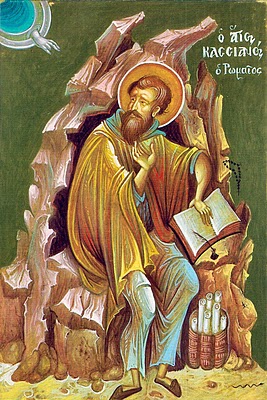
 ΦΙΛΟΚΑΛΙΑ τόμος Α' ΑΓΙΟΣ ΚΑΣΣΙΑΝΟΣ Ο ΡΩΜΑΙΟΣ περί των οχτώ λογισμών της κακίας

St.John Cassian-On Control of the Stomach


I shall speak first about control of the stomach, the opposite to gluttony, and about how to fast and what and how much to eat. I shall say nothing on my own account, but only what I have received from the Holy Fathers. They have not given us only a single rule for fasting or a single standard and measure for eating, because not everyone has the same strength; age, illness or delicacy of body create differences. But they have given us all a single goal: to avoid over-eating and the filling of our bellies. They also found a day's fast to be more beneficial and a greater help toward purity than one extending over a period of three, four, or even seven days. Someone who fasts for too long, they say, often ends up by eating too much food. The result is that at times the body becomes enervated through undue lack of food and sluggish over its spiritual exercises, while at other times, weighed down by the mass of food it has eaten, it makes the soul listless and slack.         

They also found that the eating of greens or pulse did not agree with everyone, and that not everyone could live on dry bread. One man, they said, could eat two pounds of dry bread and still be hungry, while another might eat a pound, or only six ounces, and be satisfied. As I said, the Fathers have handed down a single basic rule of self-control: 'do not be deceived by the filling of the belly' (Prov. 24:15. LXX), or be led astray by the pleasure of the palate. It is not only the variety of foodstuffs that kindles the fiery darts of unchastity, but also their quantity. Whatever the kind of food with which it is filled, the belly engenders the seed of profligacy. It is not only too much wine that besots our mind: too much water or too much of anything makes it drowsy and stupefied. The Sodomites were destroyed not because of too much wine or too much of other foods, but because of a surfeit of bread, as the Prophet tells us (cf. Ezek. 16:49).

Bodily illness is not an obstacle to purity of heart, provided we give the body what its illness requires, not what gratifies our desire for pleasure. Food is to be taken in so far as it supports our life, but not to the extent of enslaving us to the impulses of desire. To eat moderately and reasonably is to keep the body in health, not to deprive it of holiness.

A clear rule for self-control handed down by the Fathers is this: stop eating while still hungry and do not continue until you are satisfied. When the Apostle said, 'Make no provision to fulfill the desires of the flesh' (Rom. 13:14), he was not forbidding us to provide for the needs of life; he was warning us against self-indul­gence. Moreover, by itself abstinence from food does not contribute to perfect purity of soul unless the other virtues are active as well. Humility, for example, practiced through obedience in our work and through bodily hardship, is a great help. If we avoid avarice not only by having no money, but also by not wanting to have any, this leads us towards purity of soul. Freedom from anger, from dejection, self-esteem and pride also contributes to purity of soul in general, while self-control and fasting are especially important for bringing about that specific purity of soul which comes through restraint and moderation. No one whose stomach is full can fight mentally against the demon of unchastity. Our initial struggle therefore must be to gain control of our stomach and to bring our body into subjection not only through fasting but also through vigils, labors and spiritual, reading, and through concentrating our heart on fear of Gehenna and on longing for the kingdom of heaven.

Taken from "The Philokalia"Vol 1 On the Eight Vices,   Pages 73-74

Saturday, 15 September 2012

ΕΜΠΕΙΡΙΑ ΚΑΤΑ ΤΗΝ ΘΕΙΑ ΛΕΙΤΟΥΡΓΙΑ

  Μία πνευματική του κατάσταση, μου περιέγραψε κάποιος ιε­ρεύς, πού το συνέβη όλως απρόοπτος στη Λειτουργία της 7 Ια­νουαρίου κάποιας χρονιάς.
Με πήρε κρυφά σε μια γωνιά του αγίου Βήματος και μου είπε πώς του άνοιξε τα μάτια της ψυχής του το βιβλίο "Εμπειρίες κατά την Θεία Λειτουργία" και έτσι κατάλαβε ότι, όσα έζησε, ήταν αλή­θεια πέρα για πέρα και ότι ήταν του Θεού.
Και για να μην πέσω στην πλάνη θέλω να σας τα περιγράψω, πάτερ μου, μου είπε.
«Την ώρα του Καθαγιασμού των τιμίων Δώρων, πριν σηκωθώ για να πω «και ποίησον τον μεν άρτον τούτον..., το δε εν τω ποτηρίω τούτω...» ένοιωσα την πληρότητα του Αγίου Πνεύματος μέσα μου, γι' αυτό μου ήλθαν στα χείλη οι φράσεις «και το Πνεύμα σου το Αγιον μη αντανέλης απ’ εμού». Μην μου Το παίρνεις! Άφησε Το να ζήση για πάντα μέσα μου, όπως αύτη τη στιγμή Το νιώθω!
(Παρακαλούμε εκείνη την ώρα εμείς οι ιερείς, ανάξιοι όντες, βρωμεροί και τρισάθλιοι, ων πρώτος ειμί εγώ, να έλθει το Πνεύμα το Αγιον και να σκεπάσει πρώτα εμάς τους ιερείς και υστέρα όλο τον λαό και στη συνέχεια να ποίηση «τον μεν άρτον τούτον...» και «το...εν τω ποτηρίω...».' 

Εκείνη την ώρα κατεβαίνει το Αγιον Πνεύμα και δεν σκεπάζει μόνο την αγία Τράπεζα και τον ιερέα ή τους συλλειτουργούντας ιερείς αλλά και ολόκληρο τον Ναό και τους εκκλησιαζόμενους πιστούς, εσάς, πού είσθε μέσα στον Ναό και βρίσκε­σθε στην Θεία Λειτουργία. Να ξέρετε ότι το Άγιον Πνεύμα είναι παρόν! Είναι σαν Περιστέρι: είναι σαν φλόγες πυρός; είναι σαν φως; σαν άκτιστον φως; Σαν Τι είναι δεν ξέρω!)
Και προσπαθώντας να σηκωθώ όρθιος μπροστά στην αγία Τρά­πεζα, συνέχισε ο ιερεύς, για τον Καθαγιασμό των Τιμίων Δώρων, α­πέναντι μου είδα τον Εσταυρωμένο (πού βρίσκεται πίσω από την Α­γία Τράπεζα) και ένιωσα να ανοίγει την αγκαλιά Του και να μπαίνω μέσα σ' αυτήν την αγκαλιά!... πριν προλάβω να πω τίποτα! Κι εκείνη ή αγκαλιά υστέρα ένιωσα ότι δεν ήταν μόνο ή αγκαλιά του Χριστού αλλά ότι ήταν και ή αγκαλιά του Θεού και Πατρός. Εβίωσα στον Κα­θαγιασμό των τιμίων Δώρων το Μυστήριον της Άγιας Τριάδος! δια Πνεύματος Αγίου!
Όταν δε τελείωσαν οι ιεροψάλτες το εορτάσιμο Θεοτόκιο των Θεοφανείων "Μεγάλυνον, ψυχή μου..Ω των υπέρ νουν...", εντελώς αυθόρμητα και με συντετριμμένη τη φωνή άρχισα να ψάλλω το Κον­τάκιο της Πεντηκοστής: «Ότε καταβάς τάς γλώσσας συνέχεε, διεμέριζεν έθνη ο Ύψιστος· ότε του πυρός τάς γλώσσας διένειμεν, εις ενότητα πάντας εκάλεσε και συμφώνως δοξάζομεν το Πανάγιον Πνεύμα».
Αυτά τα έκτακτα γεγονότα, όπως αυτό πού σας περιέγραψα, α­ναγκάζουν την ψυχή του ανθρώπου να φωνάξει «αββά ο πατήρ», «είσαι ο Πατέρας μου, ο ΠΑΤΕΡΑΣ ΜΟΥ»!...«Είσαι ο αποκλειστικός δικός μου Πατέρας, είσαι ο Δημιουργός μου, είσαι ο Θεός μου, είσαι ο Πλάστης μου, είσαι ο Λυτρωτής μου». Αυτά όμως δεν γίνονται κάθε μέρα.


     Από το βιβλίο "Γνώσις και βίωμα της Ορθοδόξου Πίστεως",
     ΠΑΤΗΡ ΣΤΕΦΑΝΟΣ ΑΝΑΓΝΩΣΤΟΠΟΥΛΟΣ


ST.THEOPHAN THE RECLUSE,How Grace Settles in the Repentant Soul


How Grace Settles in the Repentant Soul.

In looking at a person who has repented, we are looking at a person who has actually entered into communion with God, but this communion is still hidden, secret, unmanifest. His goal is to attain communion that is complete, tangible, and perceptible. We must precisely determine all of this for ourselves and be assured, because all the penitent's labor for salvation should be built upon this foundation, namely: that in the Sacrament of Confession (or Baptism) grace descends perceptibly to the spirit but then hides itself from the awareness, although it does not in fact go away. It remains imperceptible until the heart is purified, at which time it dwells visibly and finally. It is obvious that our only instructors in this matter can be the Holy Fathers. None of them expresses it so well as St. Diadochus, Bishop of Photiki, and St. Macarius of Egypt. We present their witness to our suppositions.

Grace Settles in a Person and Stays with Him from the Moment he Receives the Mysteries.
"From the instant we are baptized," says St. Diadochus, "grace is hidden in the depths of the intellect." Also: "For when through Holy Baptism divine grace in its infinite love permeates the lineaments of God's image — thereby renewing in the soul the capacity for attaining the divine likeness — what place is there for the devil?" St. Macarius says: "Grace is constantly present, and is rooted in us, and worked into us like leaven, from our earliest years, until the thing thus present becomes fixed in a man like a natural endowment, as if it were one substance with him.

When Grace First Settles in a Person through a Sacrament, it Vouchsafes
that Person a Complete Taste of the Blessedness of Communion with God.
"If we fervently desire holiness," says St. Diadochus, "the Holy Spirit at the outset gives the soul a full and conscious taste of God's sweetness, so that the intellect will know exactly of what the final reward of the spiritual life consists." Also: "At the start of the spiritual way, the soul usually has the conscious experience of being illumined with its own light through the action of grace."
This most perceptible illumination of grace is at first expressed by the white clothing that the newly baptized wear for seven days. That this is not just a formality is seen from the examples of the holy converts, for some were visibly clothed in light, upon others a dove descended, and the faces of others became bright.
In general all who have truly come close to the Lord have felt a certain leaping of spirit, similar to the leaping of the Forerunner of the Lord in the womb of Elizabeth when the Mother of God approached her carrying the Lord within her. In the lives of Sts. Symeon and John is written that they saw a light around a brother who was baptized and received the monastic habit — and it lasted seven days. Feeling a particular action of God upon receiving the monastic habit, they sought to preserve it forever, and immediately departed to a solitary place more suitable for that form of asceticism.

Grace Hides itself from the One Who is Laboring for his Salvation.
Then grace hides itself from the one who is laboring for his salvation, and although it dwells and works in him, it does so unnoticeably to him, and he is so unaware of it that he often considers himself to be abandoned by God and perishing, which causes him to fall into constrictions, lamentations and even light depression. Thus St. Diadochus continues, from the foregoing citation: "Incidentally, it hides the treasure of this life-creating gift for a long time, so that we would count ourselves as nothing though we fulfill every virtue, for we have not yet made holy love habitual in ourselves...." "But as we continue our ascetic struggles, it produces in the theologizing soul its secret activity in a manner unknown by the soul, so that it might incline us who have been called, at the first opportunity, from the unknown to the known, to enter the way of divine visions; and secondly, so that amidst our ascetic labors we might preserve our knowledge from vainglory."
In another place he explains how grace works in general: "Grace at first conceals its presence, in those who have been baptized, waiting to see which way the soul inclines; but when the whole man has turned towards the Lord it then reveals to the heart its presence there with a feeling which words cannot express, once again waiting to see which way the soul inclines. At the same time, however, it allows the arrows of the devil to wound the soul at the most inward point of its sensitivity, so as to make the soul search out God with warmer resolve and more humble disposition..." "And I am speaking here of the struggle that takes place when God recedes in order to educate us — then grace conceals itself a little, as I have said, but nevertheless supports the soul in a hidden way, so that in the eyes of its enemies the victory appears to be due to the soul alone. This brings great sadness, humility and even some measure of despair to the soul."
St. Macarius of Egypt also says: "God's grace in man (which is already present, already granted), and the gift of the Holy Spirit, which is vouchsafed to a faithful soul, proceeds with much contention, with much endurance and long-suffering, and temptations and trials." This refers of course not to the first time grace is received, but its complete indwelling and activity, as we can see from his own words, where he says that "The spiritual influence of God's grace within the soul works with great patience, wisdom, and mysterious management of the mind, while the man for long times and seasons contends in much endurance; and then the work of grace is proved to be perfect in him." He explains this using the examples of Abraham, Jacob, Joseph and David, who, having received great promises, were made to suffer a long time in unknowing until they finally saw the fulfillment of the promise.
It is necessary to note that this hiddenness and imperceptibility is not all-encompassing, but is sometimes mixed with consolations, although these consolations are something entirely different from those which occur with the indwelling of the Spirit.

Finally, God Dwells in Man in a Special Manner.
Finally, when this period of hidden communion with God and His mysterious activity in the soul is over (the duration of this period not being in man's hands but in the guiding wisdom of man-saving grace), God dwells in man in a special manner. He visibly fills him, unites Himself to him and communes with him. This is the goal man strives to achieve through all his ascetic struggles and labors, all the economy of salvation from God Himself, and all that happens to each person in the present life from birth to the grave. St. Macarius writes that the work of grace after long trials finally shows itself fully, and the soul acquires full sonship of the Spirit. God Himself proves the heart, and man is made worthy to be of one spirit with the Lord. According to St. Diadochus, "If a man, while still alive, can undergo death through his labors, then in his entirety he becomes the dwelling-place of the Holy Spirit." "Grace illumines his whole being with a deeper awareness, warming him with great love of God." This action reveals itself or is accompanied by different manifestations with different people. 
Excerpts from the "Path To Salvation"
 A Manual of Spiritual Transformation.
By St. Theofan the Recluse.

Γέρων Ἰωσὴφ· ὁ γενναῖος στρατιώτης τοῦ Χριστοῦ!!


Γέρων Ἰωσὴφ ὁ Ἡσυχαστής (1898-1959)


Ὁ Γέρων Ἰωσὴφ ἦταν ἕνας πολὺ μεγάλος βιαστὴς εἰς τὸν ἑαυτόν του καὶ ἐμπειρότατος ἀσκητής. Ἐκοπίασεν ὅσον ὀλίγοι γιὰ νὰ ἀπόκτηση τὴν νοερὰν προσευχὴν καὶ νὰ κατανίκηση τὰ πάθη τῆς ἀνθρωπίνης φύσεως. Εἰς τὶς ἐπιστολές του παρουσιάζεται ἡ ἀσκητική του διαγωγή, ἐκφράζεται ὅλη ἡ μοναχική του ἐμπειρία καὶ ἀποδεικνύεται ὅτι ἡ ζωή του δὲν ἀπέχει πολὺ ἀπὸ τοὺς ἀσκητὰς τῆς ἐρήμου τῶν πρώτων αἰώνων. Οἱ συμπλοκές του μὲ τοὺς δαίμονας ἐνθυμίζουν τοὺς ἀγώνας τοῦ Μεγάλου Ἀντωνίου καὶ τῶν μεγάλων ἀσκητῶν τῆς ἐρήμου.

Ἐπάλαισε μὲ τὰ δαιμόνια εἰς τὴν πρώτην γραμμή. Ποίος μπορεῖ νὰ παραμείνη ἀσυγκίνητος, ὅταν ἀκούη αὐτὸ τὸ ἀσκητικὸν πολεμικὸν διάγγελμα: «Ἔκτοτε ἤρχισαν οἱ ἄγριοι πόλεμοι, ὅπου δὲν μὲ ἄφηναν ἡμέραν καὶ νύκτα. Ἄγριοι πόλεμοι! Μήτε ὥραν νὰ ἡσυχάσω. Ἐπίσης καὶ ἐγὼ εἶχον μανίαν εἰς αὐτούς. Ἐξ ὥρας καθήμενος εἰς τὴν προσευχὴν δὲν ἐσυγχώρουν νὰ βγῆ ἀπὸ τὴν καρδίαν. Ἀπὸ τὸ σῶμα μου ὁ ἱδρῶτας ἔτρεχεν ὡσὰν βρύσι. Ξύλον ἀλύπητα.
Πόνος καὶ δάκρυα. Νηστεία ἄκρα καὶ ὁλονύκτιος ἀγρυπνία» .
Θέλετε νὰ παρακολουθήσετε καὶ τὴν πολεμικὴν συμπλοκὴν μετὰ τῶν δαιμόνων; Ἂς ἀκούσωμεν τὴν καταπληκτικὴν αὐτὴν σύγκρουσιν ὅπως τὴν διηγεῖται ὁ ἴδιος: «Λοιπὸν μίαν νύκτα, καθὼς ηὐχόμην, ἦλθον πάλιν εἰς θεωρίαν καὶ ἠρπάγη ὁ νοῦς μου εἰς ἕνα κάμπον· καὶ ἦσαν κατὰ τάξιν -κατὰ σειρὰν- μοναχοὶ συνταγμένοι πρὸς μάχην. Καὶ ἕνας στρατηγὸς ἦλθε πλησίον μου καὶ μοῦ λέγει: Θέλεις, μοῦ λέγει, νὰ εἰσέλθης νὰ πολεμήσης εἰς τὴν πρώτην γραμμήν; Καὶ ἐγὼ τοῦ ἀπάντησα ὅτι σφόδρα ἐπιθυμῶ νὰ μονομαχήσω μὲ τοὺς ἀντίκρυ αἰθίοπας, ὅπου ἦσαν κατέναντι ὠρυόμενοι καὶ πῦρ πνέοντες ὡσὰν ἄγριοι σκύλοι, ὁποὺ μόνον ἡ θεωρία τους σοῦ ἐπροξένει τὸν φόβον. Ἀλλ᾿ εἰς ἐμένα δὲν ἦταν φόβος· διότι εἶχον τόσην μανίαν, ὅπου μὲ τὰ δόντια μου νὰ τοὺς σχίσω.
Εἶναι δὲ ἀληθὲς ὅτι καὶ ὡς κοσμικὸς ἦμουν τοιαύτης ἀνδρείας ψυχῆς. Τότε λοιπὸν μὲ χωρίζει ὁ στρατηγὸς ἀπὸ τὰς γραμμάς, ὅπου ἦταν ἡ πληθὺς τῶν πατέρων. Καὶ ἀφοῦ διήλθομεν τρεῖς ἢ τέσσαρας γραμμὰς συνταγματικῶς μὲ ἔφερεν εἰς τὴν πρώτην γραμμήν, ὅπου ἦσαν ἕνας ἢ δυὸ ἀκόμη κατὰ πρόσωπον τῶν ἀγρίων δαιμόνων. Αὐτοὶ ἦσαν ἕτοιμοι νὰ ὁρμήσουν καὶ ἐγὼ ἔπνεον πῦρ καὶ μανίαν κατεναντίον τους. Καὶ μὲ ἄφησε ἐκεῖ ἀφοῦ εἶπε: Ὅποιος ἐπιθυμεῖ νὰ πολεμήση ἀνδρείως μὲ αὐτούς, ἐγὼ δὲν τὸν ἐμποδίζω, ἀλλὰ βοηθῶ».
Αὐτὸς εἶναι ὁ Γέρων Ἰωσὴφ· ὁ γενναῖος στρατιώτης τοῦ Χριστοῦ, ὁ ὁποῖος μὲ τὴν βοήθειαν τοῦ Χριστοῦ πολεμεῖ εἰς τὴν πρώτην γραμμὴν καὶ ἀποδιώκει τὰς φάλαγγας τῶν δαιμόνων. Αὐτός, ὅπως βεβαιώνη ὁ ἴδιος, εἰσῆλθεν εἰς ὅλα τὰ καταφύγια τοῦ διαβόλου καὶ κατετροπωσε αὐτόν: «Κἀγὼ δὲ ἐπ᾿ ἀληθείας σᾶς λέγω ὅτι εἰσῆλθον εἰς ὅλα τὰ καταφύγια τοῦ ἐχθροῦ καὶ σκληρῶς μονομαχήσας ἐξῆλθον διὰ τῆς χάριτος».
Ἐκ τῆς ἐκδόσεως: Γέρων Ἰωσὴφ ὁ Ἡσυχαστής, ἔργον Ἱ. Μ. Καρακάλλου Ἁγίου Ὄρους, ἐκδ. Ὀρθόδοξος Κυψέλη.
Related Posts Plugin for WordPress, Blogger...