Saturday, 22 June 2013

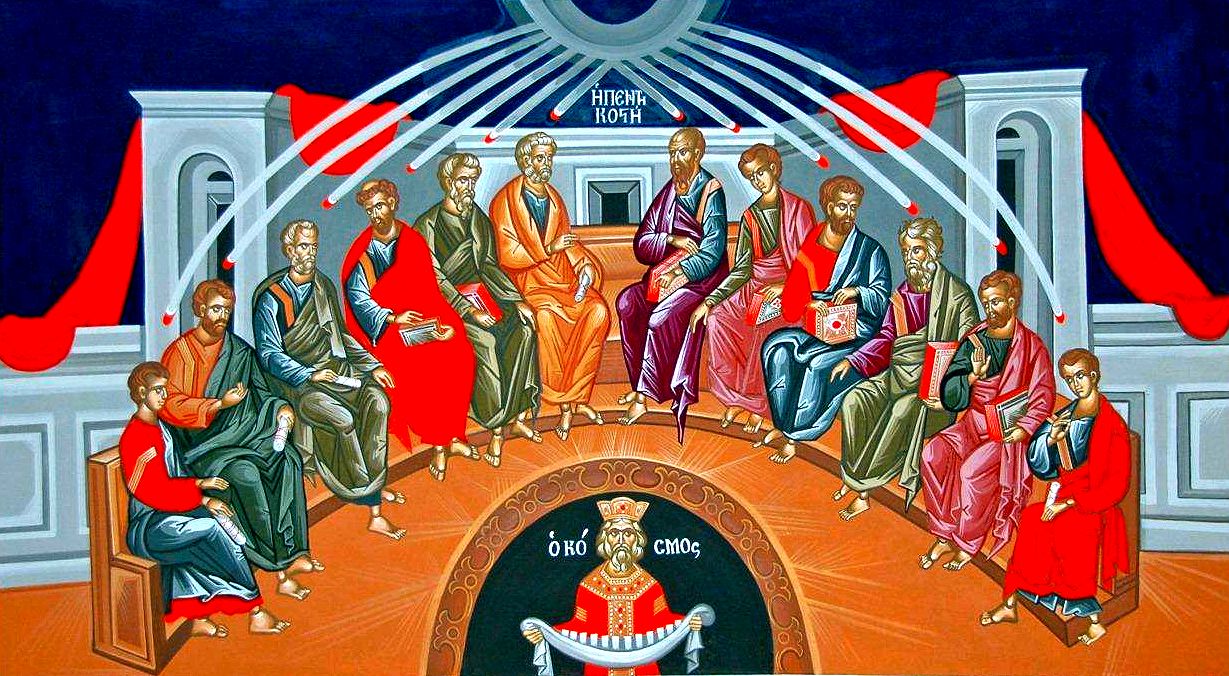
The Descent of the Holy Spirit on Pentecost


 By Metropolitan Hierotheos (Vlahos) of Nafpaktos

The descent of the Holy Spirit on the day of Pentecost does not indicate that It was previously absent from the earth and from people, but that, as we mentioned before, it operates in a different way. We can offer two points which interpret the descent of the Holy Spirit and Its different energy.

The first point is that on the day of Pentecost the Apostles understood that the Holy Spirit is a particular hypostasis and not a simple energy of God. The Holy Spirit, which appeared faintly in the Old Testament as a breath, as a sound, as the voice of a breeze, as an inspiration of the Prophets, is manifested at Pentecost “as a self-existing hypostasis”. Thus, when the events which manifested the hypostasis of the Son had been completed, there began the events which manifested the hypostasis of the Holy Spirit (St. Gregory Palamas).

The second point by which one can interpret the descent of the Holy Spirit on the day of Pentecost is that the Holy Spirit made the Disciples members of the Body of Christ and gave them the power to participate in Christ’s victory over death.

St. Nicodemos the Hagiorite, interpreting the descent of the Holy Spirit, uses passages from St. Nicetas Stethatos and St. Basil the Great, according to which it descended not like a servant, but like a master and with authority. Just as the Son and Word of God became incarnate of His own will, voluntarily, so also the Holy Spirit of Its own will made the Apostles members of the Body of Christ. Moreover, the will of the Father is also the will of the Son and the Holy Spirit, and vice versa. The energy and will of the Triune God are common to them.

Freedom is used differently for God, the angels and men. God is said to possess freedom “preeminently, supremely and supraessentially”. God cannot be compared with human data. The angels possess freedom naturally, but they exercise it without hindrance, they want to use it directly, because they have nothing to prevent them from acting on it, for they are not hindered by the body or any other opposing force. Human beings are independent and have freedom, but their free will has been traumatised and it is not easy for them to carry out their desires. This is why desire and free will need to be strengthened by God. In the Old Testament it says that he who listens “receives favour from the Lord” (Proverbs 8.35). And the Apostle Paul writes: “for it is God who works in you to will and to act according to his goog purpose” (Philippians 2.13).

This means that the Holy Spirit came down into the hearts of the Apostles and is working in men through their own will and not as servants. But men must respond to the energy of the Holy Spirit with their will, since God does not violate their freedom. However, desire and free will must be reinforced by God because in the fallen state man is enslaved, he is an attached being.

In general, when we speak of the descent of the Holy Spirit on the day of Pentecost, we cannot understand it as an incarnation, for only the Son and Word of God became incarnate, but as Its hypostatic manifestation in the world, which transformed the Disciples and changed them from mortal men to living members of the Body of Christ.


Metropolitan Hierotheos (Vlahos) of Nafpaktos, The Feasts of the Lord, 320-322

Friday, 21 June 2013

ΜΕΛΕΤΗ ΕΙΣ ΤΗΝ ΠΕΝΤΗΚΟΣΤΗ Β΄

ΝΙΚΟΔΗΜΟΥ ΑΓΙΟΡΕΙΤΟΥ
ΜΕΛΕΤΗ ΛΓ'
Εἴς τήν Πεντηκοστήν, κατά τήν ὁποίαν ἐνήργησε τό Πνεῦμα τό ἅγιον εἰς τούς Ἀποστόλους
Β. Μεταβολή τῆς καρδίας.
            Συλλογίσου ἀγαπητέ τήν β' μεταβολήν ὅπου ἔκαμε τό πανάγιον Πνεῦμα εἴς τήν καρδίαν τῶν Ἀποστόλων, οἱ ὁποῖοι εἴς τήν ἀρχήν ἦσαν τόσον φιλόζῳοι, τόσον φιλόσαρκοι, τόσον δειλοί, ὅπου δία νᾷ φυλάξουν τήν ζωή τούς, ὁ ἔνας άφησε τόν διδάσκαλο του εἴς τό πάθος καί ἔφυγε γυμνός «καί εἰς τις νεανίσκος ἠκολούθει αὐτῷ περιβεβλημένος σινδόνα ἐπί γυμνοῦ…ὁ δέ καταλιπών τήν σινδόνα γυμνός ἔφυγεν ἀπ' αὐτῶν»(Μάρκ. Ιδ' 51(α)), ὁ ἄλλος τόν ἠρνήθη καί ὅλοι οἱ ἄλλοι ἀνεχώρησαν «καί ἀφέντες αὐτόν πάντες ἔφυγον». (Μάρκ. Ιδ' 51). Καί τόσον ἦσαν τρομαγμένοι ὡσάν λαγωοί ὅπου έστεκαν κεκλεισμένοι ἀπό τόν φόβο τούς μέσα εἴς τό ὑπερῷον καί δεν ἐτόλμων νᾷ εύγουν ἔξω σχεδόν εἴς ὅλον τό διάστημα τῶν πεντήκοντα ἡμερῶν ὅπου ἐπέρασαν μετά τήν ἀνάστασιν ἀλλ' ἀφ' οὐ κατέβη εἴς αὐτούς τό ἅγιον Πνεῦμα, μετέβαλε τήν ἀσθένειαν τῆς καρδίας τῶν εἴς ἀνδρείαν καί γενναιότητα. Ὅθεν ευγήκαν ἔξω ὡσάν τόσοι ἄφοβοι λέοντες καί εκήρρυτον τόν ἐσταυρωμένον Ἰησοῦν ἐμπρός εἴς όλο τό πλῆθος του λαοῦ με μέτωπον ἀνοικτόν, με στῆθος ανδρειωμένον καί με τόλμη καί παρρησία χωρίς νᾷ δειλιάσουν οὔτε ἀπό φοβερισμούς, οὔτε ἀπό δαρμούς, οὔτε ἀπό βάσανα καί μαρτύρια, οὔτε ἀπό τόν ίδιο τόν θάνατον ἀλλ' ἐπεθύμουν ταῦτα πάντα ὡς τρυφάς καί ξεφαντώματα καί ἔχαιρον ὑπερβολικά ὅταν τά ελάμβανον «οἱ μέν οὖν ἐπορεύοντο χαίροντες ἀπό προσώπου του συνεδρίου, ὅτι ὑπέρ του ὀνόματος αὐτοῦ κατηξιώθηκαν ἀτιμασθῆναι»
(Πραξ. ε' 41). Τότε ἤθελες ιδεί ἐκεῖνον τόν δειλότατον καί φιλόζῳον Πέτρον, ὅπου πρότερον δεν ἠδυνήθη νᾷ ἀκούσῃ χωρίς φόβο οὔτε ἔν ψιλόν λόγον ἑνός δυστυχισμένου κορασίου, πώς ἐστάθη με τόσην ἀφοβία καί τόλμη καί ἐδημηγόρησε μεγαλοφώνως ἔμπροσθεν εἴς ἔνα μυριάριθμον πλῆθος ἀνθρώπων, χωρίς νᾷ στοχάζεται πώς εἶναι ολότελα ἄνθρωποι ἀλλά πώς εἶναι κνώδαλα καί φυτά ἤ λίθοι καί με τήν δημηγορία του εἵλκυσεν εἴς τήν πίστη του Χριστοῦ τρεῖς χιλιάδες λαοῦ «σταθείς δέ Πέτρος σύν τοίς ἕνδεκα ἐπῆρε τήν φωνήν αὐτοῦ, καί απεφθέγξατο αὐτοῖς» (Πραξ. β' 14). Τότε ἤθελες ιδή ἐκείνους τούς ἁλιεῖς καί ἀγραμμάτους πλουτισμένους ἀπό τόσην σοφίαν καί σύνεσιν, ὥστε νᾷ κάμνουν τούς σοφούς καί γραμματισμένους νᾷ ἐξίστανται καί νᾷ ἀποροῦν «καί καταλαβόμενοι, ὅτι ἄνθρωποι ἀγράμματοι εἰσί καί ἰδιῶται εθάυμαζον». (Πραξ. δ' 13). Καί τοῦτο διατί; Διότι ἔδωκεν εἴς τήν καρδίαν αὐτῶν χύμα γνώσεως τό Πνεῦμα τό Ἅγιον, καθώς εἶναι γεγραμμένο περί του Σολωμόντος «καί ἔδωκε Κύριος φρόνηση τῳ Σολομῶν καί χύμα καρδίας». (Γ' Βασιλ. δ' 29) καί διότι ἥψατο Κύριος καρδίας αὐτῶν ὡς γέγραπται»(Α' Βασιλ. ι 26). Ὦ χάρις! Ὦ ἐνέργεια ! ὦ πῦρ του ἀγίου πνεύματος, τό ὁποῖον ὅταν μία φορά ἀνάψῃ τήν καρδίαν, τούς λαγωούς κάμνει λέοντας, τούς αδυνάτούς δυνατούς, τούς ἀσόφους σοφούς, τούς πηλίνους κατασκευάζει πυρίνους καί τούς πρώην ανδριάντας μεταβάλλει εἴς ἄνδρας τελείους. Καί τοῦτο εἶναι ἐκεῖνο ὅπου ὁ Θεός ὑπεσχέθη νᾷ δώσῃ δία του προφήτου Μιχαίου λέγων «ούκ ἔσται ὁ ἐπακούων αὐτῶν, ἐάν μή ἐγώ ἐμπλήσω ἰσχύν ἐκ Πνεύματος Κυρίου.»(Μιχ. Γ' 8).
            Τώρα καί εσύ ἀδελφέ ὅπου αναγινώσκεις ταῦτα, στοχάσου, ἐάν ἔλαβες αὐτήν τήν γενναιότητα καί θέρμην εἴς τήν καρδίαν σου δία νᾷ μή φοβήσαι σάρκα, κόσμο και κοσμοκράτορα, τοῦτο εἶναι σημεῖον πώς μετεβλήθης ἀπό τό Πνεῦμα Κυρίου, καθώς εἶναι γεγραμμένον «τότε ματαβαλλεί τό Πνεῦμα καί διελεύσεται καί ἐξιλάσεται αὐτή ἡ ἰσχύς τῷ Θεῶ μου». (Αββακ. Α' 11). Στοχάσου καί ἐάν εσύ προτήτερα εγύρευες με ὅλην τήν ὁρμήν τῶν ἐπιθυμιῶν σου τά ἀγαθά του κόσμου, τά πλούτη, τάς δόξας, τάς ἡδονάς καί ελόγιαζες ὅτι ήτο μακαριώτερος όποιος εἶχεν ἀπό αὐτά τά ἀγαθά περισσότερα, ήξευρε ὅτι ἕως τώρα ήτο ἡ καρδία σου πεπαλαιωμένη, ἀναίσθητος καί πεπωρωμένη ὡσάν πέτρα ἀπό τό πνεῦμα του κόσμου καί τῆς σαρκός. Καί λυπήσου δία τοῦτο καί μετανόησον, πώς εἴς τόσους χρόνους τῆς ζωῆς σου, δεν έγινες ἄξιος νᾷ λάβῃς δία του ἀγίου πνεύματος μίαν καινούργιαν καρδία αἰσθητική του συμφέροντος σου, τήν ὁποίαν ὑπεσχέθη νᾷ σου δώσει ὁ Θεός «καί δώσω ὑμῖν καρδίαν καινήν καί πνεῦμα καινόν δώσω ὑμῖν καί ἀφελῶ τήν καρδίαν τήν λιθίνην ἐκ τῆς σαρκός ὑμῶν καί δώσω ὑμῖν καρδίαν σαρκίνην καί τό πνεῦμα μου δώσω ἐν ὑμῖν» (Ιεζεκ. Λς. 26).
            Ἐάν δέ τώρα γυρεύης ὅλα τά ἐναντία καί ἀντί νᾷ υπερηφανεύεσαι δία τά πλούτη, εσύ περισσότερο ταπεινώνεσαι καί χαίρεις εἴς τήν πτωχείαν, ἀντί νᾷ θέλῃς τάς τρυφάς καί τά ξεφαντώματα, εσύ ἀγαπᾷς τήν ὀλιγάρκειαν καί τήν ἐγκράτειαν, ήξευρε, ὅτι τό Πνεῦμα τό ἅγιον άεχισε νᾷ μεταβάλλει τήν καρδίαν σου εἴς ἄλλην καρδίαν, καθώς εἶναι γεγραμμένο περί του Σαούλ, «καί ἐγενήθη ὥστε ἐπιστραφῆναι τῳ ὤμῳ αὐτοῦ ἀπελθεῖν ἀπό Σαμουήλ, μετέστρεψεν αωτώ ὁ Θεός καρδίαν ἄλλην». (Α' Βασιλ. ι 9).
            Ὅθεν εὐφράνθητι καί ευχαρίστησαι τόν Κύριον, ὅπου δία του ἀγίου Πνεύματος, όχι μόνον σου εκαθάρισεν τόν νοῦν, ἀλλά καί σου ἐθέρμανε τήν καρδίαν καί θέλει νᾷ σε μεταβάλλει ἀπό σαρκικόν εἴς πνευματικόν, ἀπό νήπιον μωρόν, εἴς ἄνδρα σοφόν καί ἀπό κοσμικόν καί ἐθνικόν εἴς ἀληθινόν χριστιανόν. Τοιαύτας γάρ θεοπρεπεῖς καί παραδόξους μεταβολάς συνειθίζει να ἐνεργῆ τό Πνεῦμα τό ἅγιον, καθώς θεολογεί περί αὐτοῦ ὁ μέγας θεολόγος Γρηγόριος «τοῦτο τό Πνεῦμα (σοφώτατον γάρ καί φιλανθρωπότατον) ἄν ποιμένα λάβῃ, ψάλτην ποιεῖ πνευμάτων πονηρῶν κατεπᾴδοντα καί βασιλέα του Ἰσραήλ ἀναδείκνυσιν καί ἐάν αἰπόλον συκάμινα κνίζοντα, προφήτην ἐργάζεται, τόν Δαβίδ καί τόν Ἀμῷς ἐνθυμήθητι, ἐάν μειράκιον εὐφυές λάβῃ, πρεσβυτέρων ποιεῖ κριτήν καί παρ' ἡλικίαν, μαρτυρεῖ ὁ Δανιήλ ὁ νικήσας ἐν λάκκῳ λέοντας. Ἐάν ἁλιέας εὔρη, σαγηνεύει Χριστῷ, κόσμον ὅλον τῇ του λόγου πλοκή συλλαμβάνοντας. Πέτρον λάβε μοι καί Ἀνδρέαν καί τούς τῆς βροντῆς υἱούς τά πνευματικά βροντήσαντας. Ἐάν τελώνας, εἴς μαθητείαν κερδαίνει καί ψυχῶν ἐμπόρους δημιουργεῖ, φησί Ματθαῖος, ὁ χθές τελώνης καί σήμερον εὐαγγελιστής, ἐάν διώκτας θερμούς, τόν ζῆλον μετατίθησι καί ποιεῖ Παύλους ἀντί Σαύλων καί τοσοῦτον εἴς εὐσέβειαν, ὅσον εἴς κακίαν κατέλαβε». (Λογ. Εἴς τήν Πεντηκοστήν).
            Εντράπου λοιπόν ἀδελφέ, διότι ἕως τώρα ήσουν μακράν ἀπό τέτοιους συλλογισμούς, πορεύομενος ἐν τοῖς κακοῖς θελήμασι τῆς καρδίας σου καί μή δίδωντας τόπον εἴς αὐτήν, δία νᾷ κατοικήσῃ τό Πνεῦμα τό ἅγιον καί συντόμως εἰπεῖν, διότι ἔζησας ὡσάν ἔνας ψυχικός μόνον ἄνθρωπος, ὅς οὐ δέχεται τά του Πνεύματος, «μωρία γάρ αὐτῷ ἔστι καί οὐ δύναται γνῶναι» (Α'. Κορ. β' 14). Κάμε ἀπόφασιν εἴς τό ὑπόλοιπον τῆς ζωῆς σου, νᾷ μή λυπήσῃς πλέον τό Πνεῦμα τό ἅγιον με καμμίαν ἄτακτον καί κακήν ὄρεξιν τῆς καρδίας σου, κατά τήν παραγγελίαν ὅπου σου δίνει ὁ Ἀπόστολος, «καί μή λυπήσῃς τό Πνεῦμα τό ἅγιον του Θεοῦ» (Ἔφες. δ' 30), μηδέ νᾷ ἐναντιωθείς ὡς σκληροκάρδιος εἴς τό ἅγιον αὐτοῦ θέλημα, κατά τούς σκληροκαρδίους ἐκείνους Ἑβραίους, πρός τούς ὁποίους εἶπεν ὁ Στέφανος, «σκληροτράχηλοι καί ἀπερίτμητοι τῇ καρδία καί τοῖς ὠσίν, ὑμεῖς ἀεί τῷ πνεύματι τῳ ἁγίῳ αντιπίπτετε» (Πράξ. ζ' 51), ἀλλά νᾷ δώσης ὅλην τήν καρδίαν σου εἴς αὐτό με ὅλας τῆς τάς ἐπιθυμίας διά νᾷ ἐνοικήσει, καθώς αὐτό τό ἴδιον τό Πνεῦμα σε προστάζει λέγον «υἱέ δός μοι σήν καρδίαν» (Παροιμ. Κγ' 26). Θέλεις δέ δώσει τήν καρδία σου εἴς τό πνεῦμα τό άγιο, ἐάν μελετᾷς πάντοτε εἴς αὐτήν τό ὄνομα του Ἰησοῦ του Υἱοῦ του Θεοῦ με μίαν αδιάλλειπτον προσευχήν. Ἐπειδή τό πνεῦμα τό ἅγιον μολονότι καί ἐκπορεύεται ἐκ μόνου του Πατρός, ὅμως εἶναι καί λέγεται καί πνεῦμα του Υἱοῦ δία τήν ομοουσιότητα καί ἐν τῳ Υἱῷ ἀναπαύεται καί χαίρει ὅταν αὐτός ὀνομάζεται «εξαπέστειλεν ὁ Θεός τό Πνεῦμα του Υἱοῦ αὐτοῦ ἐν ταῖς καρδίαις ὑμῶν, κρᾶζον Ἀββᾶ ὁ Πατήρ» (Γαλ. Δ' 6), ἵνα δία τῆς τοιάυτης νοεράς καί πνευματικῆς προσευχῆς, ἐν μέν τῷ πνεύματι θεωρῇς τόν Υἱόν, ἐν δέ τῷ Υἱῷ θεωρῇς τόν Πατέρα, ὡς λέγει ὁ μέγας Βασίλειος καί ἵνα καταξιωθείς δία τῆς τοιαύτης νοεράς ἐργασίας, νᾷ εὕρῃς καί νᾷ ιδής νοερῶς τήν χάριν του ἀγίου Πνεύματος, τήν ὁποίαν ἔλαβες μέν δία του βαπτίσματος, τήν έχωσες δέ ὡσάν σπινθῆρα μέσα εἴς τά πάθη καί ἁμαρτίας.
            Καί τέλος πάντων, ἐπειδή καί τό Πανάγιον Πνεῦμα ὁ ἄλλος παράκλητος, τό συμπληρωματικόν πρόσωπον τῆς ἀγίας Τριάδος, ὁ χορηγός πάντων τῶν χαρισμάτων, ἡ ζωή τῶν ζώντων, ἡ κίνησις τῶν κινουμένων καί τελειότης ἁπάντων τῶν ὄντων, ήθελησεν ἐκ μόνης τῆς φιλανθρωπίας του να εἰδοποιήσει εἴς τήν καρδίαν σου τάς πρώτας γραμμάς καί τό πρῶτον σχέδιον τῆς χάριτος του, παρακάλεσαι τόν νᾷ μή σε ἀφήσει ἀτελῆ ἀλλά να φέρει εἴς τελειότητα αὐτήν τήν εἰδοποίησιν καί τό έργο ὅπου άρχισεν εἴς εσέ, χαρίζωντας σου τό χάρισμα τῆς διαμονῆς καί τῆς μέχρι τέλους ὑπομονῆς ἐν τῇ αὐτοῦ χάριτι, τό ὁποῖον χάρισμα εἶναι τό μεγαλύτερο, ἀπό ὅλα τά χαρίσματα καί αὐτό μόνον συνιστά καί ἐπισφραγίζει τόν ἑκάστου προορισμόν κατά τούς θεολόγους καί δία του χαρίσματος τούτου νᾷ σε ἀξιώσει ἀπό εδώ ἀκόμη, νᾷ γίνεις ὅλος πνευματικός, ὅλος ἀγγελοειδής, ὅλος ἅγιος καί υἱός Θεοῦ καί θεός κατά χάριν, ἀπ' ἐκεῖ ὅπου εἷσαι τώρα γῆ καί σποδός καθώς λέγει ὁ μέγας Βασίλειος «Πνεῦμα ἅγιον ἐπελθόν εἴς ψυχήν ἀνθρώπου, ἔδωκε μέν ζωήν, ἔδωκε δέ ἀθανασίαν, ἤγειρε κείμενον, τό δέ κινηθέν κίνησιν αΐδιον ὑπό Πνεύματος ἀγίου, ζῷον ἅγιον ἐγένετο, ἔσχε δέ ἄνθρωπος ἀξίαν πνεύματος εἰσοικισθέντος ἐν αὐτῷ προφήτου, ἀποστόλου, ἀγγέλου Θεοῦ, ὤν πρό του, γῆ καί σποδός» (ομιλ. περί του Πνεύματος του ἀγίου, ἧς ἡ ἀρχή , ἐνθυμηθῶμεν πάσα ψυχή).
ΝΙΚΟΔΕΙΜΟΥ ΑΓΙΟΡΕΙΤΟΥ, «Πνευματικὰ Γυμνάσματα»

St.Gregory Palamas-On the Manifestation of the Holy Spirit on Pentecost


After willingly suffering for our salvation, being buried and rising on the third day, He ascended into heaven and sat down on the right hand of the Father, whence He co-operated in the descent of the divine Spirit upon His disciples by sending down together with the Father the power from on high, as Both had promised (see Luke 24.49). Having sat down in the heavens, He seems to call to us from there, “If anyone wants to approach this glory, become a partaker of the kingdom of heaven, be called a son of God and find eternal life, inexpressible honour, pure joy and never-ending riches, let him heed My commandments and imitate as far as he can My own way of life. Let him follow My actions and teachings when I came into the world in the flesh to establish saving laws and offer Myself as a patter.” Truly the Saviour confirmed the gospel teaching by His deeds and miracles, and fulfilled it through His sufferings. He proved how beneficial it was for salvation by His resurrection from the dead, His ascension into heaven, and now by the descent of the Divine Spirit upon His disciples, the event we celebrate today. After rising from the dead and appearing to His disciples, He said as He was taken up into heaven, “Behold, I send the promise of my Father upon you: but tarry ye in the city of Jerusalem, until ye be endowed with power from on high” (Luke 24.49). “For ye shall receive power, after that the Holy Ghost is come upon you: and ye shall be witnesses unto me both in Jerusalem, and in all Judea, and unto the uttermost parts of the earth” (see Acts 1.8).

When the fiftieth day after the resurrection had come, the day we now commemorate, all the disciples were gathered together with one accord in the upper room, each also having gathered together his thoughts (for they were devoting themselves intently to prayer and hymns to God). “And suddenly”, says Luke the evangelist, “there came a sound from heaven as of a rushing mighty wind, and it filled the house where they were sitting” (Acts 2.1-11). This is the sound which the prophetess Hannah foretold when she received the promise concerning Samuel: “The Lord went up to heaven and thundered; and he shall give strength and exalt the horn of his anointed” (see 1 Samuel 2.10 LXX). Elijah’s vision also forewarned of this sound: “Behold the voice of a light breeze, and in it was the Lord” (see 1 Kings 19.12 LXX). This “voice of a light breeze” is the sound of breath. You might also find a reference to it in Christ’s gospel. According to John the theologian and evangelist, “In the last day, that great day of the feast”, that is to say Pentecost, “Jesus stood and cried, saying, If any man thirst, let him come unto me and drink…. This spake he of the Spirit, which they that believe on him should receive” (John 7.37-39). Again, after His resurrection He breathed on His disciples and said, “Receive ye the Holy Ghost” (John 20.22).

That cry of Christ prefigured this sound, and His breathing upon the disciples foretold the breath, which is now poured down abundantly from above and resounds with a great voice heard far and wide, summoning everything under heaven, pouring grace over all who approach with faith and filling them with it. It is forceful in that it is all-conquering, storms the ramparts of evil, and destroys all the enemy’s cities and strongholds. It brings low the proud and lifts up the humble in heart, binds what should not have been loosed, breaks the bonds of sins and undoes what is held fast. It filled the house where they were sitting, making it a spiritual font, and accomplishing the promise which the Saviour made them when He ascended, saying, “For John truly baptised with water; but ye shall be baptised with the Holy Ghost not many days hence” (Acts 1.5). Even the name which He gave them proved to be true, for through this noise from heaven the apostles actually became sons of Thunder (see Mark 3.17). “And there appeared unto them”, it says, “cloven tongues like as of fire, and it sat upon each of them. And they were all filled with the Holy Ghost, and began to speak with other tongues, as the Spirit gave them utterance” (Acts 2.3-4).

Those miracles accomplished by the Lord in the flesh, which bore witness that He was God’s only-begotten Son in His own person, united with us in the last days, came to an end. On the other hand, those wondered began which proclaimed the Holy Spirit as a divine person in His own right, that we might come to know and contemplate the great and venerable mystery of the Holy Trinity. The Holy Spirit had been active before: it was He who spoke through the prophets and proclaimed things to come. Later He worked through the disciples to drive out demons and heal diseases. But now He was manifested to all in His own person through the tongues of fire, and by sitting enthroned as Lord upon each of Christ’s disciples, He made them instruments of His power.

Why did He appear in the form of tongues? It was to demonstrate that He shared the same nature as the Word of God, for there is no relationship closer than that between word and tongue. It was also because of teaching, since teaching Christ’s gospel needs a tongue full of grace. But why fiery tongues? Not just because the Spirit is consubstantial with the Father and the Son—and our God is fire (see Hebrews 12.29), a fire consuming wickedness—but also because of the twofold energy of the apostles’ preaching, which can bring both benefit and punishment. As it is the property of fire to illuminate and burn, so Christ’s teaching enlightens those who obey but finally hands over the disobedient to eternal fire and punishment. The text says, “tongues like fire” not “tongues of fire”, that no one might imagine it was ordinary physical fire, but that we might understand the manifestation of the Spirit using fire as an example. Why did the tongues appear to be divided among them? Because the Spirit is given by measure by the Father to all except Christ (John 3.34), who Himself came from above. He, even in the flesh, possessed the fullness of divine power and energy, whereas the grace of the Holy Spirit was only partially, not fully, contained within anyone else. Each one obtained different gifts, lest anyone should suppose the grace given to the saints by the Holy Spirit was theirs by nature.

The fact that the divine Spirit sat upon them is proof not just of His lordly dignity, but of His unity. He sat, it says, “upon each of them. And they were all filled with the Holy Ghost” (Acts 2.3-4). For although divided in His various powers and energies, in each of His works the Holy Spirit is wholly present and active, undividedly divided, partaken of while remaining complete, like the sun’s ray. They spoke with other tongues, other languages, to people from every nation, as the Spirit gave them utterance. They became instruments of the divine Spirit, inspired and motivated according to His will and power.


Saint Gregory Palamas, from a sermon given in Thessaloniki on Pentecost, one of the years from 1347 to 1359

Thursday, 20 June 2013

Γέροντας Πορφύριος-Στις 10….ραντεβού με τον Θεό !

 Γέροντας Πορφύριος
Ο Παππούλης προσηύχετο πολύ. Και ήθελε και τα δικά του πνευματικά παιδιά να κάνουν το ίδιο. Ιδιαίτερα σε εμένα ήθελε, με κάθε τρόπο, να με πείσει να το κάνω. Γι” αυτό συνεχώς μου μιλούσε, για την δύναμη της προσευχής.
-Προσευχή, παιδί μου, Ανάργυρε, έλεγε, σημαίνει συνομιλία με τον ίδιο τον Θεό, που είναι ο Πλάστης, είναι ο Δημιουργός του Σύμπαντος! Είναι Εκείνος που έπλασε τον άνθρωπο κατ” εικόνα και ομοίωση Του. Είναι Εκείνος που έφτιαξε αυτά που βλέπουμε, αλλά και εκείνα που δεν βλέπουμε με τα ανθρώπινα μάτια μας.
Τέλος είναι εκείνος που δεν αρνιέται ποτέ να συνομιλήσει μαζί μα, αρκεί να του το ζητήσουμε εμείς, όποτε θέλουμε και όσες φορές θέλουμε. Δεν πρόκειται να μας πει ποτέ όχι. Αντίθετα, είναι πάντα πρόθυμος να μας ακούσει με προσοχή και με αγάπη όπως κάνει κάθε καλός Πατέρας, όταν του το ζητά το παιδί του.
Και όχι μόνο αυτό, αλλά και να μας δώσει ότι του ζητήσουμε, αρκεί να είναι αυτό που του ζητάμε προς το συμφέρον της ψυχής μας. Αλήθεια αναλογίστηκες ποτέ παιδί μου να συνομιλήσεις έστω και μια φορά με κάποιον από τους σημερινούς άρχοντες της Πατρίδας μας και να έγινε η επιθυμία σου; αν όχι σου συνιστώ να το τολμήσεις. Θα διαπιστώσεις ότι η επιθυμία σου θα παραμείνει απλώς επιθυμία!
Ουδέποτε θα δεχτούν να μιλήσουν μαζί σου. Το πολύ-πολύ να σε παραπέμψουν σε κανένα παρακατιανό, για να σε ξεφορτωθούν … Αντίθετα ο Κύριος μας που είναι ο Βασιλεύς των Βασιλέων, δεν πρόκειται ποτέ να σε παραπέμψει σε κανέναν και δεν πρόκειται ποτέ να αρνηθεί να συνομιλήσει μαζί σου, δια της προσευχής και πρόσθεσε: τα καταλαβαίνεις αυτά που σου τα λεω;
- Ασφαλώς ναι, Παππούλη μου, του απάντησα.
- Και, όμως εμένα κάτι μου λεει, πως δεν θέλεις να τα καταλάβεις.
Γιατί, εάν τα καταλάβαινες, θα έκανες πιο πολύ προσευχή.
- Μα, προσεύχεστε εσείς για μένα, προσέθεσα.
-Και όταν τρώγω εγώ, χορταίνεις εσύ; με ρώτησε!
Οπότε με αφόπλισε τελείως!
- Άκουσε Ανάργυρε, μου λεει. Θα σου κάνω μια πρόταση, αλλά θέλω εξ αρχής να μου υποσχεθείς, ότι θα την δεχτείς, και θα την τηρήσεις.
-Σας το υπόσχομαι, Παππούλη. Είμαι έτοιμος να κάνω ότι μου πείτε.
-Ε! τότε σου προτείνω να προσευχόμεθα την ίδια ώρα ακριβώς, και οι δυο μαζί. Και ο ένας θα προσεύχεται για τον άλλο.
Συμφωνήσαμε και υποσχεθήκαμε. Καθορίσαμε, μάλιστα και την ώρα της προσευχής. Ήταν η 10 μ.μ. Ο Παππούλης, όπως μου εξήγησε, πίστευε πάρα πολύ σ’; αυτό το είδος της προσευχής. Τα αποτελέσματα, μου έλεγε, της κοινής προσευχής, είναι καταπληκτικά. Θα το διαπιστώσεις και μόνος σου. Θέλω όμως, ακριβώς στις 10 μμ. Να είσαι πιστός στο ραντεβού μας. Να μην παραλείψεις, ούτε μία φορά να τηρήσεις την υπόσχεσή σου. Και εγώ θα κάνω το ίδιο.
Προχωρώντας με τον Παππούλη, φτάσαμε στην αφετηρία των λεωφορείων του Πολυγώνου. Αυτήν την φορά δεν με άφησε να τον ακολουθήσω μέχρι το σπίτι του, όπως συνήθως έκανα. Όχι, μου λέει, δεν θα έρθεις μαζί μου. Θα πας σπίτι σου. Προ ολίγου υποσχεθήκαμε κάτι. Πρέπει να αρχίσεις αμέσως. Από απόψε.
Το γοργόν και χάριν έχει. Υπάκουσα. Ο Παππούλης επιβιβάστηκε στο λεωφορείο και εγώ περίμενα την αναχώρηση του. Μόλις ξεκίνησε το λεωφορείο, θυμάμαι καλά, μου χτύπησε το τζάμι και μου είπε: Στις 10 ακριβώς! Νομίζω πως αυτή την στιγμή βλέπω την μορφή του και ακούω την φωνή του! Το πρόσωπο του έλαμπε και ομοίαζε με αγγελικό! Ήταν βέβαια, και κατά 30 χρόνια νεώτερος. Στην πιο δημιουργική ηλικία.
Περίμενα στην αφετηρία μέχρι την στιγμή που το λεωφορείο χάθηκε μέσα στο χάος της απέραντης Αθήνας κουβαλώντας μαζί του και έναν άγνωστο, μέχρι τότε, Άγιο της Εκκλησίας του Δεσπότου χριστού και αμέσως μετά έφυγα τροχάδην για το σπίτι μου, προκειμένου να είμαι απόλυτα συνεπής στο ραντεβού της προσευχής.
Πράγματι! Στις 10 μ.μ. κλείστηκα στο δωμάτιο μου και άρχισα να προσεύχομαι. Όμως, από το πρώτο κιόλας λεπτό, άρχισαν να διαπερνούν το σώμα μου έντονα ρεύματα , που άρχιζαν από τα κάτω άκρα και έφθαναν μέχρι την κεφαλή μου και τανάπαλιν(!), ενώ ένα ισχυρό άπλετο φως πλημμύρισε όλο το δωμάτιο μου και μου έδινε την εντύπωση, ότι βρισκόμουν μέσα σε φλόγες, οι οποίες, όμως δεν με έκαιγαν! Στην αρχή τρόμαξα πολύ και λίγο έλειψε να καταληφθώ από πανικό ! αμέσως όπως συνειδητοποίησα ότι όλα αυτά τα φαινόμενα απέρρεαν από την δύναμη της προσευχής του Παππούλη και όχι μόνο ηρέμησα, αλλά καταλήφθηκα από μια πρωτοφανή αγαλλίαση, που μου έδινε την εντύπωση ότι δεν πατούσα καθόλου στην γη!
Όλα αυτά συνεχίστηκαν μέχρι το τέλος της προσευχής. Την άλλη μέρα η πρώτη μου δουλειά ήταν να επικοινωνήσω με τον Παππούλη. Ήμουν αποφασισμένος να μην του πω τίποτα. Ήθελα πρώτα να μιλήσει ο παππούλης. Και έτσι έγινε.
Μόλις ζήτησα την ευχή του, ο παππούλης με ιδιαίτερη ικανοποίηση και με τρανταχτά γέλια, μου είπε: Τρόμαξες ε! Και λίγο έλειψε να το βάλεις στα πόδια …; Όμως εγώ σε έβλεπα μέσα σε έντονο φως, που πλημμύριζε όλο το δωμάτιο σου και εσύ περιχαρής ανέβαινες -;ανέβαινες σαν να ήθελες να φτάσεις στο Θρόνο του Κυρίου! Βλέπεις τι δύναμη έχει αυτού του είδους η προσευχή; Συνέχισε και θα με θυμηθείς. Πράγματι! Τον θυμάμαι. Και θα τον θυμάμαι όχι μόνον σ’; αυτή, αλλά και στην άλλη ζωή. Γιατί τα φαινόμενα αυτά προϊόντος του χρόνου, έγιναν τόσο έντονα ώστε να μην μπορώ να τα περιγράψω!
Μακάρι να προσεύχεται και τώρα μαζί μου. Δεν θα ήθελα τίποτε άλλο. Γένοιτο!
Ανάργυρος Ι. Καλιάτσος
Ο Πατήρ Πορφύριος: Ο Διορατικός, ο Προορατικός, ο Ιαματικός
Επτάλοφος 1996

Αναδημοσίευση από: Ψήγματα Ορθοδοξίας

St. Ambrose of Optina-Concerning Progress

 Saint Ambrose of Optina
 
In your letter on the 18th of January, you passed on to me your son's question: "According to the Gospel, before the end of the world, mankind will be in the most horrible state that it has ever been in. This condition rejects the possibility of the continual moral perfecting of mankind. If one accepts this, is it possible to continue laboring for the good of mankind? Why continue laboring for the improvement of mankind if one is convinced that it is impossible to achieve moral perfection for mankind before the end of the world?"


In your letter on March 24, you asked the same question in a different way: "The duty of a Christian is to do good and to strive so that good triumphs over evil. It says in the Gospel that evil will triumph over good at the end of the world. By what means can we strive for the triumph of good over evil, knowing that our strivings will not be crowned by success and that evil will win in the end?"

Tell your son that evil has already been conquered. Evil has not been conquered by human might and strivings, but by our Lord and Saviour Himself, Jesus Christ the Son of God; Who descended from heaven, became man, and suffered as a man; Who vanquished the power of evil along with its originator, the devil who held dominion over the human race, through His suffering on the Cross and through His Resurrection. The Lord freed us from demonic, sinful slavery. He himself has said: Behold, I give unto you power to tread on serpents and scorpions, and over all the power of the enemy... (Lk. 10: 19). In the mystery of Baptism, power is given to all believing Orthodox Christians to trample upon evil and to do good. This is accomplished by fulfilling the Gospel commandments. No one can be forcibly bound by evil except those who are careless in keeping God's commandments, and especially those who voluntarily give into sin.

Those who desire to conquer evil by their own power manifest a lack of understanding of the Christian mysteries in the Orthodox Church. This evil has already been conquered by the Advent of the Saviour. This lack of understanding is a sign of the proud self-assurance of man because man desires to do everything on his own without turning to God for help. The absurdity of such an approach is clearly pointed out to us by the Lord Himself: Without Me ye can do nothing (Jn. 15: 5).

You write that it says in the Gospel that evil will triumph over good at the end of the world. This is said nowhere in the Gospel. The Gospel says that there will be less faith in the end times (Lk. 18: 8) and that the love of many will grow cold because of the increase of lawlessness (Matt. 24: 12). The Apostle Paul says that the man of lawlessness, the son of perdition [the Antichrist] who apposes and exalts himself above that is called God, will appear before Second Coming of the Saviour (II Thess. 2: 3-8). It is also written in this passage that the Lord Jesus will kill the Antichrist by the spirit that proceeds from His mouth and that He will put an end to the Antichrist's reign by His Second Coming. Do we see the victory of evil over good in this passage? Any victory over good is, in fact, only temporary. On the other hand, it is not correct to say that mankind is continually perfecting itself. The betterment of life, progress, is only external and concerns the comforts of life. For example, we now use railways and the telegraph which did not exist in the past; different fuels, which were hidden in the bowels of the earth before this age, are now mined. In terms of Christian morality, there is no overall progress.

In all past ages, there were people who achieved great Christian moral perfection. These people were guided by the true Orthodox Christian Faith of Christ. They followed true Christian teaching in agreement with the Divine Revelation which God revealed through divinely-inspired Apostles and Prophets in His Church. People who are striving for perfection will be found at the time of the Antichrist. Time will be shortened for the sake of such people, as it is written: But for the elect's sake those days shall be shortened (Matt. 24: 22). In another place in Holy Scripture, we read that there were always people who gave themselves over to various sins and lawlessness in times past or who fell into various heresies and deceptions, enamored by their fallen reason (I Tim. 6: 20). These people reason according to earthly standards contrary to St. Paul's warning: Beware lest any man spoil you through philosophy and vain deceit, after the tradition of men, after the rudiments of the world, and not after Christ (Col. 2: 8).

I advise you to buy The Life of Saint Gregory the Theologian, recently published, compiled by Archimandrite Agapit. Read it through and pass it on to your son. You will see what kind of scholars there were in the 4th century A.D. Compare them with the scholars of our time. The scholars of that time, like St. Basil the Great and St. Gregory the Theologian, despite the fact that they were highly educated people and very moral, despised earthly glory and comforts, and strived for only the eternal spiritual goods. Do the scholars today follow their example? Do not the majority of them bow to earthly glory and earthly pleasures? Do they not acquire earthly goods, mixing all of this together with a false impression of their own worthiness? Do we observe in this attitude the slightest sign of a general moral perfection of men on earth?

Moral perfection is not attained by humanity as a whole, but by each individual believer, according to the degree of his fulfilling of God's commandments in humility. The final and complete perfection of man is acquired in heaven, in the eternal future life. Our fleeting life on earth is merely a preparation for the future. It is similar to those years that a youth spends in school in order to prepare for activity in the future. If the significance of man's actions were limited only to his existence on the earth, if everything ended for him here, then how could we accept the words of the Apostle Peter, who says that the earth and all the works upon it will burn (II Peter 3:10)? St. Peter adds to this thought the following words: Nevertheless we, according to His promise, look for new heavens and a new earth wherein dwelleth righteousness (II Peter 3: 13). Without the future, blessed, eternal life, our earthly sojourn would be incomplete and impossible to understand.

The desire to labor for the good of mankind is very honorable if it is placed in the right perspective. The prophet-king St. David says that we should depart from evil and then do good (Ps. 32:14). Contemporary man does just the opposite. In theory, everybody wants to work for the good of their neighbor; however, they give very little concern for the fact that they should first cleanse themselves from evil and then care for their neighbor.

The vast majority of the younger generation is very concerned that there should be great activity for the improvement of humanity. Unfortunately, this resembles someone who, although he never finished high school, allows himself to dream of becoming a professor and great instructor in a university. On the other hand, it is another extreme to conclude that striving for the betterment of man is pointless since it is impossible to push humanity forward. Every Christian is obliged to labor for the good of his neighbor according to his strength and social position. At the same time, this should be done properly and at the right time, as we mentioned above, so that our labors will be successful in God's eyes and according to His will.

In your first letter, you mentioned the books, Self-help and Independent Action. I am not acquainted with the contents of these books. I might add here that, in times past, people used to say, "Without God, you can not even get to the doorstep." The Lord Himself tells us, Without Me you can do nothing (Jn. 15:5). I can see from the titles of these books that our new 'wisemen' reason differently. Have you noticed that things produced in an amateur way [self-made] are sold for the lowest price and that amateur work is often criticized as being hack-work?

In general, how can we understand self-help and independent action from a Christian point of view? You and your son should read attentively the Gospel of St. Matthew from the beginning of the fifth chapter to the end of the tenth chapter. After reading this, he should try to fulfill the Gospel commandments contained in these chapters. Through such Christian 'self-activity', he will gain for himself great help in the moral, Christian sense.

In conclusion, I would like to say that you should advise your son not to confuse external human activity with spiritual-moral activity. First of all, to some extent, he will discover progress in external discoveries which are partially found in science. On the other hand, in relation to Christian morality, I repeat, there is no overall progress in mankind. As a matter of fact, in many of the sciences and spheres of human knowledge, progress is noticeably absent. For example, it seems to me that contemporary scholars do not understand mythology and, in general, classical antiquity as well as St. Basil the Great and St. Gregory the Theologian understood them.

Translated from: A Collection of Essays and Letters of the Optina Elder Hieroschemonk Ambrose, Moscow, 1894.

Άγ.Σιλουανός ο Αθωνίτης-Οι δοκιμασίες, είναι βαρύτερες στους πιστούς!!

 Άγιος Σιλουανός ο Αθωνίτης
"Όλοι όσοι θέλουν να ζουν ευσεβώς, θα διωχθούν" (Β΄ Τιμ. 3/γ: 12) είπε ο απόστολος Παύλος. Αυτό το "όλοι", δεν είναι τυχαίο. Ακόμα και ο Ίδιος ο Κύριος Ιησούς Χριστός, διώχθηκε: "Καταφρονημένος και απορριμμένος από τους ανθρώπους· άνθρωπος θλίψεων και δόκιμος ασθένειας· και σαν άνθρωπος από τον οποίο κάποιος αποστρέφει το πρόσωπο, καταφρονήθηκε, και τον θεωρήσαμε σαν ένα τίποτα" (Ησαίας 53/νγ: 3).
Και το ίδιο είπε ότι θα συνέβαινε στους ακολούθους Του: "Να θυμάστε τον λόγο, που εγώ σας είπα: Δεν υπάρχει δούλος μεγαλύτερος από τον κύριό του. Αν εμένα δίωξαν, θα διώξουν και σας· αν φύλαξαν τον λόγο μου, θα φυλάξουν και τον δικό σας" (Ιωάννης 15/ιε: 20).
Και όχι μόνο από διωγμούς θα έπασχαν οι πιστοί, αλλά από κάθε είδους θλίψη: "Μέσα στον κόσμο θα έχετε θλίψη· αλλά, να έχετε θάρρος· εγώ νίκησα τον κόσμο" (Ιωάννης 16/ις: 33). Και δήλωσε: "Αν κάποιος θέλει νάρθει πίσω μου, ας απαρνηθεί τον εαυτό του, κι ας σηκώσει τον σταυρό του, κι ας με ακολουθεί. Επειδή, όποιος θέλει να σώσει τη ζωή του, θα τη χάσει· και όποιος χάσει τη ζωή του, εξαιτίας μου, θα τη βρει" (Ματθαίος 16/ις: 23,24).

Έχοντας υπ' όψιν αυτά τα λόγια, που πολλοί από εμάς τα έχουμε βιώσει "στο πετσί μας", παίρνουμε θάρρος μέσα από τις θλίψεις, καθώς βιώνουμε καθημερινά τα λόγια του αποστόλου Παύλου: "σε κάθε τι συνιστώντας τον εαυτό μας ως υπηρέτες τού Θεού, με πολλή υπομονή, με θλίψεις, με ανάγκες, με στενοχώριες, 5. με ραβδισμούς, με φυλακές, με ακαταστασίες, με κόπους, με αγρυπνίες, με νηστείες· 6. με καθαρότητα, με γνώση, με μακροθυμία, με αγαθότητα, με Πνεύμα Άγιο, με αγάπη ανυπόκριτη· 7. με λόγο αλήθειας, με δύναμη Θεού· με τα όπλα τής δικαιοσύνης, τα δεξιά και τα αριστερά· 8. με δόξα και ατιμία, με συκοφαντία και με εγκωμιασμό· σαν πλάνοι, όμως κάτοχοι της αλήθειας· 9. σαν αγνοούμενοι, αλλά είμαστε καλά γνωστοί· σαν να φτάνουμε στον θάνατο, αλλά, δέστε, ζούμε· σαν να περνάμε από παιδεία, αλλά δεν θανατωνόμαστε· 10. σαν λυπούμενοι, αλλά πάντοτε έχουμε χαρά· σαν φτωχοί, όμως πλουτίζουμε πολλούς· σαν να μη έχουμε τίποτε, όμως τα πάντα κατέχουμε" (Β΄ Κορ. 6/ς: 4-10). Θυμάμαι σαν σήμερα, τα λόγια ενός φίλου απίστου, για τη ζωή του νονού μου, τον οποίο ο Θεός ευλόγησε με χαρίσματα του Αγίου Πνεύματος, αλλά κατά κόσμον θλιβόταν υπερβολικά ως τον θάνατό του. Μου είπε ο άπιστος εκείνος: "Μα πώς είναι δυνατόν ο Θεός να επιτρέπει να βασανίζεται τόσο ένας δικός Του; Αν είχατε την αληθινή πίστη, δεν θα ήταν η ζωή του ένα βασανιστήριο. Να μην έχει δουλειά, να τον κοροϊδεύουν οι εργοδότες, να αρρωσταίνει, να γκρεμίζεται το σπίτι του, να θλίβεται τόσο πολύ!
Αυτό δεν είναι πίστη, είναι πλάνη!" Και πράγματι, είχα δει κι εγώ αυτόν τον ευλογημένο άνθρωπο, να προσεύχεται με δάκρυα, να ζητάει από τον Θεό να τον πάρει "ΤΩΡΑ!". (Και πράγματι, έφυγε νέος, όταν ο αγώνας του έφθασε στην τελείωση). Απάντησα στον άπιστο φίλο μου, ότι αυτή είναι η εν Χριστώ ζωή.
Όχι χαρά και διασκέδαση, αλλά θλίψη και πόνος, και δοκιμασία. Αλλά δεν μπορούν αυτό να το δεχθούν όλοι. Μάλιστα θα έλεγα, ότι αν κάποιος δεν βιώνει αυτή τη θλίψη στη Χριστιανική του ζωή, κάτι δεν πάει καλά με αυτόν. Θα πρέπει να ανησυχεί! Γιατί δεν γνωρίζω ΚΑΝΕΝΑΝ που να προοδεύει στην εν Χριστώ ζωή, χωρίς να υφίσταται δοκιμασίες και θλίψεις.


Άγιος Σιλουανός ο Αθωνίτης

Wednesday, 19 June 2013

St. Dimitry of Rostov-On The Holy Angels

Archangel Micheal 
From the Minea of St. Dimitry of Rostov

The nine orders of the angels are divided into three hierarchies, each of which is divided into three orders: the highest, the intermediate, the lower.

The first hierarch, the highest and closest to the Most Holy Trinity, consists of the SERAPHIM, CHERUBIM, and THRONES.

The God-loving six-winged SERAPHIM stand closer than all before their Creator and Maker, as the prophet Isaiah saw, saying: "And the seraphim stood around Him, each having six wings" (Isaiah 6:2). They are fire-like since they stand before That One of Whom it is written: "For our God is a consuming fire." (Heb. 12:29); "His throne was a flame of fire" (Dan 7:9); "the appearance of the Lord was like a blazing fire" (Ex. 24:17). Standing before such glory, the seraphim are fire-like, as it said: "Who maketh his angels spirits; his ministers a flaming fire" (Ps. 103:4). They are aflame with love for God and kindle others to such love, as I shown by their very name, for "seraphim" in the Hebrew language means: "flaming".

After the seraphim, before the All-knowing God, Who resides in inaccessible light, stand the many-eyed CHERUBIM in ineffable radiance. More than the other lower orders of angels, they are always radiant with the light of the knowledge of God, with the knowledge of the mysteries of God and the depths of His Wisdom; being themselves enlightened, they enlighten others. Their name "cherubim" in translation from the Hebrew language, means: "great understanding" or "effusion of wisdom", because through the cherubim wisdom is sent down to others and enlightenment of the spiritual eyes is given for the seeing of God and knowledge of God.

Thereafter stand the God-bearing THRONES (as St. Dionysius the Areopagite calls them) before Him Who sits on the high and exulted throne, being named "thrones" since on them, as on intellectual thrones (as writes St Maximus the Confessor) God intellectually resides. They are not called "God bearing" according to essence but according to grace and according to their office, as the flesh of Jesus Christ (as St. Basil the Great writes) is called "God-bearing" according to essence since it was indivisibly united with God the Word Himself. The thrones are then called "God-bearing" not according to essence but according to grace, given for their service, which is mystically and incomprehensible to bear God in themselves. Residing on them in an incomprehensible manner, God makes His righteous judgment, according to the word of David: "Thou hast sat upon a throne, O Thou that judgest righteousness." (Ps 9:4). Therefore through them the justice of God is preeminently manifested; they serve His justice, glorifying it and pour out the power of justice onto the thrones of earthly judges, helping kings and masters to bring forth right judgment.

The middle hierarchy also consists of three orders of holy angels: the DOMINIONS, the VIRTUES, and the POWERS.

The DOMINIONS are so named because, being themselves free, they dominate over the rest of the angels which follow behind them. Having abandoned servile fear, as St. Dionysius the Aeropagite says, they voluntarily and with joy serve God unceasingly. Also they send down power for prudent governing and wise management to authorities on the earth set up by God. Further they teach how to control the senses, how to subdue in oneself dissolute desires and passions, how to enslave the flesh to the spirit, and how to rule over one's will and be above all temptations.

The VIRTUES, [the usual translation of the name of this order of angels as "virtues" is readily misleading if the old meaning of the word "virtue" as "power" or "force", especially as regards to divine beings (cf Oxford English Dictionary), is not remembered. Note of translator.] filled with divine strength, quickly fulfill the will of the All-High and Omnipotent Lord, strong and powerful. They both work very great miracles and send down the grace of miracle-working to God's saints, who are worthy of such grace, in order that these may work miracles, such as heal every sickness and foretell the future.

The holy virtues also help people laboring and those overburdened by the bearing of an obedience placed on them by someone.

The POWERS are so called because they have power over the devil, in order to restrain the power of the demons, to repulse the temptations brought upon people by them, and to prevent the demons from harming anyone to the degree that they would wish. The powers strengthen the good ascetics in spiritual struggles and labors, protecting them so that they may not be deprived of the spiritual kingdom. They help those wrestling with passions and vices to cast out evil thoughts and slanders of the enemy and to conquer the devil.

In the lowest hierarchy there are also three orders: the PRINCIPALITIES, the ARCHANGELS, and the ANGELS.

The PRINCIPALITIES are named thus because they have command over the lower angels, directing them to the fulfillment of divine orders. The management of the universe and the keeping of all the kingdoms and princedoms, of lands and all peoples, races and nations, is also entrusted to them since each kingdom, race and people have for themselves a special deeper and manager from the heavenly order called the principalities, for all their country. Further, the service of this angelic order (according to the explanation of St. Gregory the Dialogist) consists in teaching the people to requite each person in authority according to his calling. Finally, the angels of this order raise worthy people to various honorable offices and direct them so that they take power not for the sake of their own gain and benefit, nor for the sake of love of honor and vain renown, but for the sake of honor from God, for the sake of spreading and augmenting of His holy glory, and for the sake of the benefit of their neighbors - as s erving the general needs of all their subordinates.

The ARCHANGELS are called the great heralds of good news, announcing the great and most glorious. Their service (as the great Dionysius the Aeropagite says) consists in revealing prophecies, knowledge, and understanding of God's will which they receive from the higher orders of angels and announce to the lower order, i.e. the angels, and through them, to men. St Gregory the Dialogist says that the archangels strengthen people in the holy faith, enlightening their mind with the light of knowledge of the holy Gospel and revealing the mysteries of devout faith.

The ANGELS are the lowest of all the orders in the heavenly hierarchy and the closest to man. They announce the lesser mysteries and intentions of God and teach people to live virtuously and righteously before God. They are appointed to guard each of us who believe: they sustain virtuous people from fallen, and never leave us though we have sinned, but are always ready to help us, if only we ourselves want it. All of the heavenly orders are also called by the common name " angels". Although they have different names according to their situation and grace given by God (as seraphim, cherubim, thrones and the rest of the orders), yet all in general are called angels, because the word "angel" is not a denomination of essence, but of service, as it is written: "Are they not all ministering spirits, sent forth to minister" (Heb. 1:14). But their service is different and not identical: each order has its own service; for the All-Wise Creator does not reveal the mystery of His design to all to the same degree, but from the one to the others, through the higher He enlightens the lower, revealing to them His will and commanding it to be as in the book of the Prophet Zachariah. There it is said that one angel, after conversing with the prophet, met another angel who ordered him to go again to the prophet and reveal the future fate of Jerusalem: "And behold, the angel that talked with me went forth and another angel went out to meet him, and said unto him, Run, speak to this young man (that is, the prophet Zachariah), saying, Jerusalem shall be inhabited as towns without walls for the multitude of men and cattle therein: For I, saith the Lord will be unto her a wall of fire round about" (Zach. 2:3-5).

Deliberating about this, St. Gregory the Dialogist says, "When one angel says to the other: 'Run speak to this young man' there is no doubt that certain angels send others, that the lower ones are sent, that the higher send" (St. Gregory the Dialogist, Interpretation of the Gospels, #4).

We find exactly the same thing in the prophecy of Daniel, that one angel orders another to interpret the vision to the prophet. From this it is evident that angels of higher orders reveal the divine will and intention of their Creator to angels of the lower orders, that they enlighten them and send them to people. The Orthodox Church militant, being in need of the help of the angels, celebrates the Assembly of all the nine angelic orders with a special supplication, as is fitting, on the eighth day of the month of November (Nov. 21,OS) i.e. the ninth month, since all these nine orders of angels will gather on the day of the Terrible Judgment of the Lord, which the divine teachers of the Church call the eighth day. For they say, at the end of seven thousand years will begin as if an eighth day, "When the Son of man shall in His glory, and all the holy angels with Him" (as the Lord Himself foretold in the Gospel.)

From the November/December 1968 issue of Orthodox Life
Related Posts Plugin for WordPress, Blogger...